
At Hair Transplant Mexico in San Pedro, Monterrey, Mexico, Dr. Antonio Aguilar reviews donor supply, scalp health, loss pattern, and medical history before deciding whether surgery is appropriate for the case.
Key Takeaways
- This procedure moves healthy follicles from a donor area to thinning or balding areas, where they can grow after the area heals.
- FUE removes single follicle groups, while FUT removes a strip of donor tissue that is divided into grafts.
- Good candidates need enough stable donor supply, a clear diagnosis, realistic goals, and a medical review before surgery.
- Recovery can include swelling, scabbing, shedding, and slow new growth over several months.
- Results can vary based on donor supply, scalp health, graft handling, aftercare, and future native loss.
The Basic Process
This surgery is a type of hair restoration that moves follicles from a donor site to an area of bald or thinning scalp. A graft holds one or more follicles and a small amount of nearby tissue. A simple way to answer how hair grafts work is this: each graft must connect with the local blood supply to survive and support healthy hair growth.
The donor site is often at the back or sides of the scalp. Follicles in these areas often resist pattern loss better. The new area may include the front, crown, or other balding areas.
A physician must match coverage goals with donor supply. The procedure moves existing follicles. It does not create new ones.
How FUE Works
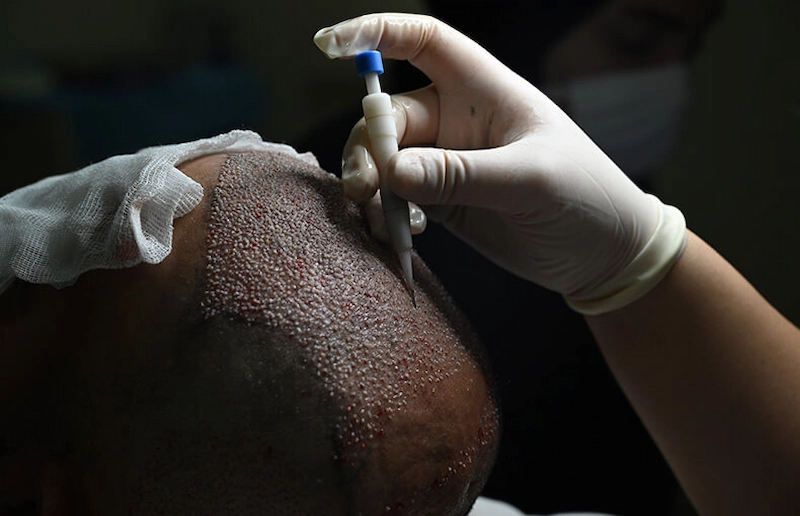
This method involves removing single groups of follicles from the donor area using small, round tools. The physician then makes tiny sites that guide the angle, spacing, and direction of each graft.
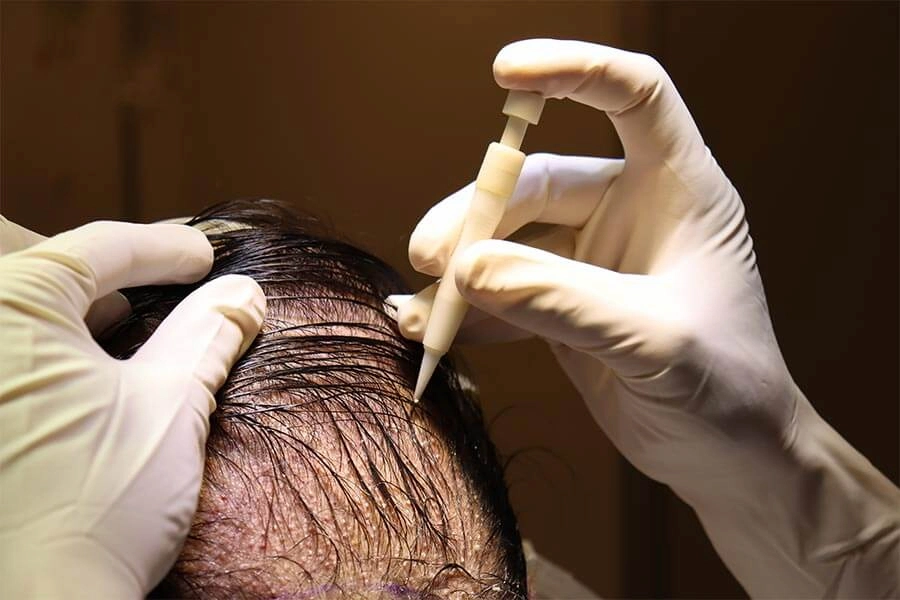
Some modern hair transplant procedures use DHI (Direct Hair Implantation) style placement with implant pens. These tools can help place grafts with control. They do not guarantee a set result.
Healing depends on the scalp, graft care, aftercare, and medical planning. The donor area may show small dot-like marks. These marks often become less visible as healing continues.
FUE vs FUT: Key Differences
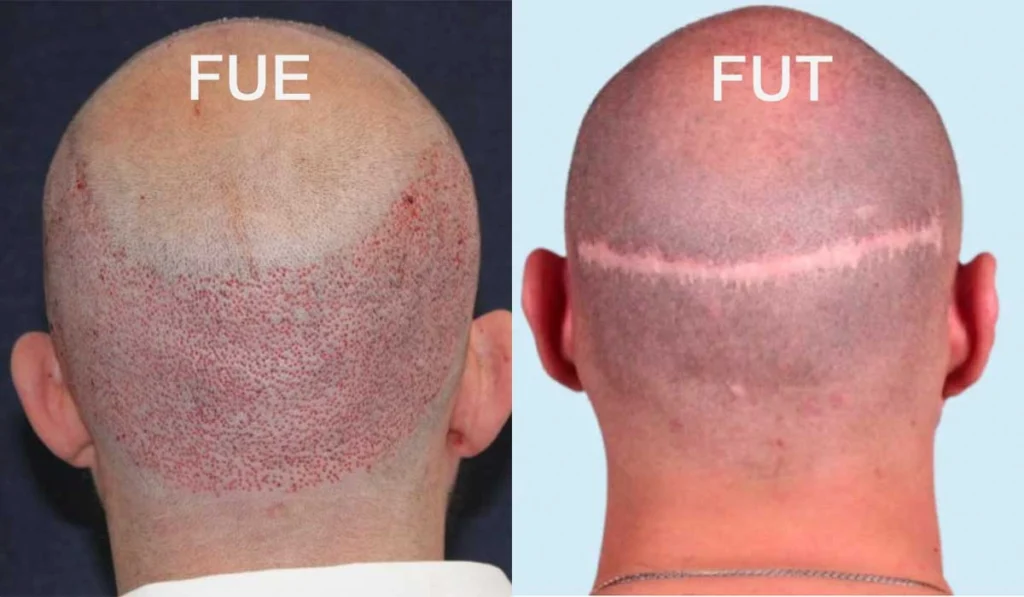
FUE and FUT differ most in scarring, donor management, and the surgeon’s approach to long-term coverage. FUE creates many small extraction points across the donor zone, so it may suit patients who wear shorter styles. FUT creates a linear scar, so it may suit patients who keep enough length in the back to cover it.
FUE can give the surgeon more control over spread-out extraction, but overharvesting can still thin the donor area. FUT may preserve more of the surrounding donor tissue in some cases, but this depends on scalp laxity and healing. Patients with tight scalp tissue may not be good candidates for FUT.
The choice should match the patient’s goals, donor density, scar risk, hairstyle, and the risk of future hair loss. A high graft count does not always mean a better result. The plan should protect donor supply for the future, not only fill the current thinning area.
Who May Be a Candidate
Good candidates often have stable donor supply, a clear loss pattern, and realistic goals. Men may seek care for the front, crown, or both. Women may seek more density along the part, temples, or front of the scalp.
Dr. Antonio Aguilar may review the scalp, donor density, medical history, medicines, and past procedures before giving a plan. This review helps find limits before surgery. It also helps decide if FUE, FUT, or another option is more suitable.
Some patients may need care before surgery. Temporary shedding, thyroid disease, low iron levels, swelling, traction damage, low donor density, or active scalp disease can limit results. Very young patients may also need careful planning because native loss can continue.
What Affects Results
Several factors affect graft survival and final density. The most important ones include:
- Donor supply: The donor area must have enough stable follicles for safe removal.
- Blood supply: Each graft needs oxygen and nutrients after placement.
- Graft handling: Follicles must stay protected while outside the scalp.
- Site design: Angle, depth, and spacing affect how natural the result looks.
- Aftercare: Washing, sun protection, and activity limits help protect early healing.
- Future thinning: Native strands may keep thinning around the treated area.
This surgery has limits. It cannot stop future loss, promise full density, or create new donor supply. Some patients may need more than one session if the treated area is large or thinning continues.
Recovery and Aftercare
Most patients go home the same day. The scalp may show redness, scabbing, swelling, tightness, itching, or numbness for several days. Some instructions may include keeping the head elevated, avoiding rubbing, and using a pressure bandage if directed.
Recovery happens in stages, and each stage has a different purpose. A simple timeline can help patients know what to expect:
- First few days: Redness, swelling, scabbing, tightness, and mild soreness may appear.
- First few weeks: Shedding may occur as the follicles enter a resting phase.
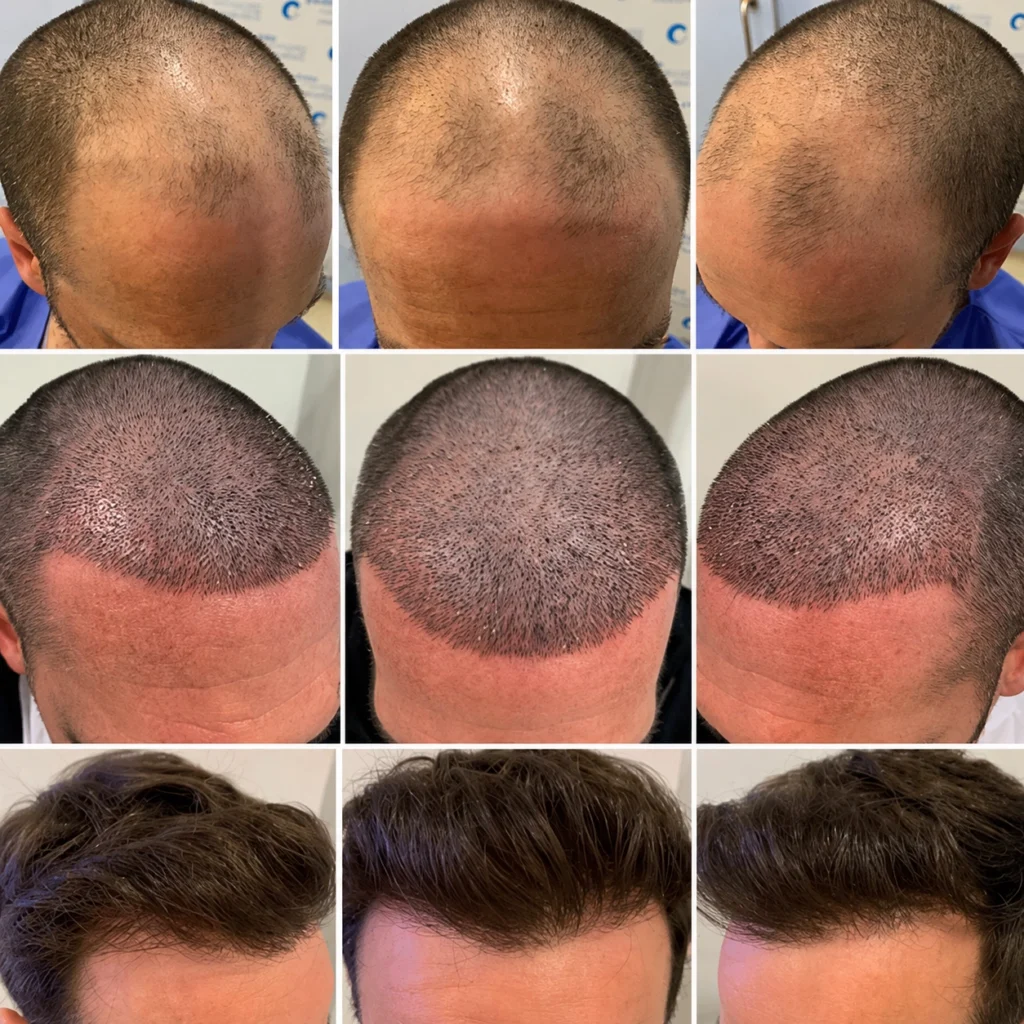
- Months 3 to 6: New growth may begin, but coverage may still look light.
- Months 9 to 12: Density, texture, and visible coverage may continue to improve.
Patients usually need to avoid scratching, direct sun, smoking, tight hats, and strenuous activities during early healing. They should follow post-hair transplant care instructions, including the washing steps provided by the clinical team. Follow-up helps the doctor check healing and adjust care when needed.
Pain, Side Effects, and Safety
Hair transplant surgery usually uses local anesthesia. Patients should not feel sharp pain during graft work. They may feel pressure, pulling, or mild discomfort.
Common side effects are usually mild, but patients should know which signs need medical review. These may include:
- Swelling: Mild swelling can happen during early healing.
- Itching: It may occur as scabs form and the scalp heals.
- Numbness: Temporary reduced feeling can happen near treated areas.
- Scabbing: Small crusts may form around grafts.
- Shedding: Short-term loss can happen before new growth starts.
- Bleeding, infection, or folliculitis after treatment: These need prompt medical guidance.
- Scarring or failed grafts: These risks depend on healing, technique, and aftercare.
Uneven texture, such as cobblestone-like changes after graft placement, should also be reviewed by a physician. Early contact helps protect healing, especially for patients who travel for care.
Cost and Location Factors
At Hair Transplant Mexico, Dr. Antonio Aguilar’s FUE pricing may range from $4,500 to $8,000 for a single area, such as the crown or hairline. A full FUE procedure may range from $6,000 to $10,000. The final estimate depends on graft needs, donor supply, treatment area, and surgical planning.
Patients often compare Mexico, the United States, Turkey, and other places because price, rules, clinic oversight, and follow-up can differ. The key question is not only where the procedure happens. Patients should ask who performs the steps and how care continues after surgery.
Treatment Areas and Less Common Methods
Surgical restoration can treat several areas, each with different planning needs:
- Frontal hairline: Needs soft placement because it frames the face.
- Crown: May need more grafts due to the swirl pattern.
- Beard and mustache: Need precise angle control.
- Eyebrows: Need fine grafts and careful direction.
- Scars: Depend on tissue quality, blood supply, and scar depth.
Less common options, such as scalp reduction, may come up in select cases. Grafting is the main modern method for most patients. A plastic surgeon, dermatologist, or trained restoration physician may perform or oversee treatment based on training and setting.