
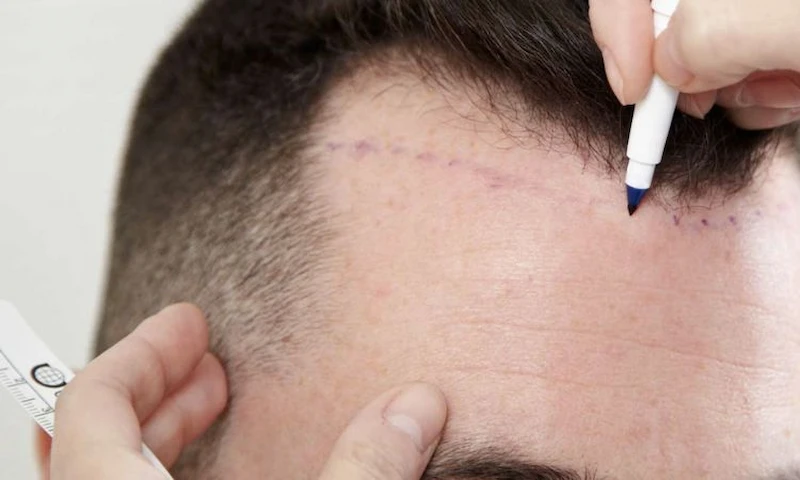
In clinical practice, physicians such as Dr. Antonio Aguilar evaluate whether this method is appropriate based on the patient’s pattern of hair loss and goals for facial harmony.
It is not a direct substitute for forehead reduction surgery, but it can be an effective option for selected candidates.
Key Takeaways
- A forehead reduction with hair restoration surgery can make the forehead appear smaller by lowering the hairline, but results depend on the availability of donor hair, hair density, and individual anatomy.
- Hair transplant and forehead reduction surgery achieve similar goals through different methods: one redistributes hair follicles, and the other removes skin, making candidacy and expectations critical factors.
- Most patients can expect a gradual improvement of about 1 to 2 centimeters in the appearance of the forehead with a hair restoration surgery, rather than an immediate structural change.
- Careful medical evaluation, including hair loss patterns and scalp characteristics, helps determine the most appropriate approach and supports more consistent long-term results.
- Outcomes vary based on technique, planning, and follow-up care, and achieving natural facial proportions is often prioritized over maximizing the extent of hairline lowering.
Does a Hair Transplant Make the Forehead Smaller?
Hair restoration surgery can make the forehead appear smaller by advancing the hairline. The effect comes from redistributing hair follicles rather than removing skin, which helps improve facial features and facial harmony.
The visible size of the forehead depends on facial proportions and hair density. A receding hairline or thinning can make a large forehead more noticeable over time. This procedure addresses this by restoring density in the frontal area.
Most patients can expect a reduction of about 1 to 2 centimeters, depending on donor density and the number of available hair grafts. For example, a patient with abundant donor hair may see a more noticeable improvement than someone with limited donor hair.
How Forehead Lowering With Hair Transplant Works
A hair restoration procedure involves moving hair follicles from a donor area to the frontal hairline. The goal is to create a natural transition that aligns with the patient’s facial features and improves facial proportions.
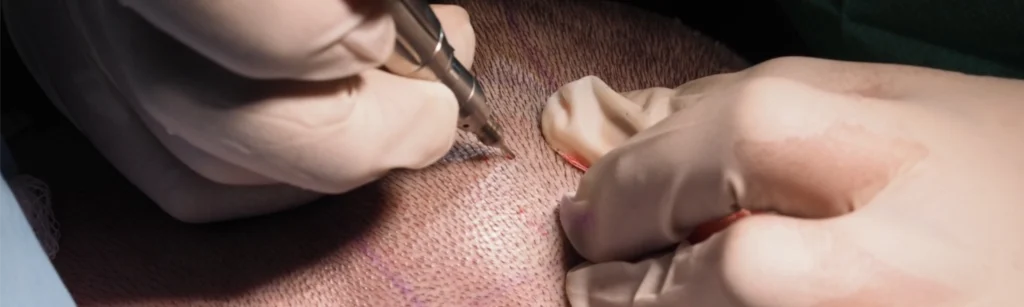
In some cases, techniques such as the DHI hair restoration surgery in Mexico are used to more precisely control the angle and placement of hair follicles.
The angle and direction of each graft affect the final appearance. Hair follicles must follow natural growth patterns to avoid an artificial result. Density planning also helps create a smooth transition between existing and transplanted hair.
FUE Extraction and Graft Placement
Follicular Unit Extraction (FUE) involves removing individual hair grafts from the donor area, and understanding the differences between FUE and DHI hair transplants helps clarify how each technique affects placement and results.
These grafts contain one to four hair follicles and are selected based on quality. The extraction process aims to preserve each graft for placement.
The grafts are then placed into small incisions along the new hairline. This step determines how natural the results of the hair restoration procedure appear over time.
Hairline Design and Planning
Hairline design considers age, gender, and future hair loss. A lower hairline may not suit patients with progressive thinning. Planning helps maintain natural facial proportions over time.
In clinical practice, lowering the hairline too much can affect long-term balance. Physicians consider future hair loss patterns when designing the final position.
Forehead Reduction vs Hair Transplant
Forehead reduction surgery is a surgical procedure that removes skin and advances the scalp forward. This method can immediately reduce the size of the forehead. It requires adequate scalp laxity and healing capacity.
A hair restoration procedure works by adding hair instead of removing tissue. Results develop gradually as transplanted hair follicles grow. Each method addresses the same concern through different approaches.
A hair restoration surgery is often selected when:
- The forehead is moderately large
- Adequate donor hair is available
- Gradual improvement is preferred
A forehead reduction surgery may be considered when:
- A more immediate reduction is needed
- Scalp laxity allows advancement
- A surgical approach is acceptable
Who Is a Good Candidate
Candidacy depends on hair loss pattern, donor density, and scalp condition. Good candidates are usually people with a large forehead or a receding hairline who still have enough healthy hair follicles in the donor area. Patients with stable hair loss tend to achieve more consistent results from hair restoration procedures over time.
This approach is often used by individuals who want to improve facial proportions without undergoing forehead reduction surgery. It is more suitable for those looking for gradual, natural changes rather than an immediate structural reduction. A structured medical evaluation helps confirm if this option aligns with their goals.
Who Is Not a Candidate
Patients with advanced hair loss or limited donor hair may not achieve enough density. Ongoing conditions, such as male pattern baldness, can affect long-term results.
Anatomical limits also play a role. Tight scalp tissue or limited donor supply can limit how much the forehead can be reduced.
Medical Evaluation and Treatment Planning
A medical evaluation helps determine whether a hair restoration procedure is appropriate and worth it for each patient. Physicians assess the size of the forehead, the position of the hairline, and overall hair density.
At Hair Transplant Mexico in San Pedro, Monterrey, evaluations focus on safety and long-term planning. This setting supports structured follow-up and continuity of care.
Personalized Treatment Plan
A treatment plan outlines the number of grafts, technique, and expected results. It also considers future hair loss and facial proportions.
Clear expectations help patients understand the limits of the results of restoration procedures and avoid overcorrection.
Before and After Results
Hair restoration surgery results develop over time. Initial shedding occurs before new growth begins. This process is part of normal healing.
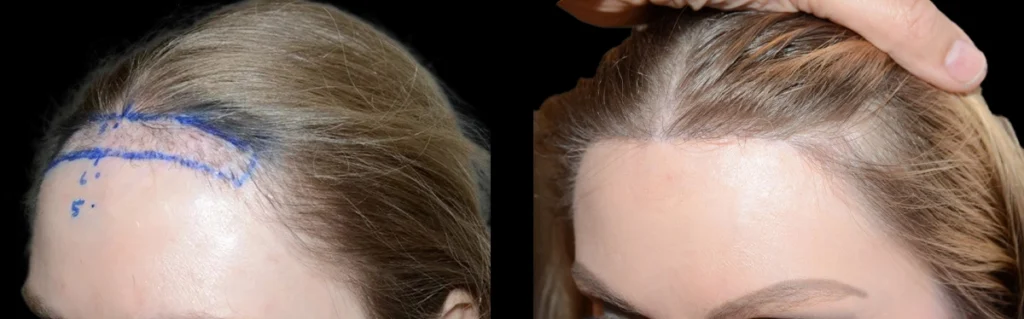
Realistic Outcome Limits
A hair grafting surgery can improve the appearance of a large forehead, but it may not achieve the same results as a surgical reduction. Results depend on donor hair and available density.
Natural results are often prioritized over lowering the hairline as much as possible. This helps maintain long-term facial harmony.
Risks and Limitations
All hair restoration procedures involve some risk. These may include infection, swelling, or uneven growth. Proper technique and follow-up help reduce complications.
Graft Survival and Shock Loss
Not all hair grafts survive after placement. Temporary shedding, known as shock loss, can occur in both transplanted and nearby hair after the procedure. This happens because hair follicles enter a resting phase before new growth begins.
Shock loss is usually temporary, and new hair growth typically starts within a few months. Most patients see gradual improvement over time as the hair follicles recover and produce new hair.
Hair Transplant in Mexico
Patients often compare countries when researching hair restoration. Factors include medical oversight, physician involvement, and continuity of care.
Monterrey offers established medical facilities and structured clinical environments. This supports follow-up care and consistent results after a hair grafting surgery.
If you are considering a hair transplant for forehead reduction, a medical evaluation can help clarify your options and expected outcomes. You can schedule a consultation to review your case and determine the most appropriate approach.