
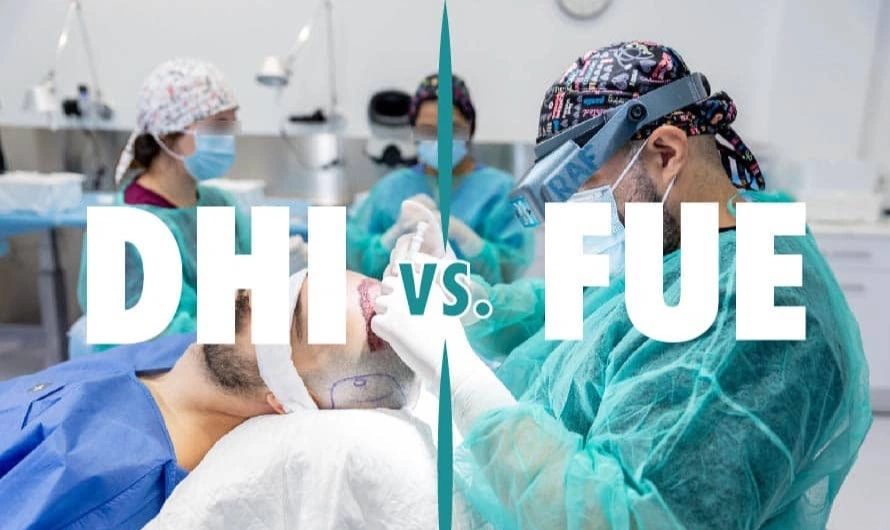
In a FUE vs DHI hair transplant comparison, both techniques use follicular unit extraction from the donor area, but FUE places grafts into pre-made channels, while DHI uses a pen-like tool to implant follicles directly into the recipient area.
FUE is commonly used to cover larger areas with a higher number of grafts, while DHI allows more controlled placement in smaller or more detailed zones, such as the hairline.
In terms of outcomes, both techniques can produce natural-looking results and offer excellent outcomes when performed under proper medical supervision.
The final appearance depends on graft survival, placement strategy, and the patient’s hair characteristics rather than the method alone.
Recovery timelines and long-term outcomes are also similar, with gradual hair growth over several months and results influenced by ongoing hair loss and follow-up care.
Key Takeaways
- FUE and DHI are both minimally invasive hair restoration techniques that primarily differ in how follicles are placed in the recipient area.
- FUE is often used for covering larger areas with a higher number of grafts, while DHI allows more controlled placement in smaller zones.
- The outcome depends on graft survival, donor area quality, and surgical execution rather than the method alone.
- Recovery timelines are similar, with healing in about 7 to 10 days and gradual growth over several months.
- A proper evaluation helps determine candidacy and select the most appropriate approach based on individual needs.
FUE Vs DHI Hair Transplant Difference Explained
Extraction and Implantation Method
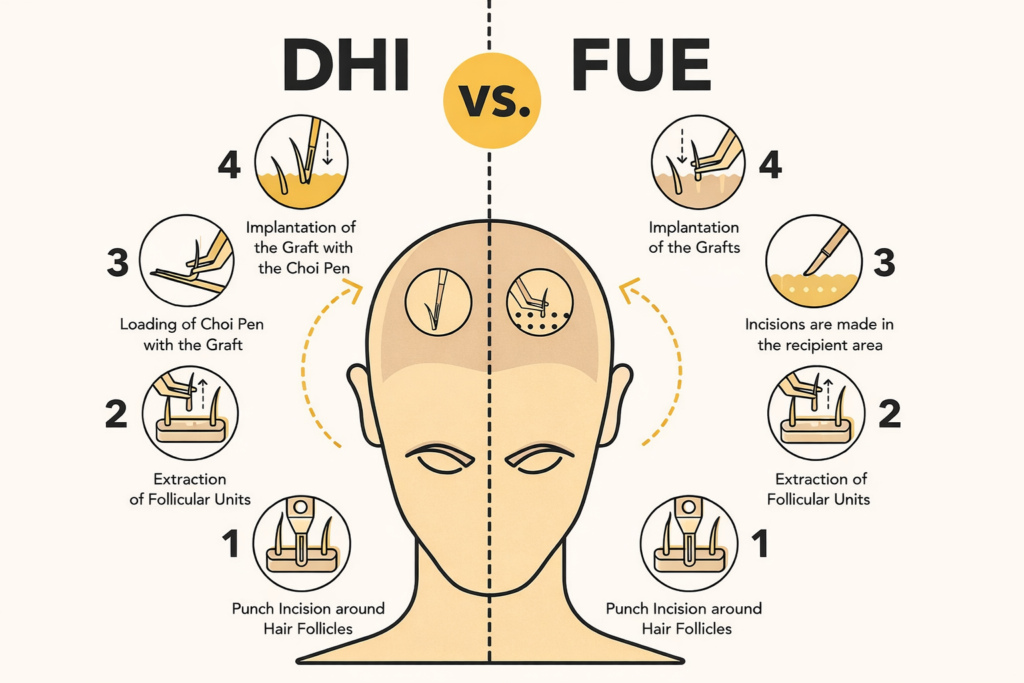
FUE and DHI differ mainly in how grafts are handled after extraction. In FUE, grafts are removed from the donor area and placed into channels in the recipient area. In DHI, grafts are extracted and immediately implanted using a device that implants follicles directly.
Some patients may also compare other methods, such as FUT hair transplants in Mexico, when exploring surgical options.
These differences affect how hair implantation is performed and planned, which can influence consistency and efficiency.
Density and Use Case
DHI allows controlled placement and may support higher density in small areas. FUE is often preferred when covering larger areas with a higher number of grafts.
Both can produce natural-looking results and offer excellent outcomes when performed correctly. The final result depends on placement strategy, graft survival, and long-term planning.
What Is FUE and DHI Hair Transplant
How the FUE Procedure Works
FUE uses Follicular Unit Extraction to remove individual grafts from the donor area. These grafts are then prepared and placed into the recipient area.
It is widely used for hair restoration and can treat different stages of hair loss. The approach is flexible depending on the number of grafts required and the extent of hair loss.
How the DHI Procedure Works
DHI follows a similar extraction process but uses a device to implant follicles directly. This reduces the time grafts remain outside the body.
The method focuses on precise placement and control. It is often used in areas where detail is important, such as the hairline.
Hair Transplant Evaluation and Candidacy
Candidates are evaluated based on hair loss pattern, donor area quality, and overall health, as well as factors such as the optimal age for a hair transplant.
The physician assesses how many grafts can be safely extracted and whether the donor area can support the desired coverage. This helps determine if the procedure will focus on covering larger areas or refining smaller zones.
A medical assessment also reviews hair characteristics and sets realistic expectations for density and long-term results. In locations such as San Pedro, Monterrey, Mexico, clinics often emphasize physician involvement and follow-up care. This supports consistent planning and helps monitor healing and graft survival.
DHI vs FUE: Which Is Better?
FUE vs DHI Hair Transplant Pros and Cons
| Factor | FUE | DHI |
|---|---|---|
| Best Use | Covering larger areas | Detailed placement in smaller areas |
| Number of Grafts | Higher number of grafts | Targeted graft placement |
| Precision | Good overall control | Higher control in small zones |
| Cost | Generally lower | More expensive than FUE |
Both methods depend on execution and planning. When performed under proper conditions and with attention to graft handling and placement, they can offer excellent results.
Is DHI Better Than FUE?
There is no universal answer to which one is better. FUE is often used for covering larger areas with a higher number of grafts, while DHI is preferred for precise placement in smaller zones.
The choice depends on donor area capacity, desired density, and treatment goals. Both techniques are minimally invasive, and a professional evaluation is needed to select the most appropriate option.
FUE vs DHI Hair Transplant: Results
Both techniques can offer excellent outcomes when performed correctly. Results depend on graft survival, donor-area quality, and proper placement within the recipient area, especially in cases of advanced hair loss.
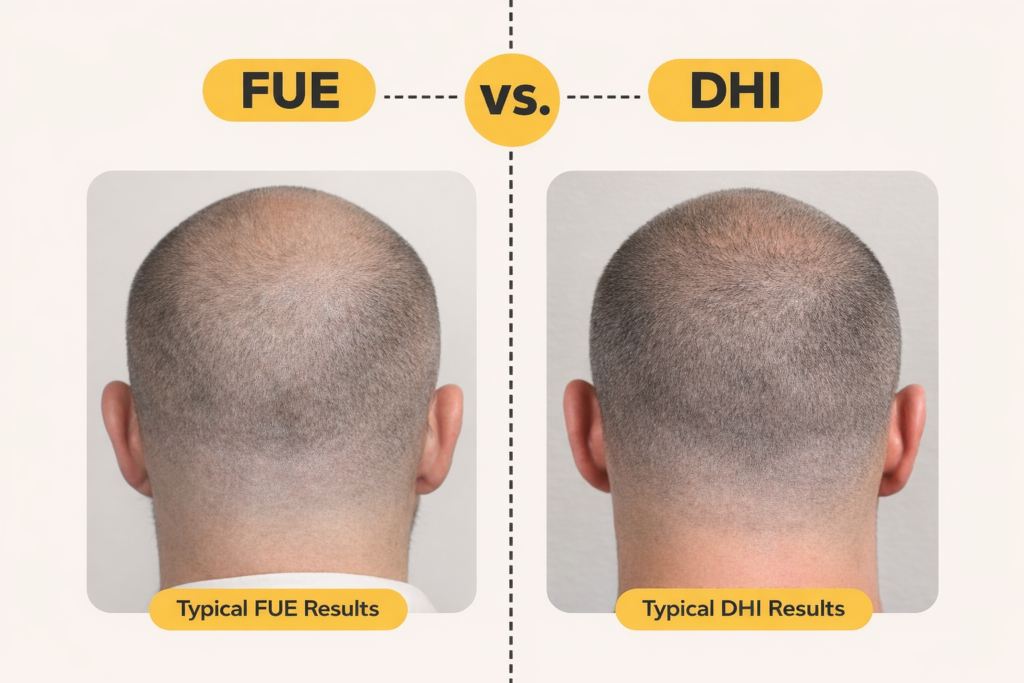
Hair growth develops gradually over months, and long-term results depend on the stability of existing hair and ongoing care. Neither method prevents future hair loss.
DHI vs. FUE: Recovery
Recovery is usually short, with healing in about 7 to 10 days. Mild redness or scabbing may appear in the recipient area.
The main difference lies in the implantation technique. DHI may involve less graft handling and no pre-made incisions, which can result in slightly less visible trauma in small areas. FUE, especially when covering larger areas, may involve more widespread healing due to the greater number of incisions.
Hair shedding can occur before new growth begins. Proper post-hair transplant care supports stable results and helps maintain graft survival over time.
FUE vs DHI Hair Transplant Cost
Cost varies based on the number of grafts and the complexity of the case. DHI is often more expensive than FUE due to the implantation process.
Typical ranges include:
- Single area FUE hair transplant (crown or hairline) from $4500 – $8000
- Full FUE hair transplant from $6000 – $10000
Patients comparing regions often consider cost, medical oversight, and continuity of care, especially when reviewing hair transplant cost in Mexico as part of their decision.
Risks and Safety Considerations
Hair transplant procedures carry risks such as swelling or uneven growth. These are usually manageable with proper care and monitoring.
Doctor involvement and structured follow-up help improve graft survival and support long-term outcomes.
If you are considering a hair transplant, a professional evaluation can help clarify which approach fits your needs and goals. Schedule a consultation to review your case and receive a personalized treatment plan based on your hair loss pattern and donor area.