
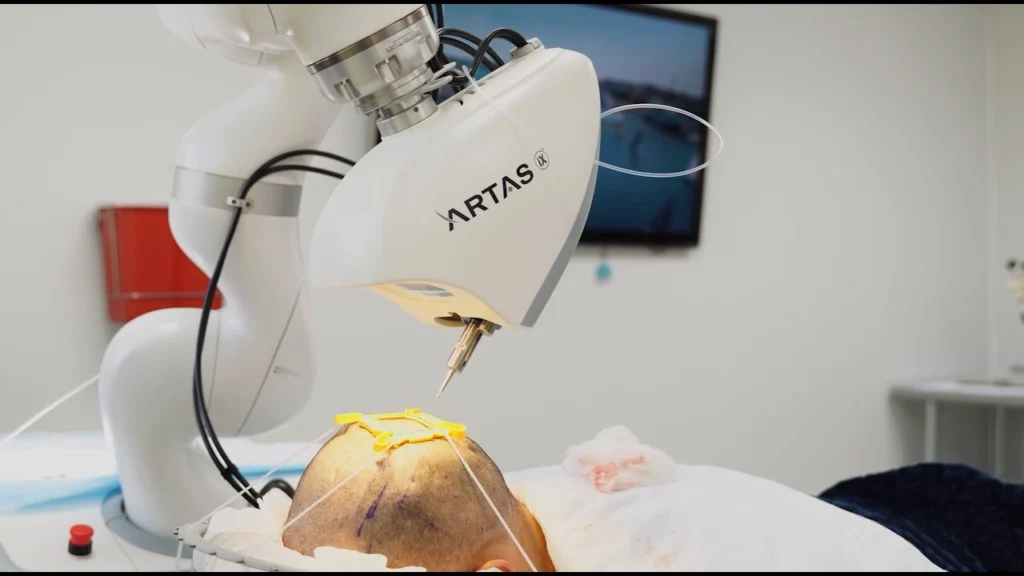
A robotic hair transplant in the United States commonly costs between $10,000 and $20,000, with many procedures falling near $15,000. The final price depends on graft count, doctor fees, equipment, location, and follow-up care.
Computer-assisted treatment is not always cheaper or more precise than manual FUE. Hair Transplant Mexico is in San Pedro Garza García, Monterrey, where Dr. Antonio Aguilar reviews the patient’s donor supply, hair loss pattern, health, and goals before recommending a doctor-led manual method.
Key Takeaways
- Computer-guided systems use images, software, and a doctor-controlled tool to help with selected FUE steps. The doctor still plans the design and manages safety.
- ARTAS may support steady graft removal, but it does not promise better growth or more natural results than skilled manual FUE.
- Cost depends on graft count, device fees, physician care, travel, location, and follow-up.
- Good candidates need sufficient donor follicles, a clear diagnosis, realistic goals, and physical traits compatible with the equipment.
- Patients should compare the level of doctor involvement, medical care, follow-up, and plans for complications before choosing a clinic or country.
What Is a Robotic Hair Transplant?
The procedure uses cameras, software, and a moving arm to help with Follicular Unit Extraction (FUE). Many medical groups also use the term “Follicular Unit Excision” because a small punch frees each unit from the skin. This minimally invasive method avoids the long cut used in follicular unit transplantation. It still leaves many small donor wounds.
How a Hair Restoration Robot Works
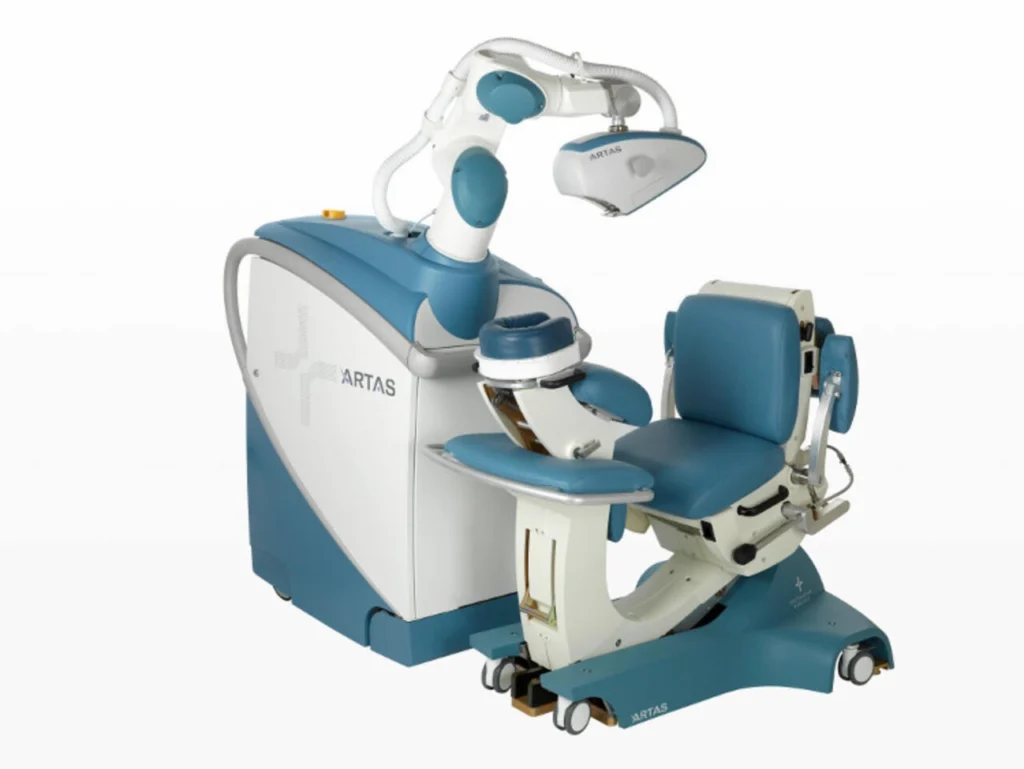
A hair restoration robot maps the donor scalp. It checks the angle, spacing, and direction of visible hair follicles. The ARTAS robotic hair transplant platform uses cameras and artificial intelligence to suggest which follicular units to remove.
These systems are part of the latest hair transplant technology, although each device supports different surgical steps. A robotic hair transplant system may also help create each recipient site or place grafts, depending on the model.
What the Surgeon Still Controls
The doctor checks whether the patient is a good candidate and estimates the safe donor supply. The physician also designs the new growth pattern, sets the device, gives local anesthesia, and manages the recipient area. The care team protects and handles each hair graft. The machine cannot replace medical judgment or treat complications on its own.
Surgery Steps
Evaluation and Treatment Planning
The doctor reviews the patient’s health, medication use, scalp condition, donor density, and hair loss pattern. The physician then designs the hairline and decides how many grafts each area may need. The care team trims the donor area and applies local anesthesia. The robot does not diagnose the patient or create the treatment plan on its own.
Robotic Mapping and Extraction
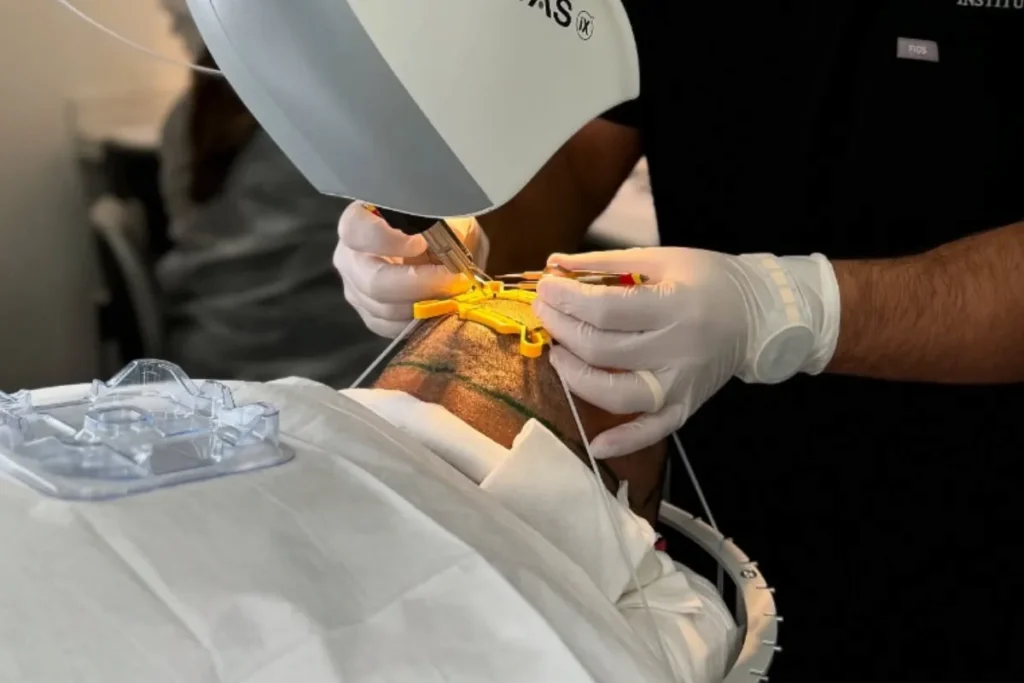
The ARTAS cameras scan the donor area and measure the position, angle, thickness, and grouping of the follicles. The software suggests grafts based on settings chosen by the physician. The robotic arm then uses a small needle and punch to cut around the selected follicular units. A doctor or technician removes, checks, cleans, and stores the grafts after the robot separates them from nearby tissue.
Site Creation, Implantation, and Time
The physician first creates a digital plan that shows where the new grafts should go. The ARTAS system can then create small recipient sites at the planned depth, angle, and spacing while avoiding existing follicles. Some ARTAS systems can also assist with implantation, but many clinics place grafts manually or with a DHI pen. The full session often takes four to eight hours because planning, extraction, graft checks, site creation, and placement all require time.
Main Disadvantages
A machine can repeat the same motion many times. It cannot detect changes in the scalp as well as a skilled physician can. Manual control may help when growth angles, scars, skin firmness, or donor conditions vary. The system may reduce fatigue, but it cannot remove human error because people still plan and run the procedure.
ARTAS Hair Transplant Disadvantages
ARTAS has limits linked to setup and patient traits. Color, curl, scalp contrast, head position, donor access, and shaving needs may affect its use. The machine also needs special parts, space, and trained staff. These needs may raise the price or limit access.
Surgeon Skill Still Matters
The device cannot create a natural-looking design on its own. It also cannot decide how many grafts to save for future thinning. The doctor must choose the angle, spacing, density, and donor plan. Results still depend on skill, graft care, placement, healing, and follow-up.
Assisted FUE vs Manual FUE
Both methods remove single grafts with small punches. A robotic FUE transplant uses cameras and set movements, while manual FUE gives the doctor direct control over depth, angle, speed, and location. The main choice is often computer-assisted FUE versus manual extraction.
What Clinical Evidence Shows
Research does not show that machine-assisted placement always grows more follicles than skilled manual work. In one FDA-reviewed study of 30 people, the manual side had a mean hair count of 91.4 hairs after 9 months, while the ARTAS side had 83.2 hairs. ARTAS still met the study’s set limit for non-inferiority. This means it gave steady results, but it did not prove better growth.
ARTAS, NeoGraft, and FUT
ARTAS uses digital images and a doctor-controlled arm. NeoGraft hair transplant surgery uses an automated FUE tool that a doctor or trained user moves by hand.
Follicular unit transplantation removes a strip of scalp before the tissue is split into grafts. Patients should ask which steps use equipment and which steps remain manual.
Is Computer-Assisted FUE Worth It?
Computer-assisted FUE is not automatically worth the higher cost. The device can repeat graft extraction with less fatigue, but it cannot match a skilled physician’s tactile feedback, real-time judgment, or ability to adjust to scars, tight curls, unusual angles, and changes in the scalp.
Manual FUE may offer better control and precision in complex cases, while assisted systems may require shaving and have limitations related to hair and skin traits. The method is worthwhile only when a doctor finds that the device offers a clear benefit for the patient’s donor area and treatment plan.
Candidacy and Medical Evaluation
Good candidates often have a known cause of thinning, enough donor supply, stable health, and realistic goals. People with active scalp disease, low donor density, rapid hair loss, or poor healing may not qualify. Color, texture, curl, and scalp contrast may also affect device use. The doctor should assess both the surgery and the equipment.
Risks, Recovery, and Permanence
Computer-assisted FUE carries the same main risks as manual FUE, including infection, scarring, poor growth, overharvesting, and uneven density. The device is not automatically more precise than a skilled doctor because it cannot feel tissue resistance or adjust as quickly to scars, tight curls, and unusual follicle angles.
Poor settings or inadequate medical oversight may damage grafts or unevenly remove follicles from the donor area. Most patients can expect redness, swelling, and crusting during the first one to two weeks. Temporary shedding may occur about two to eight weeks after surgery, while new growth often begins near the third month.
Density is usually easier to judge between six and twelve months, though some results may continue to improve beyond that point. Transplanted follicles usually retain their donor traits, but untreated native strands around them may continue to thin and can require medical care or future surgery.
How Much Does the Procedure Cost?
The cost of a robotic hair transplant depends on the graft count, the treatment area, device fees, doctor fees, and follow-up. Some quotes do not include medicine, blood tests, travel, lodging, or later care. Larger areas often need more time and more grafts. Patients should ask for a full written price.
Average Cost, Location, and Follow-Up
Patients compare Mexico, the United States, Turkey, and other countries because prices, medical oversight, and follow-up models vary. A robot-assisted procedure typically costs $10,000 to $20,000 in the United States, with an approximate midpoint of $15,000, although graft count and clinic fees can affect the final price.
Hair Transplant Mexico does not offer robotic procedures; instead, it provides doctor-led manual FUE and DHI in San Pedro Garza García. Patients should compare physician involvement, licenses, emergency plans, total costs, and long-term follow-up before choosing a hair transplant clinic.
Results and Reviews
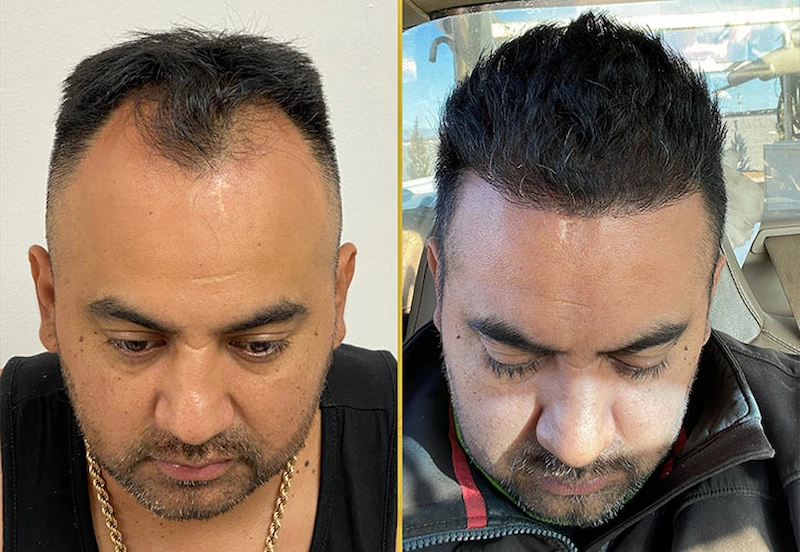
New growth often begins near the third month, while density becomes easier to assess between six and twelve months. Reviews of robotic hair restoration often discuss procedure length, comfort, shaving, recovery, cost, and the level of doctor involvement.
Positive reviews may mention smooth extraction and short downtime, while negative reviews may focus on high fees, limited suitability for the device, or results that did not meet expectations. Reviews can support research, but they cannot prove that a machine is more accurate than a skilled physician or predict one patient’s outcome.
Choosing the Right Hair Restoration Method
Robotic systems can assist with selected FUE steps, but they do not replace medical judgment, donor planning, or careful graft placement. Hair Transplant Mexico uses doctor-led manual FUE and DHI in San Pedro Garza García, Monterrey, rather than robotic systems.
The right method depends on your donor supply, pattern of loss, scalp health, and long-term goals. Schedule a free consultation with Dr. Antonio Aguilar to review your options.