The optimal density depends on donor availability, strand thickness, blood supply, and surgical planning. A higher number does not always create a better result. Safe placement matters more than forcing maximum density into one area.
Density Per cm²
Density is often measured by how many follicular units are placed per square centimeter in the recipient area. This helps the surgeon plan how many grafts are needed for each zone. An experienced surgeon must balance density, blood supply, graft survival, and long-term loss patterns.
Density Percentage
The density percentage compares the transplanted density to the natural density. For example, a patient may not need 100% original density to look full in daily life. Color, skin tone, curl, shaft thickness, and styling all affect the final look.
Natural vs Transplanted Density
Natural density means the amount of growth a person had before thinning or balding. Transplanted follicles can create strong coverage, but the result depends on how the grafts are placed and how well they survive. The goal is to create a natural pattern that fits the patient’s face, donor site, and risk of future loss.
Can You Restore Original Density?
A restoration procedure usually cannot restore the exact original density that existed before loss. In many cases, it does not need to do that to look natural. Good placement can create strong visual coverage with less density than a non-thinning scalp, while some patients may also consider non-surgical restoration alternatives.
Does a Procedure Increase Density?
Yes, it can increase density in areas where growth has thinned or disappeared. The procedure moves donor follicles from a stable area to the thinning or bald area. This can improve overall density, but the result must be planned with realistic expectations.
What Creates the Illusion of Density?
The illusion of density occurs when transplanted follicles are placed to make the scalp appear fuller. This does not always require the highest possible number of grafts. It requires smart planning, safe spacing, and careful distribution.
A strong density plan considers:
- Single-follicle grafts for a natural hairline
- Multi-follicle grafts for fuller coverage
- Proper angle and direction
- Strand thickness and curl
- Contrast between strand color and scalp tone
Coverage vs Density
Coverage and density are related, but they are not the same. Coverage means the area appears filled in, while density refers to how much growth is present in that area. A patient with a limited donor supply may benefit more from strategic coverage than from attempting to place too many grafts in a single small area.
Density Timeline After Surgery
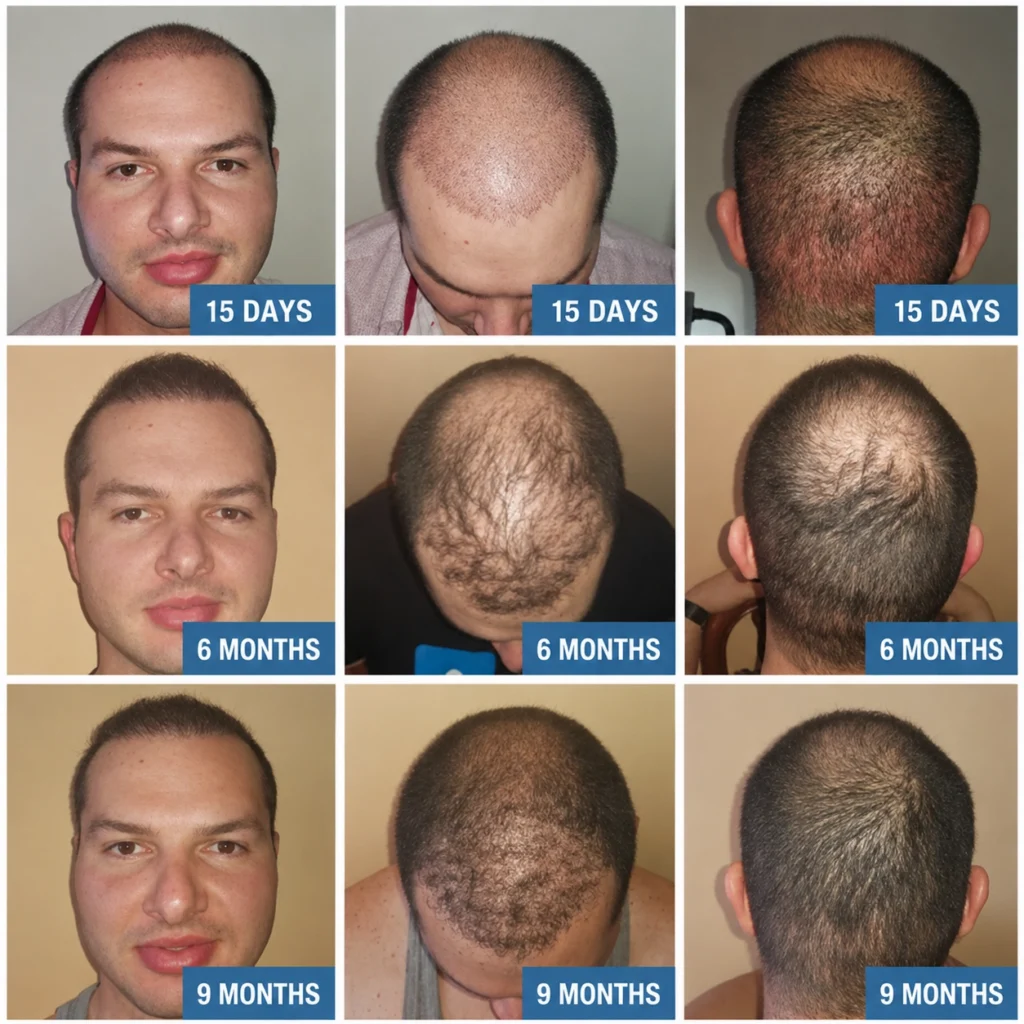
Density develops over time. Patients should not judge the final result too early, as shedding, early regrowth, and thickening occur in stages. Post-surgery recovery often includes temporary shedding during the first weeks. Patients should also follow safe grooming guidance, including when to get a haircut after restoration surgery.
- Weeks 2–8: temporary shedding may occur
- Months 3–4: early new growth may begin
- Months 6–9: visible density often improves
- Months 12–18: final density becomes clearer
What Affects Final Density?
Several factors affect final density. The most important factors include donor strength, strand type, graft survival, and the surgeon’s placement of each follicular unit. Good density comes from planning, safe spacing, and careful handling of the grafts so the transplanted hair can grow in a natural pattern.
Donor Area Strength
The donor area limits how many grafts can be moved safely. If the donor supply is weak, the surgeon must avoid removing too much from the back or sides of the scalp. Strong donor hair gives the surgeon more options, while weak donor hair requires a more conservative plan.
Strand Thickness and Texture
Strand thickness affects how dense the result looks. Coarse or wavy growth can create more coverage than fine, straight growth. This means the number of hairs matters, but fiber quality also matters.
Graft Survival
Graft survival refers to the number of transplanted follicles that grow after placement. This depends on handling, placement depth, blood supply, and aftercare. If too many grafts are packed too tightly, survival can decrease.
Surgeon Placement Technique
Surgical technique plays a major role in density. The angle, direction, depth, and spacing of each graft affect how natural the result looks. Hair Transplant Mexico uses DHI (Direct Hair Implantation) and FUE (Follicular Unit Extraction), along with the LION implantation pen, to support controlled placement and precise implantation.
Is 3,000 Grafts a Lot?
Yes, 3,000 grafts is a significant number, but whether it is “a lot” depends on the treatment area. A small frontal zone may not require as much as a larger crown or a full frontal restoration. More grafts can help, but only when the scalp can support them safely.
Grafts vs Hairs
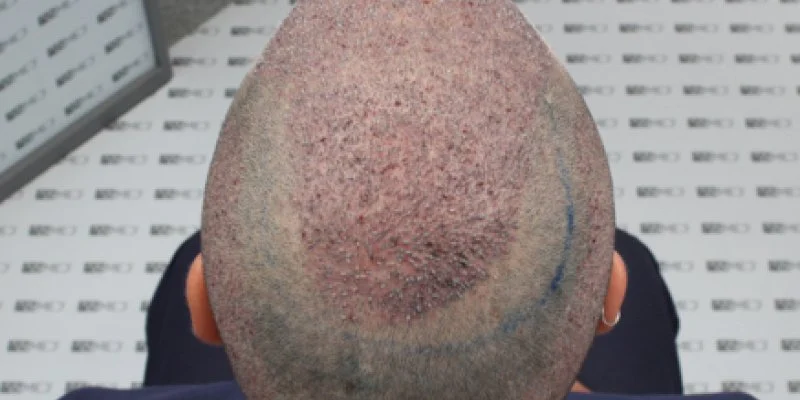
A graft is not always the same as one strand. One follicular unit may contain one, two, three, or more hairs. This is why 3,000 grafts can produce a different number of hairs in one patient than in another.
Is High-Density Restoration Safe?
This procedure can be safe when the patient is a good candidate and the plan protects the scalp. The risk increases when too many grafts are placed in a small recipient area. A dense result should never come at the cost of poor graft survival or future donor damage.
When High Density Is Not Recommended
High density is not always the safest choice. It may not be recommended when the donor supply is limited, the recipient area has a weak blood supply, or the patient has advanced loss. In these cases, coverage and long-term planning may matter more than maximum density.
Each graft needs oxygen and nutrients after placement. If too many grafts are packed into a small area, they can compete for blood supply. This may reduce graft survival and affect the final result.
Density Examples by Treatment Area
Density varies across treatment areas. The frontal zone often needs about 40 to 60 grafts per cm² because it frames the face and needs a fuller visual effect. The crown often uses about 30 to 40 grafts per cm² because the swirl pattern requires broader coverage and careful donor planning.
Frontal Zone
The frontal zone usually needs the highest visual density. A range of 40 to 60 follicular units per cm² can help create a natural frame when the donor area is strong enough. Hairline shape, angle, and irregularity still matter as much as graft count, especially when treating temple restoration.
Crown
The crown often needs about 30 to 40 follicular units per cm², depending on the size of the thinning area. This zone may need many grafts because growth follows a circular pattern. A smart plan protects donor supply while improving coverage.
Beard, Mustache, and Eyebrows
Beard and mustache restoration usually needs about 20 to 35 grafts per cm². The crown often uses about 30 to 40 follicular units per cm², so beard and mustache density may overlap with lower crown ranges, but usually requires a different angle and spacing.
Eyebrow restoration is usually planned at about 25 to 45 follicular units per cm², depending on the extent of the missing area, brow shape, and natural direction.
Best Candidates for Higher Density
Some patients are better candidates for higher density than others. The best candidates usually have strong donor hair, good scalp health, stable loss, and realistic expectations. Patients with widespread thinning may need a different plan, especially when diffuse thinning is present, and restoration planning is involved.
Higher density may be more suitable when the patient has:
- Strong donor supply
- Good blood supply in the recipient area
- Thick or medium-caliber donor hair
- Limited treatment area
- Stable loss pattern
- Healthy scalp condition
Cost and Density
Cost often depends on the number of grafts, the size of the treatment area, and the complexity of the case. At Hair Transplant Mexico, a single-area FUE procedure for the crown or hairline ranges from $4,500 to $8,000, while a full FUE procedure ranges from $6,000 to $10,000.
Higher density goals may require more planning, more grafts, or more than one session, so the final cost depends on the medical evaluation.
Medical Evaluation With Dr. Antonio Aguilar
A medical evaluation with Dr. Antonio Aguilar helps define realistic density goals. He reviews the donor area, recipient area, strand type, scalp condition, and long-term loss pattern. This step helps avoid overharvesting, poor placement, and unrealistic expectations.
Schedule Your Free Consultation
Density should be planned with care, not guessed from a graft number alone. Schedule your free consultation with Hair Transplant Mexico to receive a doctor-led evaluation and a clear treatment plan.