
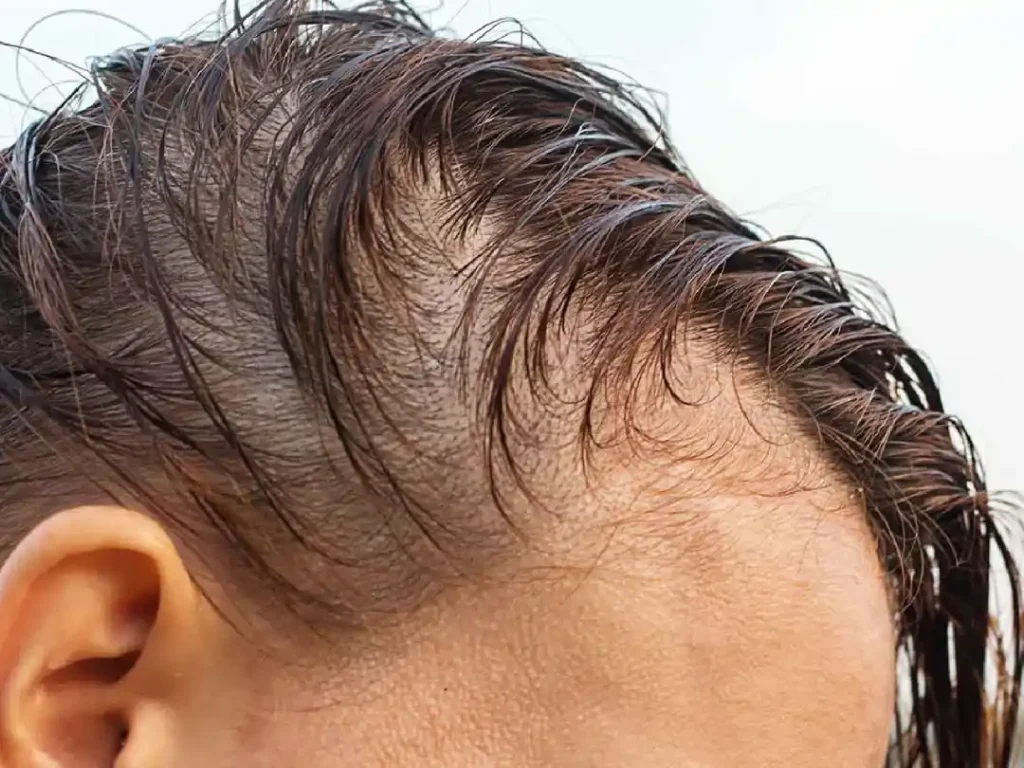
Because existing hair remains, grafts must be placed carefully to avoid additional hair shedding.
At Hair Transplant Mexico in San Pedro, Monterrey, Dr. Antonio Aguilar evaluates each case based on donor stability and the type of hair loss. Not all patients qualify, and treatment depends on medical history and how the condition changes over time.
Key Takeaways
- Diffuse thinning hair transplant can work for some patients, but it depends on a stable donor area and a clear diagnosis of the underlying type of hair loss.
- Some conditions, like telogen effluvium, may improve, while androgenetic alopecia and diffuse unpatterned alopecia often need long-term care.
- Treatment often starts with medical care to reduce hair shedding before surgery is considered.
- Results aim to improve hair density, not fully restore all lost hair, and they vary by patient.
- Doctor evaluation and follow-up care help ensure safer, more stable results.
Can Diffuse Thinning Be Treated, and Who Qualifies?
Diffuse thinning can be treated in some cases, but not all patients qualify. Doctors look at the cause and the rate at which hair is shedding. Patients with a stable donor and steady hair loss may be considered for surgery. Those with active medical conditions often need treatment first.
Is Diffuse Thinning Reversible?
Some types of diffuse thinning can improve over time. This is common in telogen effluvium caused by stress, illness, or thyroid disorders. Hair shedding may slow once the cause is treated and normal hair growth resumes. In contrast, androgenetic alopecia and pattern baldness usually continue over time.
When Transplant Is Not Recommended
A transplant may not be a good option if thinning affects the whole scalp. This includes the donor area where donor hairs are taken. Diffuse unpatterned alopecia often limits access to a healthy donor. In these cases, medical treatment is usually the first step.
Diffuse Thinning Causes and Types
Diffuse thinning affects hair across the scalp rather than in one clear area. This is different from pattern hair loss, where a receding hairline or crown hair transplant treatment areas are often discussed.
Doctors check if the loss is even or follows a pattern. This helps guide treatment and identify the type of hair loss.
Common causes include:
- Stress illness
- Thyroid disorders
- Telogen effluvium
- Androgenetic alopecia
These conditions can lead to hair shedding and thinner hair over time.
Main types include:
- Telogen effluvium – temporary shedding linked to stress or illness
- Diffuse androgenetic alopecia – gradual thinning across the scalp
- Diffuse unpatterned alopecia – thinning that also affects the donor area
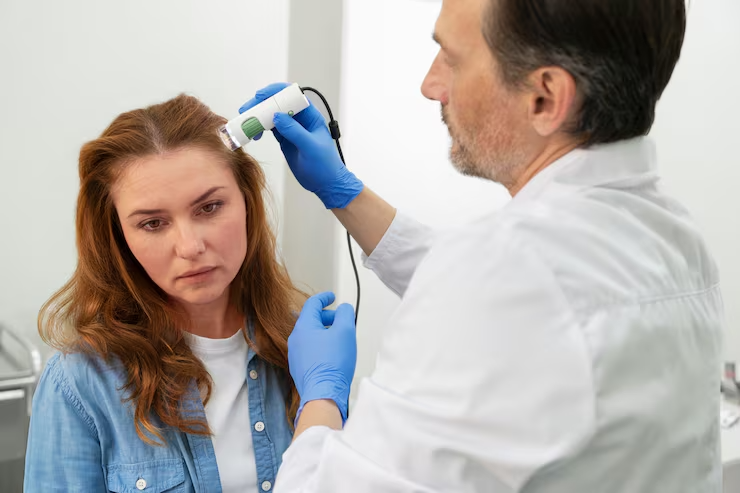
Medical Evaluation and Graft Planning
Doctors perform a full evaluation before planning surgery. They check hair density and the strength of the donor area. The goal is to move donor hairs without reducing coverage elsewhere. This step helps avoid poor results and protects existing hair.
The number of grafts depends on the extent of thinning. Diffuse thinning often requires careful placement rather than a large number of grafts. For example, a patient with even thinning but a stable donor area may need density improvement rather than a receding-hairline reconstruction. Each plan depends on how the hair loss appears.
Diffuse Thinning Treatment Options
Treatment depends on the cause and stability of hair loss. Medical care is often used first to reduce hair shedding and support hair growth. This can help improve hair density before considering surgery, depending on the specific forms of hair loss present.
Common options include:
- Medications for androgenetic alopecia
- Treatment for thyroid disorders
- Management of telogen effluvium
If a patient is not ready for surgery, doctors may suggest monitoring. Hair density and donor stability are checked over time. A transplant may be considered later if conditions improve.
Hair Transplant for Diffuse Thinning
Hair transplantation for diffuse thinning needs careful technique. Existing hair must be protected during the procedure. The goal is to improve density without harming nearby follicles. This requires precise work.
FUE (Follicular Unit Extraction) is a common method used in these cases. It removes individual grafts from a healthy donor area. Grafts are placed between existing hairs to increase density. Surgeons adjust spacing and angle to protect natural hair.
Results and Limitations
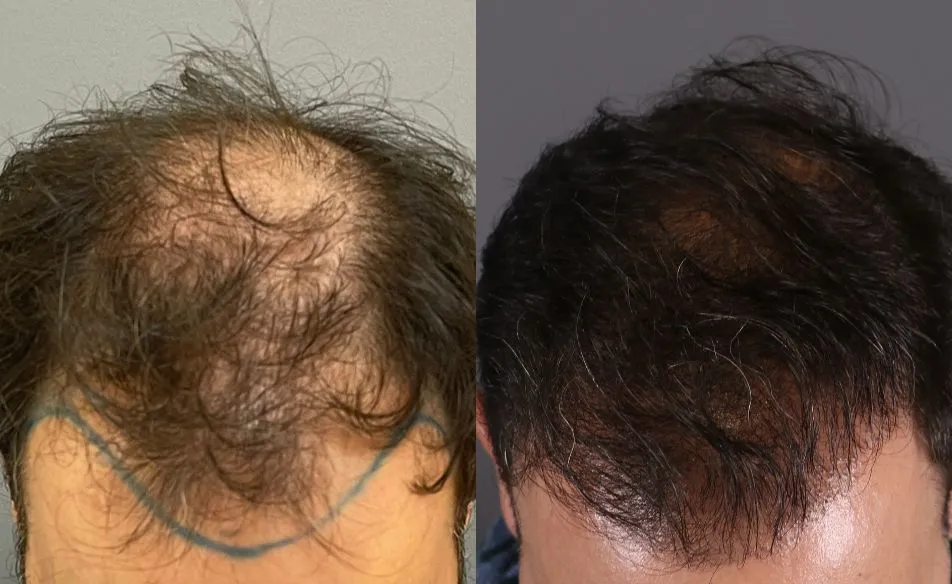
Results vary from patient to patient. A diffuse thinning hair transplant before-and-after view often shows a gradual change. Improvements happen over time, not all at once. Patients should expect slow progress, and many people carefully evaluate outcomes when asking whether a hair transplant is worth it.
Diffuse-thinning cases may not achieve the same density as other transplants. Results depend on donor strength and ongoing hair loss. The goal is to improve coverage, not fully restore all hair. Clear expectations help guide decisions.
Diffuse Thinning Hair Transplant Cost
Cost depends on graft count, technique, and level of care. Diffuse cases often need careful planning rather than large procedures. Each case is different and reviewed on its own.
Typical price ranges include:
- Single area FUE Hair Transplant (crown or hairline) from $4500–$8000
- Full FUE Hair Transplant $6000–$10000
Patients often compare Mexico, Turkey, and the United States. Differences include doctor involvement, safety rules, and follow-up care. Some clinics focus on high volume, while others focus on ongoing care.
These factors affect both cost and experience. For a broader breakdown, patients often review detailed guides on the cost of hair transplants in Mexico.
Safety and Medical Considerations
FUE (Follicular Unit Extraction) is a common method used in these cases, and understanding the differences between FUE and DHI techniques can help clarify how grafts are placed.
Other techniques, such as those explained in FUT hair transplant procedures, may be considered in specific cases depending on donor characteristics. Dr. Antonio Aguilar highlights the need for accurate diagnosis in each case. This helps reduce risk.
Patients should expect ongoing care after the procedure. A transplant does not stop future hair loss. Follow-up helps track progress and support hair growth over time. This supports long-term stability.
If you are considering a diffuse thinning hair transplant, a medical evaluation can help determine the cause and the most appropriate next step. Schedule a consultation to review your case and understand your options based on your hair loss pattern and donor area.
If you are considering a diffuse thinning hair transplant, a medical evaluation can help determine the cause and the most appropriate next step. Schedule a consultation to review your case and understand your options based on your hair loss pattern and donor area.