
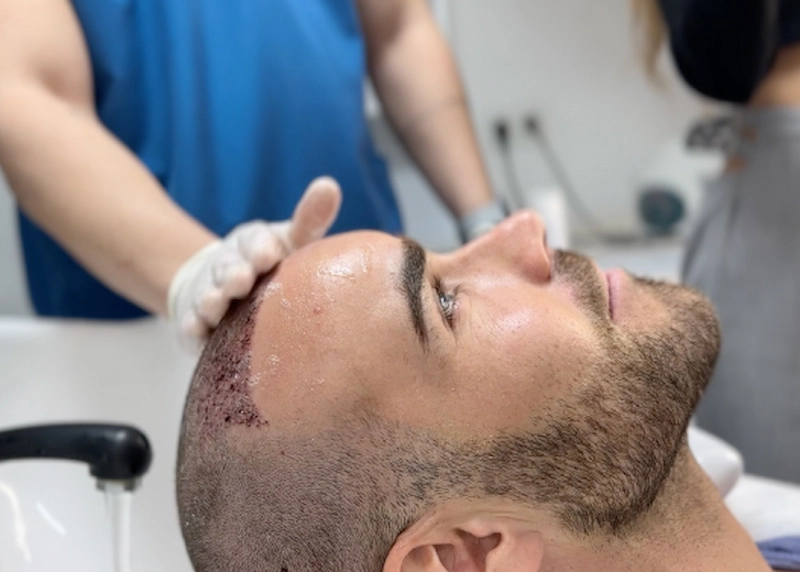
Results can be long-lasting when the transplanted follicles survive, but the outcome depends on donor quality, surgical planning, graft handling, healing, and future loss.
Dr. Antonio Aguilar, a specialist in FUE Hair Transplant and Hair Restoration, provides a clinical context for understanding how planning and medical oversight shape the process.
Key Takeaways
- An FUE hair transplant removes individual follicular units from the donor area and places them into thinning or bald areas without strip harvesting.
- Good candidates usually have a stable loss pattern, adequate donor supply, and no medical issues that could affect healing or safety.
- Recovery often includes redness, swelling, scabbing, and temporary shedding before gradual growth appears over several months.
- Results can be long-lasting, but future loss, graft survival, donor supply, and surgical planning affect the outcome.
- Patients should compare clinics based on physician involvement, medical oversight, follow-up care, and informed consent, not on cost alone.
What Is Follicular Unit Extraction?
FUE is a hair transplantation technique that removes small natural groupings of strands from the donor area. Each follicular grouping may contain one to four strands, depending on the person’s natural pattern. The goal is to move healthy donor follicles into areas affected by thinning while preserving a natural appearance.
The FUE method differs from older strip-based approaches by avoiding the removal of a long strip of scalp, and patients comparing modern methods may also want to understand FUE vs DHI hair transplant differences before choosing a technique.
Instead, the physician uses tiny incisions to isolate and extract the grafts one by one. This makes planning important because donor supply is limited and must be used carefully.
Step-by-Step Treatment Process
Evaluation and Planning
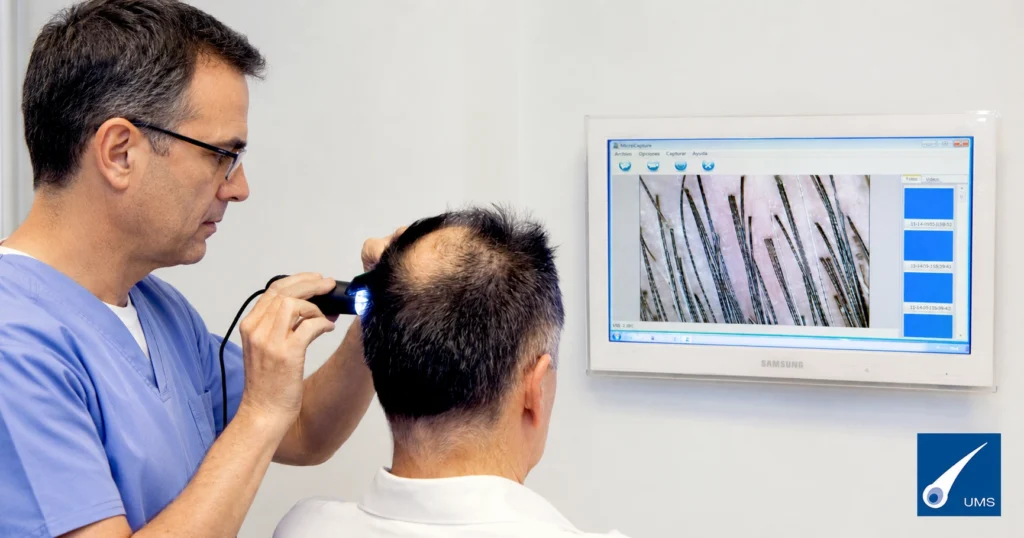
The process starts with a review of the hair loss pattern, donor density, scalp health, medical history, and long-term goals. The physician estimates how many grafts can be safely removed without excessively thinning the donor zone. This step also helps define the recipient area, expected density, and realistic outcome before hair transplant surgery begins.
Donor Area Preparation
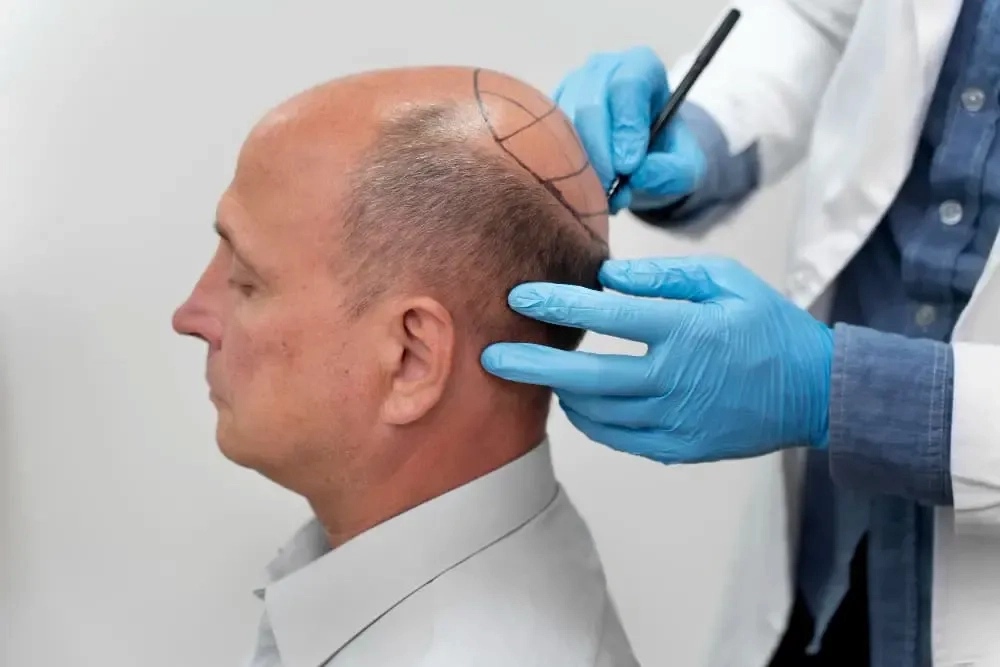
The donor area is trimmed, cleaned, and marked before extraction. Local anesthesia is applied to reduce discomfort during the session. The clinical team then prepares the area so graft removal can follow the planned pattern.
Follicle Extraction
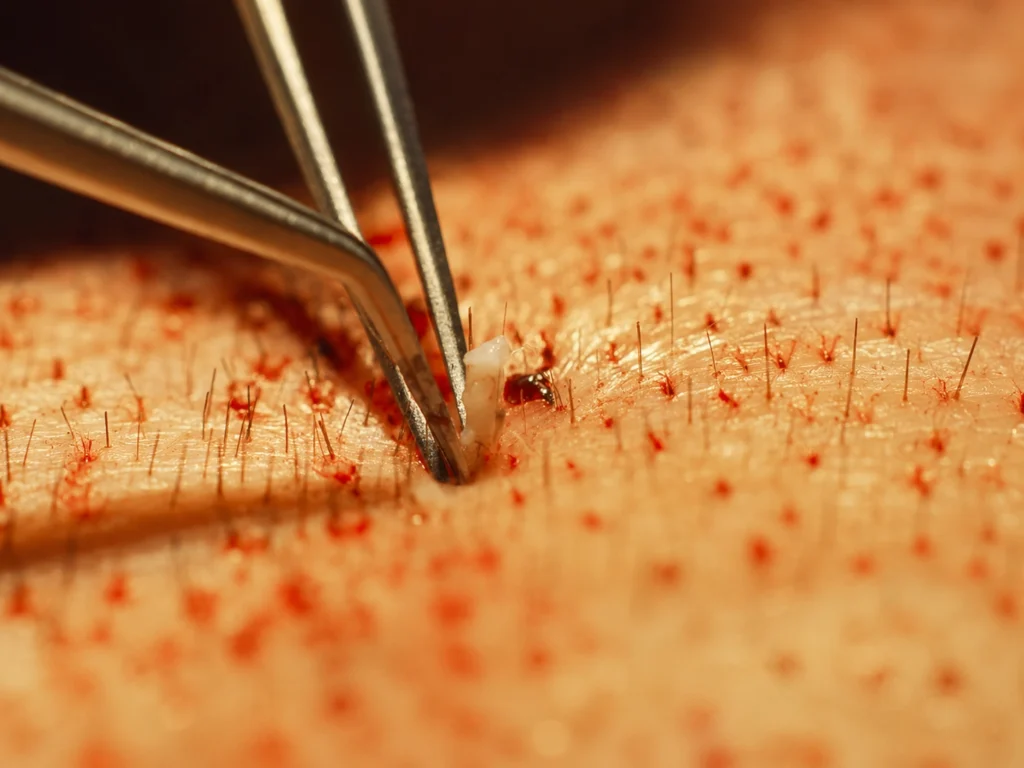
During extraction, the clinician removes each hair graft from the donor area with a small punch. The goal is to preserve the individual hair follicle and reduce trauma to surrounding tissue. Careful technique matters because damaged grafts may have lower survival.
Graft Sorting and Preparation
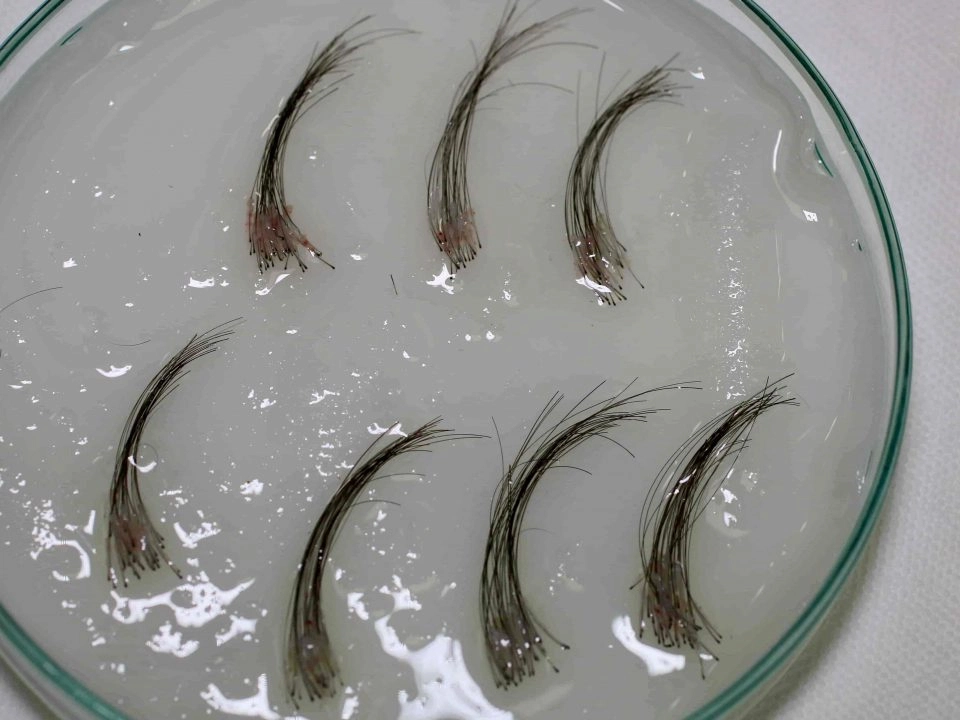
After removal, grafts are reviewed, organized, and kept in a controlled environment before placement. This helps protect the follicles while the recipient area is prepared. Grafts may be grouped by size so they can be placed where they look most natural.
Recipient Site Creation
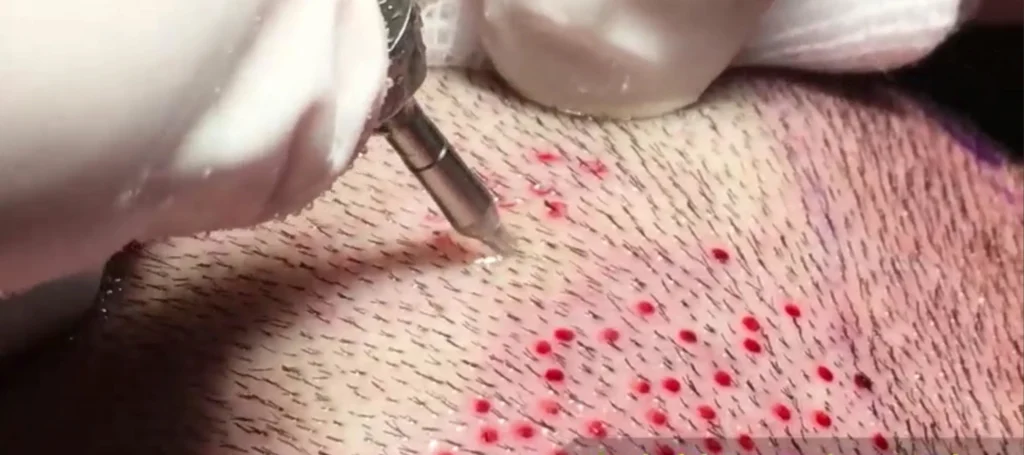
The physician creates recipient sites that guide angle, direction, depth, and density. This step affects how the transplanted hairs will grow and how natural the final pattern may look. Hairline work often requires extra precision because it is highly visible.
Graft Placement
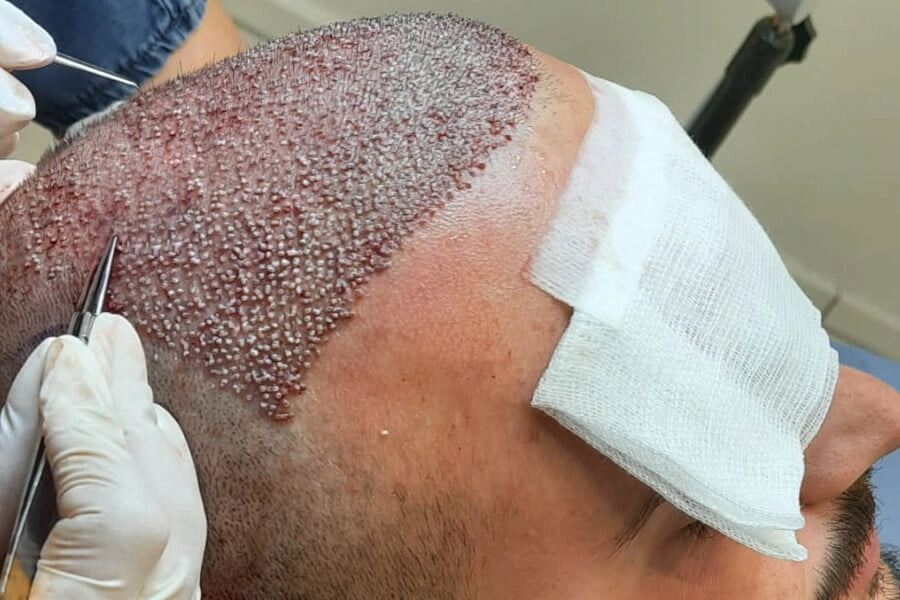
Prepared grafts are placed into the recipient area according to the treatment plan. Single-hair grafts are often used in more visible areas, while larger follicular units may be used to support density behind them. Good placement helps support natural-looking regrowth, especially along the frontal line.
Treatment Time and Comfort
A typical session can take 4 to 8 hours, depending on the number of grafts, the size of the recipient area, and case complexity. Smaller sessions may take half a day, while larger cases can take a full clinical day. Some patients require staged planning when the donor area or treatment goal calls for a more conservative approach.
Most patients receive local anesthesia before extraction and placement. This helps reduce discomfort during the session, though pressure, vibration, or mild pulling sensations may occur. After treatment, soreness, tightness, or tenderness can happen as part of normal post-procedural healing.
Who Is a Good Candidate
Not everyone with thinning hair is a good candidate for this treatment, especially in advanced cases where a bald hair transplant may require careful donor planning. A suitable candidate usually has a stable pattern of loss, enough donor supply, realistic expectations, and no medical condition that could increase healing or surgical risks.
Donor quality also affects planning. Coarser strands can sometimes create more visible coverage than finer strands, even with the same graft count. Patients with early, aggressive, or unclear shedding may need medical treatment or monitoring before surgery is considered.
FUE vs FUT
Both techniques move healthy follicles from the donor area to thinning or bald areas, but they differ in how grafts are removed.
- FUE: Removes follicles one by one using small punch tools. It usually leaves small dot-like marks, and recovery focuses on tiny extraction points.
- FUT: Removes a strip of scalp tissue through strip harvesting. Follicular Unit Transplantation (FUT) may allow for many grafts in a single session, but it leaves a linear scar and can lead to increased tightness in the donor area.
The right method depends on donor supply, graft needs, scarring concerns, hairstyle preferences, and the physician’s evaluation.
Areas That Can Be Treated
This technique can treat several areas, but each one requires different planning.
- Frontal Line: Requires careful design because it frames the face and affects overall balance.
- Crown: Can be more complex because strands grow in a circular pattern and may require more grafts for coverage.
- Beard and Mustache: Require precise angle control because facial growth patterns differ from scalp coverage.
- Eyebrows: Use small grafts placed at specific angles to match natural direction and density.
- Scars: May be treated when scar tissue has enough blood supply to support graft survival, though results can vary.
A conservative plan helps preserve donor supply for future needs.
Recovery Timeline
During the first 3 to 7 days, redness, swelling, small scabs, and scalp sensitivity are common. Patients usually follow specific washing instructions and avoid scratching, rubbing, heavy sweating, direct sun exposure, and intense exercise to protect the grafts, making post-hair transplant care an important part of early recovery.
By 2 to 4 weeks, many transplanted strands shed as part of the normal growth cycle, which is why patients often ask about hair fall after a hair restoration surgery. New visible growth often begins around 3 to 4 months, becomes more noticeable between 6 and 9 months, and continues improving up to 12 months or longer, depending on the case.
Are Results Permanent?
Yes, transplanted follicles are generally long-lasting when they survive the transfer process and come from a stable donor area. These follicles are typically more resistant to pattern loss, so they can continue growing in the treated area.
This does not stop future thinning in the surrounding native strands. Over time, that can change the overall appearance and may require medical therapy, follow-up care, or staged restoration.
Risks and Side Effects
As a surgical procedure, safety depends on medical oversight, patient selection, sterile technique, and follow-up. Common side effects can include swelling, redness, itching, scabbing, temporary shedding, and numbness, which are covered in more detail in this guide to side effects of hair transplant.
Less common problems can include infection, poor growth, unnatural direction, or visible donor thinning.
Graft survival depends on extraction quality, handling, placement, blood supply, and aftercare. Patients often compare Mexico, Turkey, the United States, and other destinations because regulations, clinic oversight, physician involvement, and follow-up systems can vary.
Monterrey can be a practical option for patients seeking treatment in Mexico because it offers access to established medical infrastructure, easier follow-up for regional patients, and care in a major northern business and healthcare center.
Cost Factors
Pricing in Mexico may differ from that in the United States or Turkey because operating costs, healthcare systems, and care models vary. Patients should compare what is included, not only the advertised graft number.
At Hair Transplant Mexico, Dr. Antonio Aguilar’s FUE pricing may range from $4,500 to $8,000 for a single area, such as the crown or hairline. A full FUE treatment may range from $6,000 to $10,000, while a single area plus full beard restoration may range from $5,500 to $9,000. A full beard procedure may range from $4,500 to $8,000, depending on the case.
The graft count is one of the main pricing factors. Complex cases may involve repair work, scar coverage, low donor density, or advanced frontal design.
Doctor Oversight in FUE Transplantation
Patients should ask which steps are performed by the physician and which are delegated to trained staff. In many systems, transplant surgeons may work with clinical teams, but medical responsibility should remain clear.
Hair Transplant Mexico is located in San Pedro, Monterrey, Mexico, an affluent area in northern Mexico where patients may seek physician-led care in a structured clinical setting.
Informed consent means the patient understands the benefits, limits, alternatives, risks, and expected recovery. Dr. Antonio Aguilar’s role at Hair Transplant Mexico can be described as physician-led evaluation and procedural planning. The most useful consultation explains what is possible, what is limited, and what should be monitored over time.
Schedule a free consultation with a qualified physician to review your hair loss pattern, donor area, treatment options, and expected timeline.