
Cost depends on graft count, technique, facility standards, and case complexity. Dr. Antonio Aguilar’s full FUE hair transplant cost ranges from $6,000 to $10,000. Results vary by donor density, texture, healing, and future loss.
This procedure does not create new follicles, so candidacy depends on what can safely be moved from the donor area. Patients with advanced loss may still qualify if they have a stable donor fringe, while patients with very limited supply may need alternatives or a more conservative plan.
Dr. Antonio Aguilar, a specialist in FUE Hair Transplant and Hair Restoration, evaluates donor supply, loss pattern, medical history, and expectations before developing a treatment plan.
Key Takeaways
- A transplant may help with advanced loss when the patient has enough stable donor supply, usually from the back and sides of the scalp.
- Complete scalp loss can limit surgery because the procedure moves existing follicles rather than creating new ones.
- Results depend on donor density, texture, graft survival, scalp health, and realistic coverage goals.
- FUE, FUT, DHI planning, and body donor use may be considered, but the right approach depends on medical evaluation.
- Cost varies by graft count, technique, physician involvement, facility standards, travel needs, and follow-up care.
Can You Get a Hair Transplant If Totally Bald?
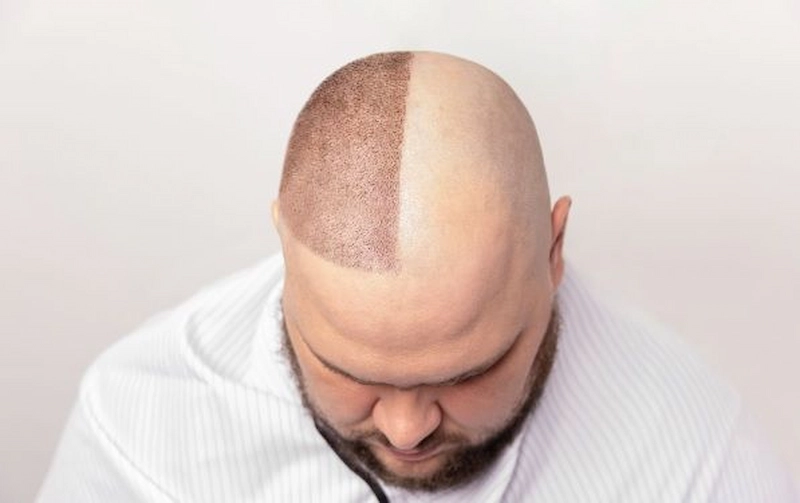
A totally bald scalp can make surgery difficult because transplantation depends on available donor follicles. This procedure does not create new follicles. It moves healthy units from one area to another.
Some patients use “totally bald” to describe no visible growth on top, but still have a stable donor fringe at the back and sides. Others have almost no usable follicles anywhere on the scalp, which may make surgery unsuitable. A medical exam helps define the difference.
A hair transplant for a bald head is only possible when enough grafts can be safely transplanted from the donor site. This is why the answer depends on donor supply, not only the size of the bare area. A patient with severe thinning may qualify, while a patient with no stable donor source may need scalp micropigmentation, a system, or medical management.
Can You Be Too Bald for a Hair Transplant?
Yes, some patients can be too bald for surgery to meet their goals. This usually happens when the donor area cannot provide enough follicles for the desired coverage. In that case, a full head of hair may not be realistic.
Doctors often use the Norwood scale to describe the stage of loss. Norwood 6 or 7 cases usually need more grafts than early-stage cases, and full coverage may not be possible. The plan may focus on the frontal zone or the mid-scalp rather than trying to cover every area.
How Doctors Evaluate Bald Patients
A doctor checks more than the visible pattern of loss. The evaluation includes the type of loss, scalp condition, donor density, medical history, expectations, and possible side effects. This process helps decide whether someone is a candidate for hair transplantation.
Stable loss is easier to plan than rapid thinning. If existing strands continue to weaken, the transplanted area may look isolated over time. Conditions such as alopecia areata, scarring alopecia, or active scalp inflammation may require medical control before surgery is considered.
Hair Transplant for Bald Men
This procedure often focuses on the areas that frame the face first. These areas include the frontal line, mid-scalp, and crown. The best plan depends on age, pattern, donor supply, caliber, and personal goals.
The frontal zone often receives priority because it affects facial framing. The crown may need multiple grafts because its growth pattern is circular and can continue to thin. Covering a large area with limited grafts creates lighter coverage, while treating a smaller area can create a stronger visual impact.
FUE and FUT for Baldness
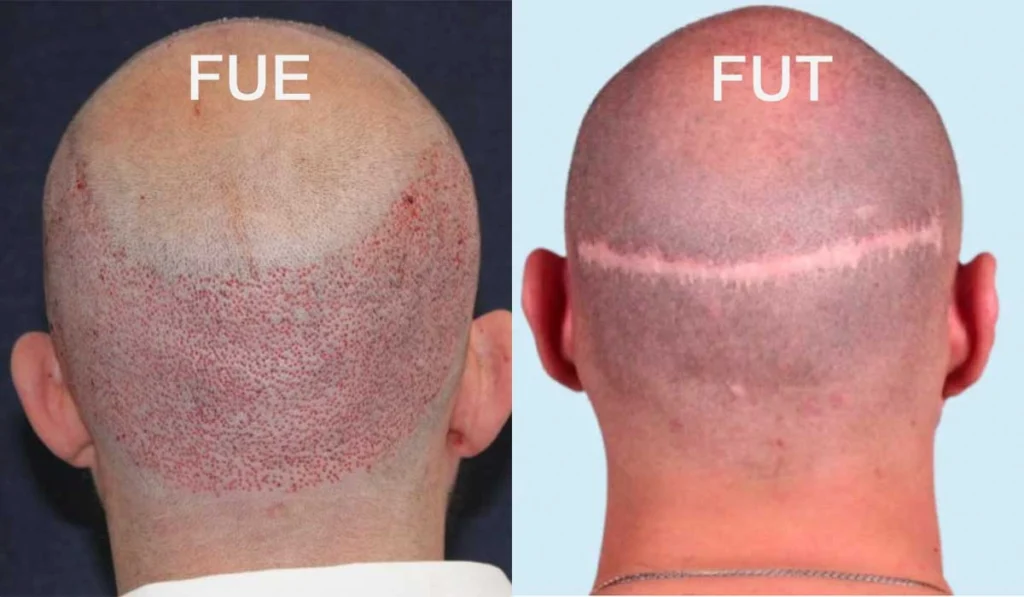
Different methods may fit different baldness patterns. The choice depends on donor supply, graft needs, scalp laxity, and scar preference.
- FUE: Fits mild to advanced thinning when patients want to avoid a long linear scar. It removes individual follicular units, but poor planning can thin the donor area.
- FUT: Fits selected advanced cases that need more grafts in one session. It requires enough scalp laxity and leaves a linear scar.
- DHI: Fits detailed placement areas, such as the frontal line. It uses implant pens, but it does not guarantee a specific result.
How Many Grafts Are Needed for Total Baldness?
Total baldness usually requires more grafts than the donor area can safely provide. This is why full scalp coverage may not be realistic, even with staged planning.
In these cases, doctors often prioritize the frontal area and mid-scalp first. Graft numbers can be misleading because a single graft may contain one, two, three, or more strands, and the final appearance also depends on texture, contrast, placement angle, and blood supply.
Bald Hair Transplant Cost
The cost of a hair transplant depends on graft count, technique, medical team, facility standards, and follow-up. Dr. Antonio Aguilar’s full FUE cost ranges from $6,000 to $10,000. Monterrey may be a practical option for patients who want physician-led care in Mexico with structured follow-up, but travel and medical planning should still be reviewed before treatment.
Bald Hair Transplant Results
Results vary because each patient has a different donor supply, scalp features, and healing patterns. Transplanted hair usually sheds before it regrows, and visible hair growth often begins months after surgery. Final density can take a year or longer.
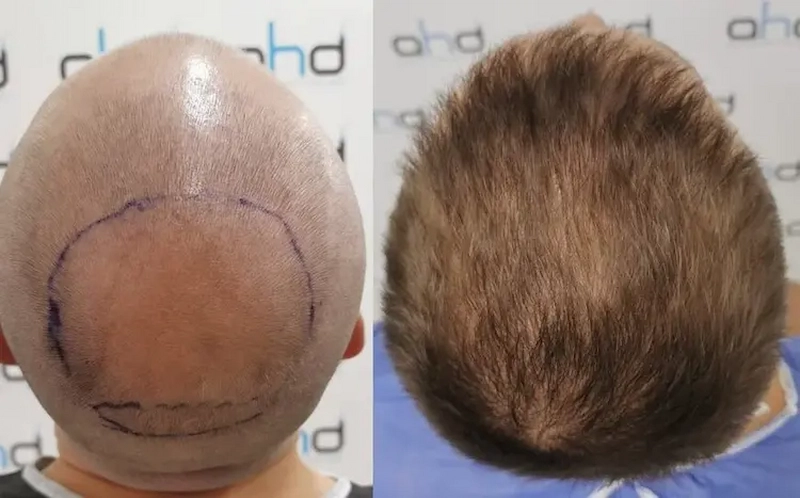
Before-and-after photos should be reviewed with context. A useful comparison should include the number of grafts, time since surgery, loss stage, donor area condition, and similar texture. A Norwood 3 case does not predict the result of a Norwood 6 or 7 case.
Is a Hair Transplant Permanent?
A hair transplant can be long-lasting when healthy donor follicles survive and continue to grow in the new area. Transplanted hair usually keeps many traits from the donor area, which is why donor selection matters. In stable donor zones, these follicles are generally more resistant to male pattern baldness.
The result is not always “permanent” for the whole scalp. Native strands around the transplanted area can still thin over time, so some patients may need medication, PRP, or future planning. Permanence should be discussed as part of long-term care, not as a guaranteed outcome.
Can Body Hair Be Used?
Body donor follicles can be used in some advanced cases when scalp donor supply is limited. Beard follicles may add density in selected areas, while chest or other body follicles may provide support in specific cases. These follicles can differ in texture, length, growth cycle, and predictability.
Body donor follicles usually work better as support than as the main source of coverage. They may help behind the frontal zone or in less visible areas. They do not replace careful scalp donor planning.
Choosing a Bald Hair Transplant Surgeon
Choosing a surgeon requires more than just checking photos. Patients should consider medical training, procedural involvement, safety protocols, and follow-up. In some cases, a plastic surgeon may be involved in broader cosmetic planning, but hair restoration requires specific graft and donor expertise.
Doctor-led procedures matter because design, donor planning, anesthesia decisions, and complication management require medical judgment. Patients should ask who designs the frontal line, who extracts and places the grafts, how many grafts are realistic, what risks apply, and how follow-up is handled. These questions help patients understand how a hair transplant works in their specific case.
Alternatives for Severe Baldness
Not every patient is a good surgical candidate. Alternatives can help when donor supply is weak or when goals exceed what surgery can provide. These options may also support surgery in selected cases.
Common hair transplant alternatives include:
- Scalp micropigmentation: Creates the look of short stubble, but it does not grow follicles.
- Medication: May help slow active thinning in selected patients, but it does not replace missing follicles.
- PRP therapy: May support scalp health and early growth in some cases, but results vary.
- Hair systems: Provide immediate coverage without surgery, but they require maintenance over time.
A transplant can help selected patients with advanced loss, but the right plan depends on donor supply, medical evaluation, and realistic goals. To understand your options, schedule a consultation with Dr. Antonio Aguilar at Hair Transplant Mexico.