

The biggest change is the stronger shape of the frontal area compared with earlier footage that showed more recession. Public sources have not confirmed his graft count, exact method, cost, or clinic. Hair Transplant Mexico, based in San Pedro Garza García, Monterrey, provides clinical context on these topics, where Dr. Antonio Aguilar performs FUE procedures and has more than 10 years of experience.
Key Takeaways
- Mizkif confirmed that he had a restoration procedure in 2024, and later images show more coverage at the front of the scalp.
- He did not publicly confirm his exact method, graft count, cost, or clinic. Treat these details as estimates.
- The clearest change appears around the front and temples, but photos alone cannot measure graft survival or final density.
- Results often take several months to develop. Donor density, surgical planning, healing, and follow-up can all affect growth.
- Patients comparing clinics or countries should look at doctor involvement, medical oversight, follow-up, and care quality, not price alone.
Did Mizkif Get a Hair Transplant?
Yes. Matthew Rinaudo, better known as Mizkif, confirmed the procedure in a June 2024 video titled “I Finally Got a Hair Transplant.” The American Twitch streamer and YouTuber also helped found the creator group One True King.
His own statement makes this different from cases based only on rumors or photos. Readers comparing celebrity restoration cases can also review Mingyu’s hair transplant for another example of how visible changes can be assessed from public images.
Some medical details are still unknown, including his diagnosis, graft count, surgical plan, and exact method. It is also unclear whether he uses any long-term treatment for ongoing hair loss.
Mizkif Before His Hair Transplant
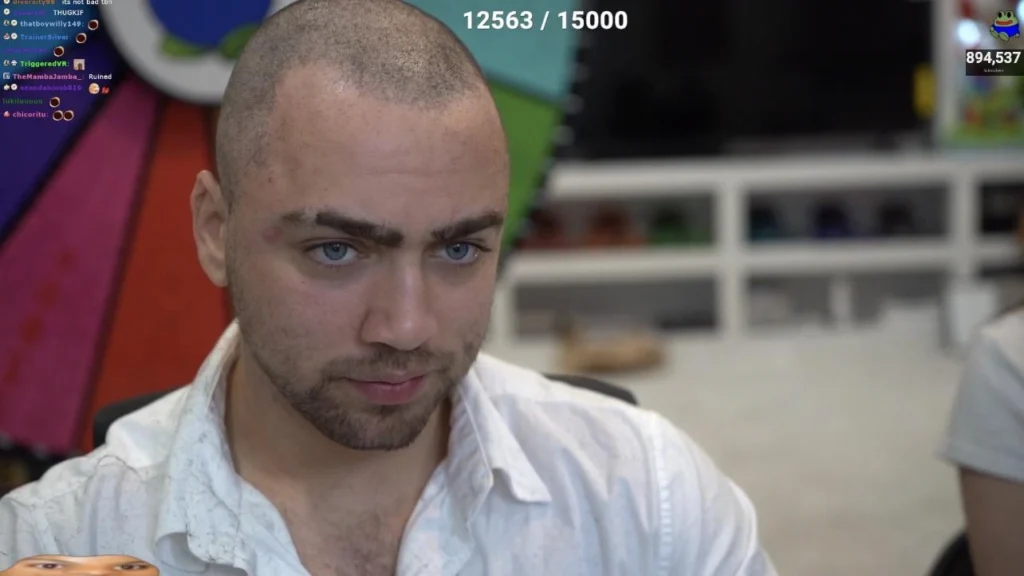
Older photos and videos showed more scalp around the front and temples. This can look like frontal recession or thinning, but photos cannot show the exact cause. A doctor would need to examine the scalp, review medical history, assess the donor area, and evaluate the pattern of loss.
This matters because surgery moves healthy follicles from one area to another. It does not stop natural thinning in untreated areas. A treatment plan should consider both current loss and how it may change later.
Mizkif Hair Transplant Before and After
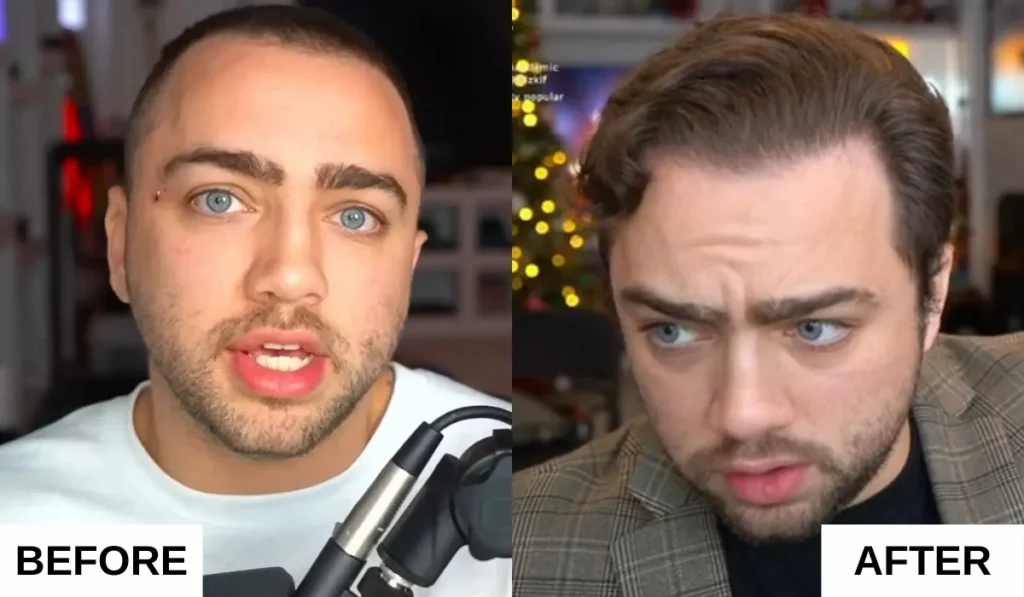
The clearest visual change is at the front of the scalp. Older images show more open space near the front of the scalp, while newer images show stronger coverage. Lighting, hairstyle, hair length, and camera angle can change how these results look in photos.
Changes in Mizkif’s Hairline
The frontal edge looks fuller and more even in later footage. The corners also look less open in some images. These changes fit with frontal restoration, but they do not show how many grafts were placed.
Mizkif Hair Transplant Results
Later images show visible growth in the treated area. A natural-looking result depends on more than hair transplant density. Doctors must also consider growth direction, angle, spacing, donor supply, and nearby natural strands.

Did Mizkif’s Hair Transplant Fail?
There is no strong public evidence that the procedure failed. Early shedding and uneven growth are common during recovery. Results can look poor in the first few months, even as new growth develops.
How Long Do Results Take?
Transplanted strands often shed during the first few weeks after surgery. New growth usually appears over several months. Many patients see clear changes between six and nine months, while final growth may take about 12 months.
Why Hair Transplant Results Vary
Results can differ based on donor density, strand thickness, curl, scalp health, graft care, and healing. Natural strands may also keep thinning after surgery. This is why a doctor must review each case and plan follow-up care.
Mizkif’s Hair Transplant Procedure
He confirmed having surgery, but he has not shared enough medical details to confirm every step. Doctor involvement matters because the procedure includes diagnosis, donor planning, hairline design, graft placement, and post-surgery care. These steps can affect both safety and the final look.
When comparing clinics, patients should examine:
- Who performs the main surgical steps
- The doctor’s training and role
- The follow-up plan after surgery
- How risks and limits are explained
Where Did Mizkif Get His Transplant?
Reliable public sources have not clearly confirmed the exact clinic and location. Patients comparing Mexico, Turkey, or the United States should consider doctor oversight, local regulations, follow-up, and who performs each part of the surgery. Standards and clinic models can vary within every country.
For many North American patients, Mexico can involve less travel than more distant medical tourism locations. This may make in-person follow-up easier in some cases. Patients should still compare each clinic’s medical standards and care process.
What Technique Was Used?
The exact method has not been confirmed. Follicular unit extraction, or FUE, removes small groups of follicles one by one from the donor area. DHI (direct hair implantation) often refers to placing grafts with an implanter pen after removal.
Implanter pens help doctors place grafts into the target area. They can help control depth, angle, and direction during placement. No tool or method can guarantee a better result for every patient.
How Many Grafts Did Mizkif Receive?
No confirmed graft count is available. Some online estimates place the number near 2,500 to 3,000 grafts based on changes seen at the front of the scalp. These figures are guesses and should not be treated as confirmed medical facts.
A patient’s graft needs cannot be based on another person’s case. The number depends on the area size, current density, donor supply, strand type, and future loss. A doctor must examine these factors before making a plan.
How Many Transplants Has Mizkif Had?
His own public comments and video support one procedure. Reliable public information does not confirm that he has had more than one surgery or undergone a second hair transplant. Any claims about extra sessions should stay unconfirmed unless a reliable source provides proof.
If you are considering hair restoration, a medical evaluation can help determine your donor supply, pattern of loss, and treatment options. Schedule a free consultation with Hair Transplant Mexico to review your case with a qualified physician.