
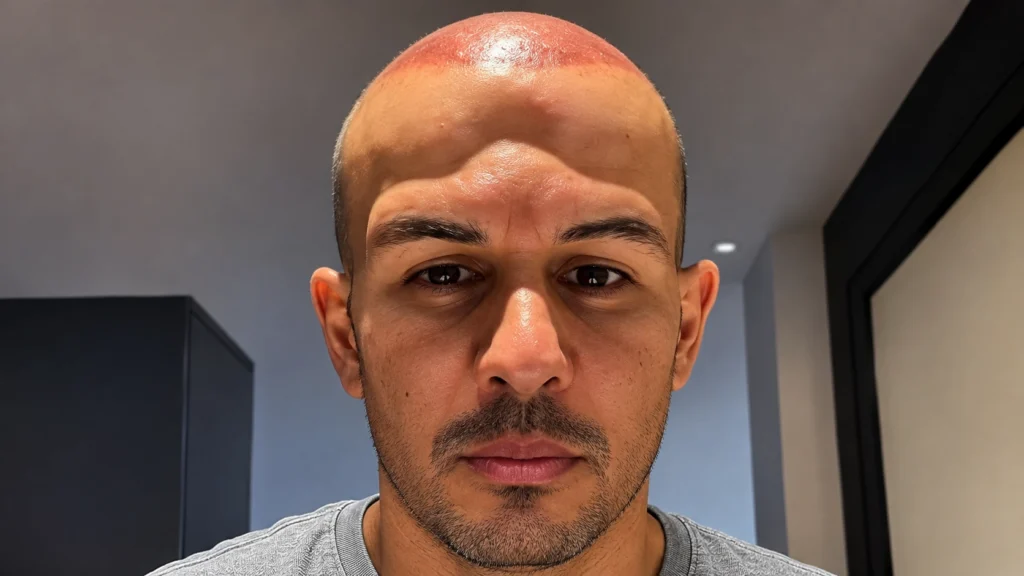
Keeping your head elevated, avoiding heavy exercise, and using cold compresses as directed may help reduce swelling. Doctors may also prescribe medication to control inflammation. Seek medical care for severe swelling, fever, worsening pain, or vision changes. Hair Restoration Mexico is located in San Pedro Garza García, Monterrey, where Dr. Antonio Aguilar performs FUE hair transplants.
Key Takeaways
- Facial swelling is a common side effect caused by inflammation and fluid buildup after surgery.
- Swelling often starts within 1–3 days, peaks around days 2–4, and improves within 5–7 days.
- Fluid can move down from the scalp to the forehead, eyelids, nose, and cheeks.
- Sleeping with your head raised, avoiding heavy exercise, and using cold compresses away from new grafts may help manage swelling.
- Severe swelling, fever, worsening pain, or vision changes may signal a problem that needs medical care.
Is Facial Swelling Normal After a Hair Transplant?
Yes, mild to moderate swelling is normal after hair transplant surgery. A swollen face after a hair transplant often results from fluid buildup and the body’s healing response. The amount of swelling depends on the number of grafts, the treatment area, and how each person heals.
Swelling can occur after follicular unit excision (FUE) and follicular unit transplantation (FUT). Direct hair implantation (DHI), which uses special pens to place follicles, may also cause swelling. No method can fully prevent this side effect.
Doctors may use a grading system to describe how far swelling has spread. A study in the Journal of Cutaneous and Aesthetic Surgery used the following grades:
| Grade | Areas Affected |
|---|---|
| Grade 0 | No visible swelling |
| Grade 1 | Upper forehead |
| Grade 2 | Upper and lower forehead |
| Grade 3 | Around the eyes |
| Grade 4 | Swelling around the eyes with marked bruising |
These grades describe where swelling appears and how severe it looks. They don’t always mean a patient has a complication. Pain, fever, redness, and changes over time also help doctors assess recovery.
Why Does Your Face Swell After Surgery?
During hair transplant surgery, the doctor makes small openings in the scalp to remove and place hair follicles. The body sends more blood and fluid to these areas to support healing. This process can cause temporary swelling, a common symptom discussed in our guide to hair transplant swelling.
Doctors also inject a tumescent solution into the scalp before or during surgery. This fluid often contains saline, local anesthetic, and sometimes medicine to reduce bleeding. Some of the fluid stays in the tissue briefly after surgery.
Gravity can cause this fluid to move from the scalp toward the face. The amount of swelling depends on how much fluid was used and how the tissue responds. Larger procedures may cause more noticeable symptoms.
Forehead, Eye, and Eyelid Swelling
The forehead often swells first because it sits just below the treated scalp. Fluid may then move toward the eyelids, nose, and cheeks. This explains why some patients notice more swelling around their eyes a few days after surgery.
The eyelids may feel heavy or look puffy. Mild bruising can also appear around the eyes. Seek prompt medical care for severe eye pain, vision changes, or major trouble opening the eyes.
How Long Does Facial Swelling Last?
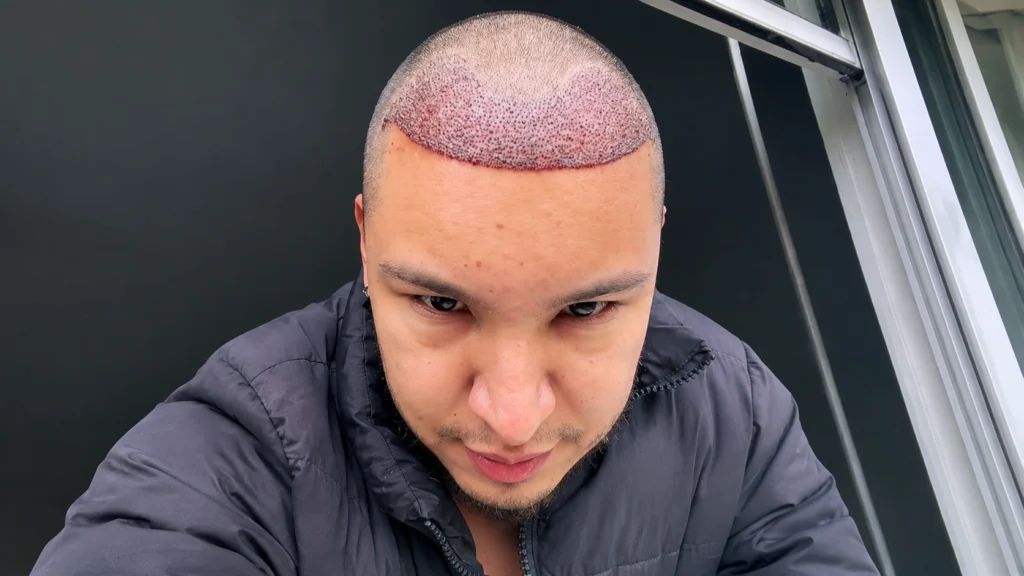
Most patients see swelling improve within 5–7 days. Some may have mild symptoms for up to 10 days or longer. Swelling often starts in the first 48 hours and becomes more visible around days 2–4.
A clinical review of FUE complications reports that swelling often peaks around days 2–3 and usually clears within 5–7 days. Hair transplant recovery can vary by procedure and the patient’s healing process.
| Recovery Period | What to Expect |
|---|---|
| Day 1 | Mild scalp tightness or early forehead swelling |
| Days 2–3 | Swelling increases and may reach the eyelids |
| Day 4 | Forehead and eye swelling may still be visible |
| Days 5–7 | Swelling usually starts to decrease |
| Days 8–10 | Most visible swelling has cleared in many patients |
| Days 11–14 | Some patients may still have mild puffiness |
| After 14 Days | Ongoing swelling should be checked by a doctor |
This timeline shows a common recovery pattern, not a fixed schedule. Some patients heal faster, while others need more time. See a doctor if swelling worsens or is accompanied by unusual symptoms.
Is Swelling Normal on Day 4?
Yes, swelling on day 4 can be normal after a hair transplant. Fluid may still move down from the scalp, causing puffy eyelids even as forehead swelling begins to fade.
Soft swelling without fever, increasing pain, or spreading redness often reflects normal healing. Patients should look for gradual improvement over the next few days. Sudden or severe changes need medical attention.
How to Reduce Facial Swelling
Facial hair transplant swelling treatment aims to ease discomfort and protect new follicles. Common preventive measures include sleeping with your head raised, using cold compresses, and avoiding heavy activity. These steps may help, but results vary between patients.
Keep your head raised. Many doctors advise sleeping with the head and upper body raised during the first few nights. Use pillows or a reclining chair to stay in this position. Avoid sleeping face down or putting pressure on the treated scalp.
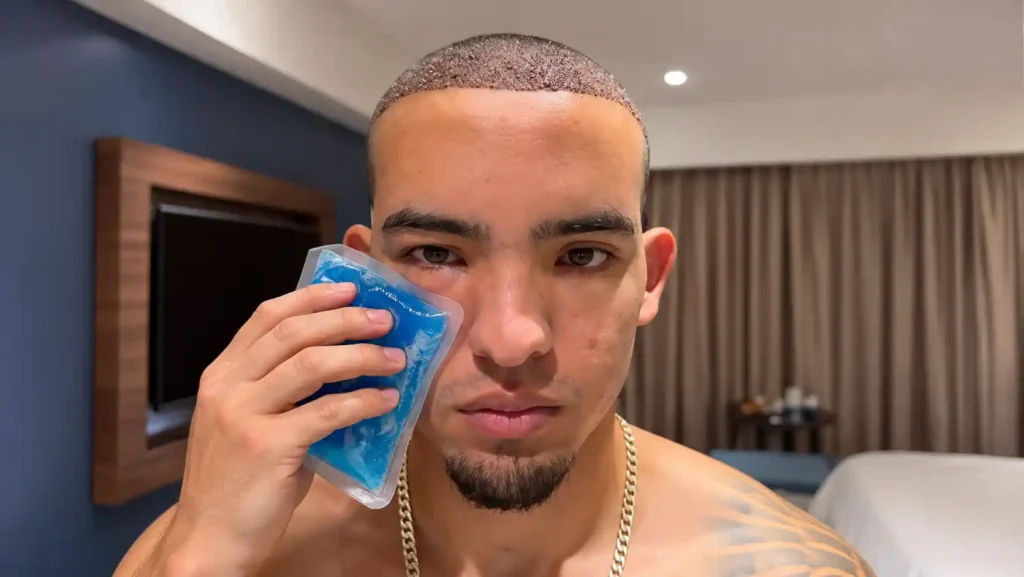
Use cold compresses carefully. Some doctors allow wrapped ice packs on areas away from the new grafts. A cold pack or bag of frozen peas may ease discomfort, but it should never press against the treated area. Follow your doctor’s advice on where and how long to apply cold packs.
Avoid heavy activity. Lifting heavy objects, intense exercise, and repeated bending may increase pressure around the scalp. Limit these activities until your doctor says it is safe to resume them. Light movement is often fine when allowed.
Take prescribed medicine as directed. Doctors sometimes use corticosteroids to reduce inflammation and swelling. These medicines are not suitable for everyone and should only be used under medical care.
A 2010 study in the Journal of Cutaneous and Aesthetic Surgery, titled Hair Transplantation: Preventing Post-operative Oedema, enrolled 340 patients and analyzed 308 after excluding some. The study found less swelling in patients who received triamcinolone in the tumescent solution used during surgery.
The same study found that physical methods alone, such as certain sleeping positions and ice packs, did not prevent swelling as well. These methods may still provide comfort, but their effect on swelling is less certain. Patients should follow their doctor’s care plan rather than trying new treatments on their own.
When Is Facial Swelling Dangerous?
Most swelling after surgery goes away without serious problems, although patients may experience other side effects of a hair transplant during recovery. In rare cases, severe or worsening swelling may signal infection, bleeding under the skin, or an allergic reaction. Doctors assess your symptoms and how they change to determine the cause.
Warning signs include spreading redness, warmth, severe pain, fever, and fluid or pus coming from the wounds. Hard or rapidly growing swelling may mean blood has collected under the skin. These symptoms need medical care, not home treatment.
When to Seek Medical Attention
Contact your surgeon if swelling gets worse after it starts to improve or lasts longer than expected. Fever, increasing pain, unusual drainage, or major swelling on one side of the face also need medical attention. Severe eye pain or vision changes require urgent care.
Seek emergency help if you have trouble breathing, tongue or throat swelling, or sudden facial swelling with signs of an allergic reaction. Patients who travel for surgery should know where to get medical care near home. Follow-up visits help doctors check healing and spot problems early.
Does Facial Swelling Affect Hair Transplant Results?
Normal swelling does not usually harm hair grafts or stop new hair from growing. The fluid mainly affects the tissue around the treated area while the follicles begin to heal. Avoid rubbing, scratching, or pressing on the scalp during early recovery.
Severe infection, major inflammation, or injury can harm healing and may affect graft survival. Following washing instructions, taking prescribed medicine, and keeping follow-up visits can help protect the treated area. Final results depend on donor hair quality, graft handling, surgical skill, and how well the scalp heals.
Patients comparing hair restoration in Mexico, the United States, or Turkey should consider physician involvement, medical regulations, clinic oversight, and follow-up care. Access to a doctor after surgery matters because some problems may appear days after the procedure.
To learn more about hair transplant recovery and what to expect after surgery, schedule a free consultation with Hair Restoration Mexico. Our medical team can assess your needs, explain the procedure, and answer your questions about healing and aftercare.