
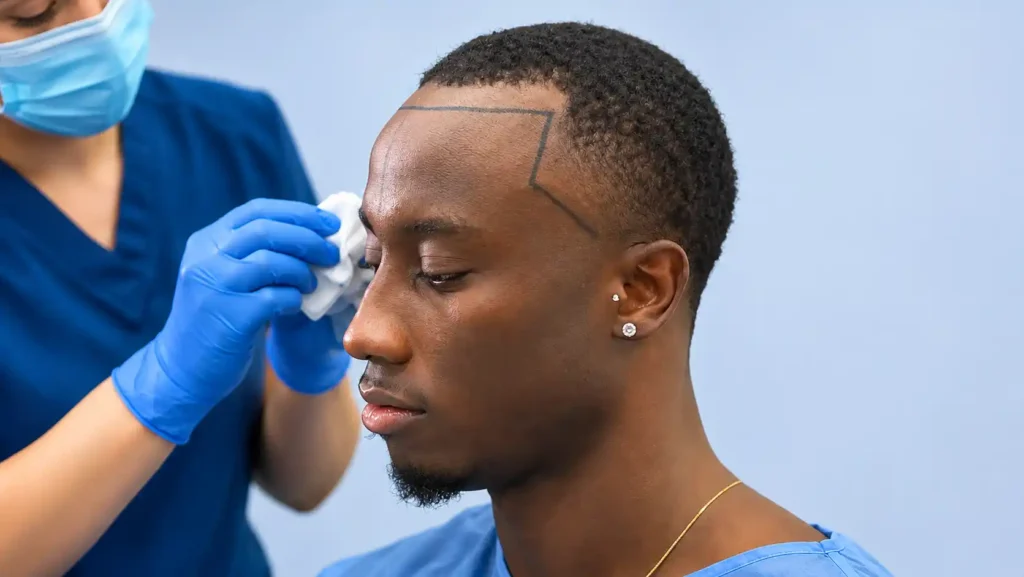
In the United States, costs can range from $4,000 to over $15,000, while Hair Restoration Mexico, located in San Pedro, Monterrey, is another option for patients comparing costs and medical care. Patients with central centrifugal cicatricial alopecia (CCCA) need a medical exam before surgery because active scalp disease can affect results.
Key Takeaways
- African American men and women can receive hair transplants for pattern baldness, traction alopecia, and some stable forms of scarring hair loss.
- Afro-textured hair often has curved roots that require careful removal to prevent damage and support natural-looking results.
- FUE and FUT can both restore hair. The right method depends on hair structure, donor supply, scarring concerns, and medical needs.
- New hair growth often begins after 3–4 months. Fuller results may take 12–18 months, depending on healing and graft survival.
- Costs vary based on graft count, technique, and location. Patients should also compare doctor involvement, clinic safety, and follow-up care.
Can African Americans Get a Hair Transplant?
Yes, a hair transplant for African Americans can restore hair in areas affected by permanent hair loss. The surgeon moves healthy hair follicles from the back or sides of the scalp into bald or thinning areas. These follicles can grow new hair once they heal.
Not everyone is a good candidate. A doctor must check donor hair, scalp health, medical history, and the cause of hair loss. African American hair restoration also requires careful planning to match the patient’s natural hairline and curl pattern.
How African American Hair Affects Transplantation
Afro-textured hair often grows in tight curls, while the roots can curve beneath the skin. These curves can make hair removal harder because the root may grow in a different direction from the visible strand. Surgeons must consider each patient’s hair shape, scalp, and root depth when planning the procedure.
Curly Follicles and Graft Extraction
Curved follicles need careful removal to prevent damage. Transection happens when a surgical tool cuts through a follicle during extraction. A 2016 study involving 18 patients found that a curved extraction tool caused less follicle damage than standard tools in the group studied.
This research shows why surgeons may need to adjust their tools and methods for curly hair. The best approach depends on the patient’s follicle shape and the surgeon’s experience.
Hair Density and Natural Coverage
Curly hair can make the scalp look fuller because each strand takes up more space. Some patients may need fewer grafts to achieve good visual coverage, but this varies by person. Hair thickness, curl shape, donor density, and scalp color all affect how full the hair looks.
Who Is a Good Candidate?
Good candidates have enough healthy donor hair, stable hair loss, and realistic goals. A hair transplant surgeon checks the scalp and donor area to see whether surgery is suitable. Patients with active scalp disease may need treatment before having a transplant.
Common Causes of Hair Loss
Androgenetic alopecia, also called pattern hair loss, causes gradual thinning in both men and women. Traction alopecia occurs when tight braids, weaves, or other hairstyles pull on the hair for long periods. Early cases may improve when the pulling stops, but severe cases can cause permanent hair loss.
Central centrifugal cicatricial alopecia (CCCA) is a form of scarring hair loss that often starts at the crown. It is more common in Black women and can destroy follicles over time. The American Academy of Dermatology explains that early treatment can help stop further damage.
Patients with CCCA need to control the disease before considering surgery. Even after the condition becomes stable, transplanted follicles may not grow as well in scarred areas.
Hair Transplants for Black Men and Women
African American men often seek treatment for receding hairlines, thinning temples, or crown hair loss. African American women may experience thinning caused by tight hairstyles, pattern hair loss, or scalp conditions.
Learn more about hair transplants for Black women and how these conditions affect treatment options. Each patient needs a plan based on the cause of hair loss and the amount of healthy donor hair.
The surgeon must design a hairline that suits the patient’s face and natural growth pattern. Beard, mustache, and eyebrow transplants are also possible in some cases. These areas need different graft placement angles and careful planning.
FUE vs. FUT for African American Hair
Follicular unit extraction (FUE) and follicular unit transplantation (FUT) are two common ways to restore lost hair. Both methods move healthy follicles from a donor area to thinning or bald areas. The choice depends on hair shape, donor supply, scar preferences, and the surgeon’s experience.
FUE Hair Transplant
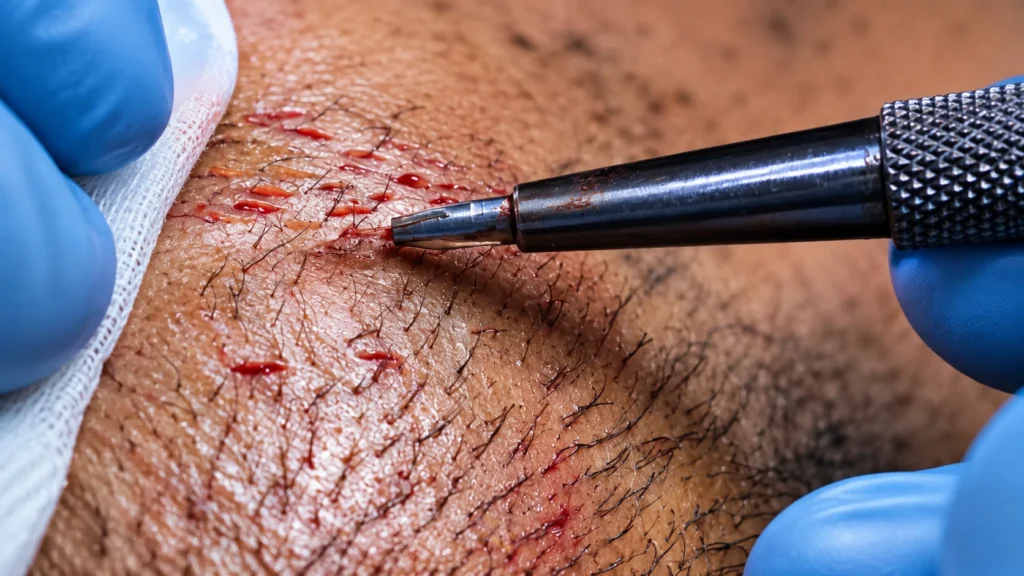
FUE removes follicles one at a time using small surgical tools. Curved roots can make this process harder, so the surgeon must adjust the tool’s angle to avoid damage. FUE leaves small scars across the donor area instead of one long scar.
Direct Hair Implantation (DHI) is another method for placing grafts after extraction. It may use a pen-shaped tool to insert follicles into the scalp. DHI can be used with FUE harvesting, but the tool itself does not guarantee better growth.
FUT Hair Transplant
FUT removes a thin strip of skin and hair from the donor area. The surgical team then separates the strip into small grafts under a microscope. This allows them to see the curved roots while preparing the follicles.
FUT leaves one long scar where the strip was removed. The scar may be more visible when the patient wears very short hair.
Risks, Scarring, and Complications
Possible side effects of a hair transplant include infection, swelling, folliculitis, poor hair growth, and visible scars. Some patients may also develop thick or raised scars called keloids. A doctor should review the patient’s skin and scar history before surgery.
A medical review of curly hair transplantation explains why surgeons must consider hair shape, tools, and possible complications. Careful graft handling and medical supervision help reduce avoidable risks.
Patients comparing clinics in Mexico, Turkey, or the United States should check who performs the surgery and understand how hair transplant safety in Mexico is evaluated.
They should also ask about safety standards, medical supervision, and follow-up care. Rules and clinic practices can vary by country and provider.
African American Hair Transplant Before and After
Before-and-after photos can show changes in hairline shape, coverage, and hair density. Natural-looking results depend on placing follicles at the right angles and following the patient’s natural growth pattern. Photos are easier to compare when lighting, angles, and hair length are similar.
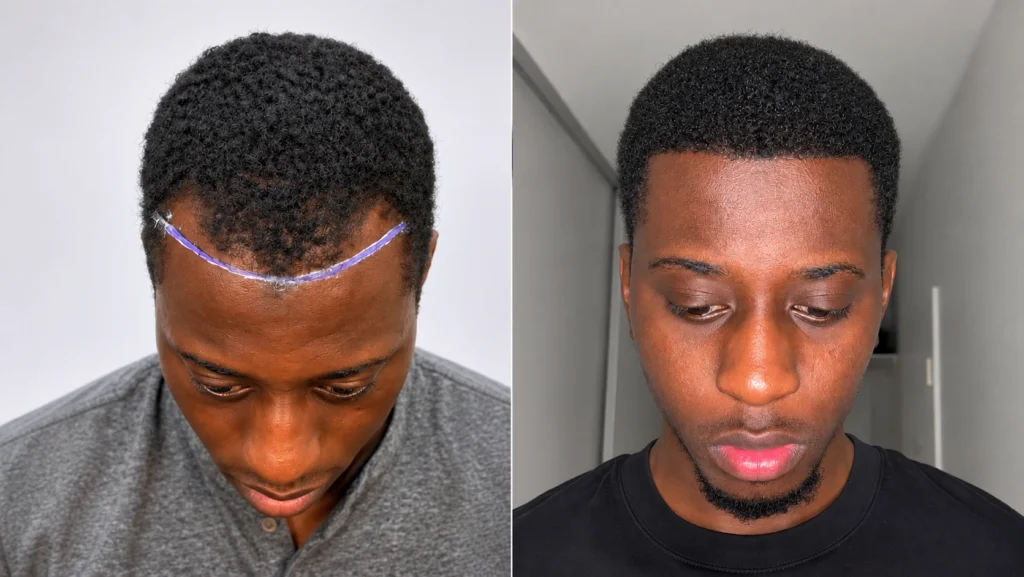
Patient cases are more helpful when they show the number of grafts, method used, and time since surgery. Transplanted hairs usually keep the curl pattern and texture of the donor hair. Results vary, and surgery does not stop future hair loss in untreated areas.
Celebrity cases, such as Deion Sanders’ hair transplant, can provide additional context about hair restoration, but individual results vary.
Recovery and Hair Growth Timeline
Most patients have mild pain, redness, and small scabs during the first 7–14 days. Some transplanted hair shafts fall out during the first few weeks, which is normal during recovery. The follicles may remain healthy beneath the skin and grow new hair later.
New growth often starts around months 3–4. Hair usually thickens over the following months, with fuller results appearing within 12–18 months. The American Academy of Dermatology notes that many patients see clear results within 6–9 months, although healing times differ.
How Much Does a Black Man’s Hair Transplant Cost?
The cost depends on the number of grafts, treatment area, and surgical method. At Hair Restoration Mexico in San Pedro, Monterrey, a single-area FUE hair transplant costs $5,000 USD, while a full FUE hair transplant costs $6,000 USD. Both prices include hotel accommodations, private transportation, and follow-up consultations.
Dr. Antonio Aguilar performs FUE hair transplants at the clinic and is a member of the International Society of Hair Restoration Surgery (ISHRS). A medical evaluation helps determine whether surgery is appropriate, how many grafts patients need, and what results they can reasonably expect.
If you’re considering a hair transplant, schedule a consultation with Hair Restoration Mexico. Dr. Antonio Aguilar can assess your hair loss, evaluate your donor area, and explain which treatment options may suit you.