
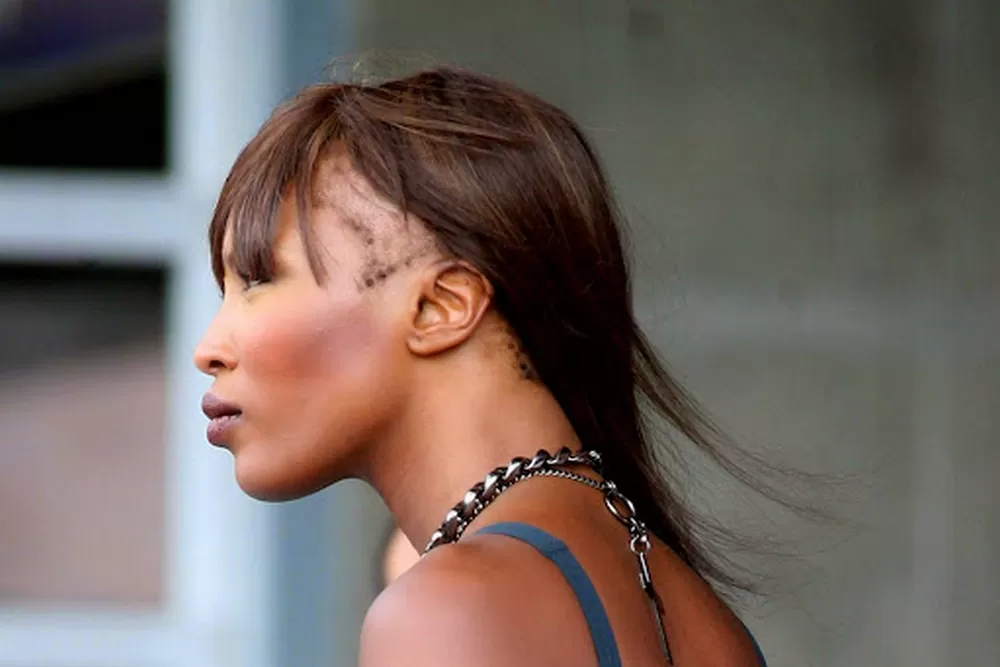
Results depend on graft survival, recipient site design, curl direction, and follow-up care. Patients should expect gradual growth, variable density, and a timeline measured in months. Hair Restoration Mexico is located in San Pedro, Monterrey, Mexico, an affluent area in northern Mexico, where Dr. Antonio Aguilar evaluates these factors during treatment planning.
Key Takeaways
- Surgical restoration may help with traction alopecia, thinning edges, selected crown loss, and scar coverage when the donor supply is healthy and scalp inflammation is controlled.
- Afro-textured strands require careful surgical planning because curved follicles can be harder to extract and implant without damage.
- A physician should identify the type of hair loss before surgery, especially when conditions like central centrifugal cicatricial alopecia may be present.
- Results vary based on diagnosis, graft survival, recipient site design, curl direction, and follow-up care.
- Patients researching care in Mexico should compare physician involvement, clinic oversight, surgical planning, and continuity of care, not only cost or location.
Can Black Women Get Hair Transplants?
Yes, black women can be candidates when the cause of loss is stable, and the donor supply is sufficient. The key question is not only whether hair transplants work, but whether the scalp can support safe grafting. Hair loss in Black women can come from traction, genetics, inflammation, scarring, heat damage, or chemical injury. Each cause affects treatment planning differently.
Traction alopecia often affects the edges, temples, and frontal zone after years of tension from tight styles. Central centrifugal cicatricial alopecia often starts at the crown and may create scarring. Genetic thinning may affect the part line, crown, or frontal region. Breakage from heat or relaxers can look like thinning, but it does not always mean the hair follicles are permanently damaged.
Hair Transplant for an African American Woman
This procedure requires planning around curl pattern, follicle shape, and donor supply. African American patients may have tightly curved follicles that curve beneath the skin, making extraction more challenging.
The surgeon must protect each graft during removal and place it in recipient sites that match the natural growth direction. This is essential for African American hair restoration near the edges, temples, and frontal zone.
In FUE, the physician removes individual follicular units from the donor area. FUE can avoid a linear scar, but it requires a precise punch angle when follicles are curved.
DHI (Direct Hair Implantation) uses an implantation pen to place grafts, but the tool itself does not guarantee a better result. FUT may yield more grafts per session, but it can leave a linear scar.
Evaluation and Candidacy
Evaluation starts with identifying the type of hair loss. A physician reviews scalp inflammation, scarring, density, donor strength, styling history, and prior treatments.
Surgery may not help if scarring alopecia remains active, the donor area is weak, or expectations are not realistic, which is why physicians must identify who is not a good candidate before planning grafting.
In unclear cases, a biopsy may help guide diagnosis and reduce the risk of being declined for surgery after further medical review.
Dr. Antonio Aguilar, a physician focused on FUE Micrografting and restoration procedures, evaluates whether grafting can be planned safely. A personalized plan should explain the treatment area, the estimated graft range, the technique, the expected density, and the limits.
It should also explain whether medical treatment is needed before or after hair transplant surgery, or whether non-surgical options may be more appropriate. This helps the patient understand what the procedure can and cannot change.
Common Treatment Areas
Women often research restoration for edges, frontal thinning, crown loss, eyebrows, and scars. Edges need soft density and careful angle control, not a harsh straight line.
Crown work may be more complex when CCCA is involved because disease control takes precedence over graft placement. Scar coverage depends on blood supply, tissue quality, and the graft’s ability to grow in the area.
Eyebrow restoration uses fine grafts placed at shallow angles. The result depends on direction control and the donor texture used. Some planning principles also apply to African American men, especially when treating the beard, mustache, or frontal zones. Still, women often need different density planning because styling goals may differ.
Results, Longevity, and Before-and-After Photos
Female results can be strong when the diagnosis is clear, donor supply is stable, and grafts are handled well. Transplanted follicles can grow long-term when they come from stable zones, but new thinning can still occur in untreated areas.
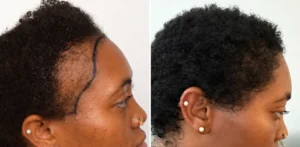
Before-and-after photos can help patients review density, curl blending, and shape. They should show similar hair loss patterns, similar texture, and clear time points.

Growth after surgical restoration happens in stages, not all at once. In the first few weeks, transplanted strands often shed as the follicles shift into a resting phase, which does not always mean the grafts failed. The NHS notes that transplanted strands often fall out after a few weeks, new growth may start around 4 months, and fuller results may take 10 to 18 months.
Early growth can look uneven because follicles do not all restart at the same speed. Some areas may appear thinner before they improve, especially along the edges or crown, where density and curl direction affect the final look.
Final results depend on healing, graft survival, recipient site design, scalp health, and whether the original condition remains stable. Follow-up matters because the physician can monitor inflammation, shedding, and new thinning in untreated areas.
Cost and Location Factors in Mexico
Hair transplant cost for a Black female in Mexico depends on graft count, treatment area, technique, physician involvement, and follow-up. A single-area FUE procedure for the crown or hairline may cost $4,500 to $8,000, while a full FUE procedure may cost $6,000 to $10,000.
Monterrey is often the best option for patients seeking a robust medical infrastructure, a clinical setting, and direct follow-up. Patients searching for hair transplant Monterrey often compare quality, safety, and long-term planning.
If you are considering a procedure, start with a medical evaluation that reviews your scalp health, donor area, and long-term coverage goals. A physician can review your scalp, donor area, hair loss pattern, and goals before recommending a plan.
To understand your options, schedule a free consultation with Hair Restoration Mexico.