
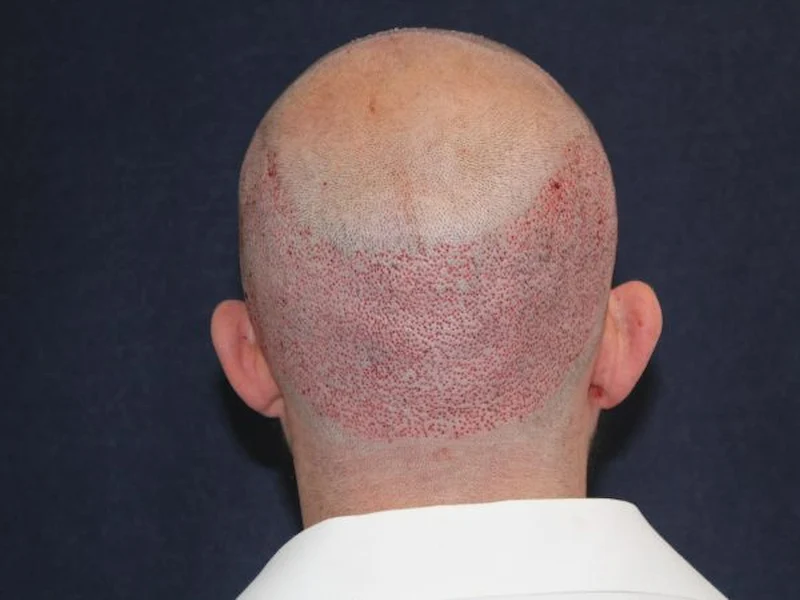
After surgery, the donor area may feel tender, itchy, red, or scabbed while the skin heals. Removed follicles do not regrow at the exact extraction sites, but surrounding hair can continue to grow and help cover the area when harvesting is properly spaced.
At Hair Transplant Mexico, donor-area planning is approached through medical evaluation, graft calculation, and follow-up to support safe healing and realistic expectations.
Key Takeaways
- The surgical supply zone is limited, so graft planning must protect future treatment options. Careful spacing helps preserve coverage and reduce visible scarring.
- Follicles removed from the donor area do not regrow at the exact sites of extraction. Surrounding hair can continue to grow and help cover small marks when harvesting is planned well.
- FUE and FUT affect the harvesting zone differently. FUE creates small extraction points, while FUT can leave a linear scar.
- Mild itching, redness, scabbing, tenderness, and pain can occur during healing. Worsening pain, spreading redness, drainage, fever, or swelling should be reviewed by a doctor.
- A medical evaluation should confirm scalp health, candidacy, and the safe number of grafts before surgery. This helps protect both coverage goals and future options.
What Is the Donor Area in a Hair Transplant?
This harvesting zone is the area of the scalp or body from which follicles are taken for transplantation. In most patients, grafts are taken from the back and sides of the scalp because this region tends to remain more stable over time.
The donor site for a hair transplant must have enough density to support the treatment plan. The goal is to place grafts in the recipient area while preserving the original zone’s natural appearance.
This supply is finite, so each extraction matters. Follicles removed from the donor area do not return to the same points. Nearby strands can help cover small extraction marks when grafts are spaced well. Poor planning can reduce coverage and affect the final appearance.
How Doctors Evaluate the Harvesting Zone
A medical evaluation assesses density, caliber, scalp health, skin quality, and the risk of future thinning. A physician also reviews medical history, prior surgery, medications, and patient expectations.
This helps determine whether the patient is a candidate for a hair transplant procedure. Dr. Antonio Aguilar evaluates graft supply and surgical planning in this clinical context at Hair Transplant Mexico.
A strong source zone usually has stable growth, enough coverage, and healthy skin. The best donor area for hair transplant planning is often the stable zone at the back and sides of the scalp.
The physician should confirm that the hair in the donor region is strong enough before surgery. If density is low or the patient has diffuse thinning, the plan may need fewer grafts, staged treatment, or non-surgical support.
Safe Donor Zone and DHT Resistance
The safe source zone is usually found at the back and sides of the scalp because these follicles are often more resistant to DHT, the hormone linked to patterned hair loss.
This does not mean every follicle in that region is permanent, so the physician still needs to assess stability before surgery. If grafts are taken from an unstable border zone, those transplanted follicles may thin later.
This is why medical mapping matters before extraction. The surgeon should identify which parts of the scalp are stable, which areas may continue to thin, and how much blood supply should be preserved for future needs. A safe plan protects both the harvesting site and the recipient area.
How Many Grafts Can Be Taken Safely?
The safe number of grafts is usually estimated from measured density, hair caliber, scalp size, extraction method, and future thinning risk. On average, patients have a permanent scalp supply of around 6,000 to 8,000 grafts over time, but not all of these can be removed safely in a single surgery or from a single region.
A single procedure often uses only part of that reserve because the plan must preserve coverage in the harvesting site and avoid visible thinning. The physician should set the limit after mapping the scalp, calculating the number of grafts needed, and reserving enough for potential future loss.

FUE and FUT Donor Harvesting
Follicular Unit Extraction (FUE) and Follicular Unit Transplantation (FUT) remove follicles from the harvesting zone in different ways. The main difference is how grafts are removed and how the scalp heals afterward.
- FUE removes individual follicular units with small circular punches.
- FUT removes a thin strip of scalp, which is then divided into grafts. This can leave a linear scar, and scalp laxity affects how easily the skin closes.
- FUE requires controlled spacing so the treated zone does not look patchy.
- FUE grafts should be placed to protect the surrounding hair and preserve natural coverage.
Hair length, scar quality, and healing affect whether the line becomes noticeable. Both methods can be appropriate when an experienced surgeon matches the method to the patient’s scalp and goals.
Overharvesting and Scarring
Overharvesting happens when too many grafts are taken from a limited region. This can cause visible scarring, reduced density, and uneven coverage. Scarring in the donor area can also limit future procedures.
Possible Donor-Site Complications
Most healing changes are temporary, but complications can occur. Possible issues include infection, prolonged redness, poor scar healing, numbness, folliculitis, uneven density, and visible thinning from overharvesting. These risks can vary based on technique, graft count, skin response, aftercare, and physician oversight.
Patients should know which symptoms are expected and which ones need medical review. Fever, pus, spreading redness, worsening pain, sudden swelling, or a scar that becomes raised or painful should be evaluated. Early follow-up helps identify problems before they affect healing or long-term coverage.
Healing Timeline and Common Symptoms
The harvesting site changes over time, but most early symptoms improve gradually.
- First few days: Redness, scabs, swelling, and tenderness can occur.
- First week: Itching may develop as the skin heals. Patients should avoid scratching.
- First month: The region often looks calmer, though mild sensitivity may remain.
- After one year: The site usually shows a more stable appearance, with changes in scar visibility and density.
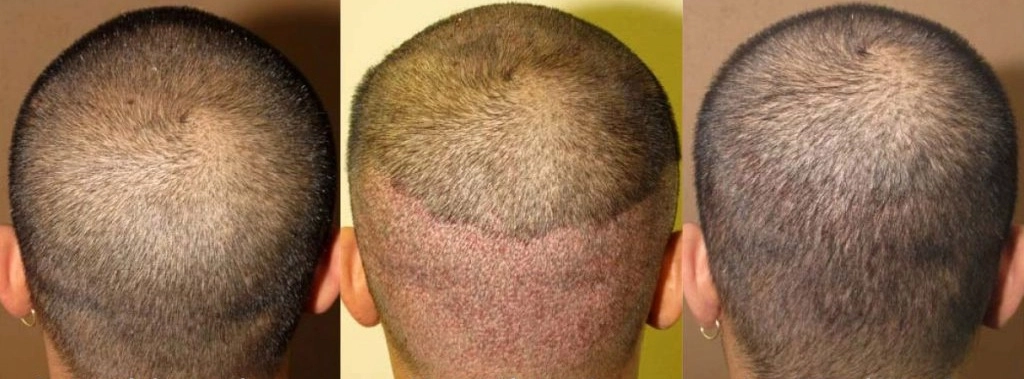
Mild pain can occur after surgery, including discomfort while sleeping. Worsening pain, pus, fever, spreading redness, or sudden swelling should be reviewed by a doctor.
Regrowth after Harvesting
Follicles do not regrow in the exact places where they were removed. The transplanted hairs may shed first, then grow later in the new location. Nearby strands can continue to grow, helping conceal extraction points. Some patients may also notice temporary shock loss near the surgical site, which should be monitored during follow-up.
Post-Surgery Care
Aftercare protects healing tissue and reduces irritation. Patients are usually instructed to follow post-surgery scalp care instructions, such as keeping the site clean, avoiding touching or scratching it, sleeping with the head elevated, and using only approved shampoos or medications.
Some clinics keep a bandage in place for several days, while others remove or change it earlier. The exact timing depends on the technique and the physician’s instructions.
During the first week, care usually focuses on:
- Gentle washing and softening scabs
- Avoiding friction, scratching, or rubbing
- Keeping the scalp out of direct sunlight
- Waiting to resume heavy exercise, sweating, swimming, hats, and close shaving until cleared by the medical team
- Discussing smoking before surgery because it can affect blood flow and healing
Follow-up helps confirm that the surgical site is healing as expected.
Doctor Oversight and Safety
Doctor-led planning matters because surgical supplies are limited and treatment decisions affect long-term options. DHI (Direct Hair Implantation) and FUE (Follicular Unit Extraction) are established techniques in modern restoration, and implantation pens can help place grafts with controlled angles when used within a clear plan.
No technique can guarantee a specific outcome. Informed consent should explain the method, risks, recovery, scarring, graft limits, and outcome variability.