
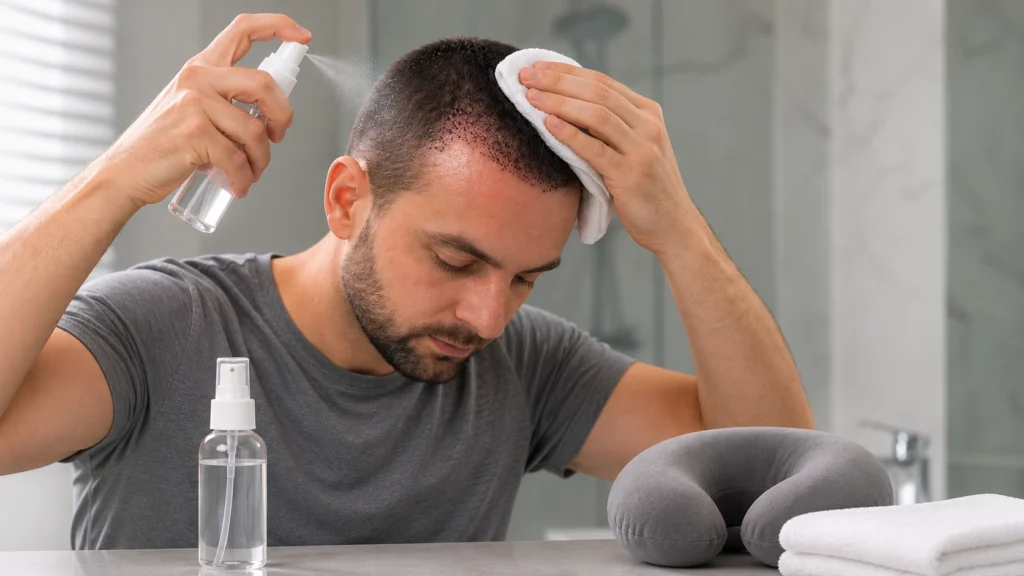
Recovery depends on your health, the type of surgery, and how your scalp heals. Always follow your doctor’s advice on washing, medication, and daily activities. Hair Transplant Mexico is a doctor-led clinic in San Pedro Garza García, an affluent area of Monterrey, Mexico, where Dr. Antonio Aguilar specializes in FUE hair restoration. Having your supplies ready and following a clear care plan can help you heal and lower the risk of problems.
Key Takeaways
- Basic recovery supplies include mild shampoo, saline spray when advised, prescribed medicine, clean pillowcases, a neck pillow, and loose clothing.
- Protect new grafts by washing your scalp with care, avoiding rubbing, and following your doctor’s advice on sleeping positions.
- Avoid hard exercise, swimming, direct sunlight, smoking, and alcohol during early recovery. Your doctor will tell you when these activities are safe.
- Some transplanted hair may fall out during the first few weeks. New growth often starts within a few months, while fuller results can take 10–18 months.
- Call your surgeon if you have severe pain, ongoing bleeding, fever, spreading redness, or swelling that gets worse.
Things You Need After a Hair Transplant at Home
Getting your supplies ready before surgery makes post-hair transplant care at home easier. Most patients need gentle cleaning products, clean bedding, loose clothes, and any medicine their doctor prescribes. Your care team should tell you which items they provide and what you need to buy.
What Products and Supplies Do You Need?
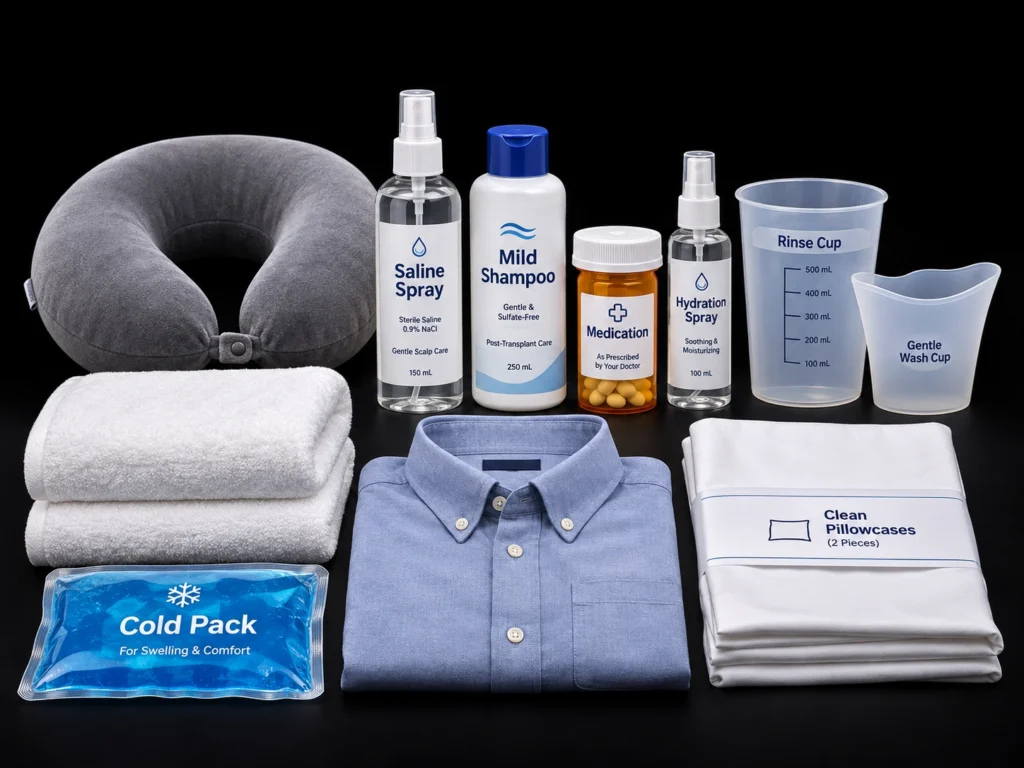
The following products can help with post-hair transplant care, but not every patient needs all of them. Some are basic care items, while others depend on your doctor’s advice. Ask your surgeon before buying special products or starting new treatments.
| Product | Purpose | Recommendation |
|---|---|---|
| Mild shampoo | Cleans the scalp without harsh rubbing | Usually recommended |
| Saline or hydration spray | Keeps treated skin moist | If recommended |
| Prescribed medicine | Helps manage pain or other medical needs | As prescribed |
| Neck pillow | Helps keep pressure off the grafts during sleep | Optional, often helpful |
| Clean pillowcases and towels | Keep bedding and nearby surfaces clean | Recommended |
| Button-down shirts | Reduce rubbing when changing clothes | Recommended |
| Cold pack | Helps reduce forehead swelling | If recommended |
| Clean rinse cup | Helps wash the scalp without strong water pressure | Optional |
Your doctor may suggest using saline spray often during the first few days. The amount and timing depend on your care plan. If you use a cold pack, keep it away from the grafts and follow your doctor’s advice.
You do not need to buy every product sold for hair transplant recovery. Special shampoos, supplements, and costly care kits may not provide extra benefits. Focus on the supplies your surgeon recommends.
Aftercare Essentials for Female Patients
Women usually follow the same basic recovery steps as men. Hair length and the way the donor area is prepared may affect daily care. Patients with long hair should avoid tight hairstyles, extensions, and brushing that pulls on healing skin.
Women with thinning across the scalp may also need more tests before surgery. A doctor should check the cause of hair loss and the health of the donor area. These findings help determine whether surgery is suitable and what results to expect.
Medications and Hair Growth Treatments
Some medicines help control pain or swelling after surgery. Others treat hair loss that may continue in areas that were not treated. Your doctor will decide which medicines are safe and useful for you.
Do You Need Medication After Surgery?
Not everyone needs the same medication after a hair transplant procedure. Your surgeon may prescribe pain relievers or antibiotics based on your medical history, the type of surgery, and your risk of infection. Antibiotics are not always necessary, so follow your prescribed treatment plan and contact your doctor if symptoms worsen.
Do You Need Minoxidil After a Hair Transplant?
Minoxidil is not required after every procedure. It may help protect existing hair and slow further thinning in some patients. Doctors may suggest topical or oral minoxidil based on your health and type of hair loss.
Topical minoxidil may irritate skin that is still healing. Ask your hair transplant surgeon when it is safe to start or resume use. Finasteride is another option for some patients, but these medicines do not replace proper scalp care.
How to Care for Your Scalp
Your scalp needs gentle care while the new grafts heal. In follicular unit extraction (FUE), a doctor removes small grafts from the donor area and places them in the recipient areas. Learn more about how hair transplants work and the steps involved.
Direct Hair Implantation (DHI) often uses a special pen to place grafts, but both methods need careful aftercare and medical follow-up.
Washing Your Hair and Protecting Grafts
Your doctor will tell you when to start washing your scalp, often within the first few days. Once washing is allowed, gently wash the area with warm (not hot) water and approved shampoo. Use a clean cup if needed, and avoid strong shower pressure on the grafts.
Small scabs may form around the new hair follicles as the skin heals. Do not scratch, rub, or pull them off, since this can harm the treated skin. Let them loosen with gentle cleaning, and follow your doctor’s advice on when you can resume normal washing.
Sleeping Positions and Swelling Management
Your doctor may tell you to sleep with your head elevated for the first few nights. A neck pillow can help you stay in place and keep pressure off the transplanted areas. Use clean pillowcases and try not to sleep directly on the treated scalp.
Mild hair transplant swelling around the forehead is common during the first few days. If your doctor approves, place a cold pack on your forehead, away from the grafts. Call your surgeon if swelling worsens or is accompanied by fever or severe pain.
What to Avoid After a Hair Transplant
New grafts need time to settle and heal. Rubbing, pressure, and certain daily activities may harm the treated skin during early recovery. Your doctor will explain which activities to avoid and when you can return to them.
Exercise, Sun Exposure, and Sweating
Avoid strenuous activity, heavy lifting, and hard workouts until your surgeon says they are safe. Light physical activity, such as walking, may be allowed sooner. Heavy sweating, pressure, and accidental contact with the scalp can irritate the healing area.
Keep your scalp out of direct sunlight during early recovery. Avoid pools, hot tubs, and saunas until your doctor approves them. Ask when it’s safe to wear a hat, since tight hats may rub against new grafts.
Smoking, Alcohol, and Other Restrictions
Smoking and nicotine can slow wound healing by reducing blood flow and oxygen to the skin. Alcohol may raise the risk of bleeding or affect your medicine. Ask your doctor how long you should avoid both after surgery.
Do not scratch your scalp or use hair products that your doctor has not approved. Hair dye, chemical treatments, and rough brushing can irritate healing skin. Wait until your surgeon confirms that you can return to your usual hair care routine.
Hair Transplant Recovery Timeline
Hair transplant recovery happens in stages. The scalp usually heals within the first few weeks, but new hair growth takes several months. The timeline below explains what to expect and how to care for your scalp.
| Recovery Stage | What to Expect | Main Care Priority |
|---|---|---|
| Days 1–7 | Redness, swelling, tenderness, and scabs | Protect grafts and follow washing instructions |
| Days 8–15 | Scabs loosen, and swelling decreases | Continue gentle cleaning and avoid picking scabs |
| 1 month | Temporary hair shedding may occur | Follow prescribed treatments and monitor healing |
| 2 months | The scalp looks more healed, but density may remain low | Attend follow-ups and track progress |
| Months 3–6 | New hair growth often begins | Monitor gradual changes |
| Months 10–18 | Fuller results may develop | Review progress with your surgeon |
For a closer look at recovery 10 days after a hair transplant, learn what to expect as swelling decreases and scabs begin to loosen. Temporary shedding during the first few weeks is common and does not necessarily mean the grafts have failed.
New growth often becomes visible within three to six months, while fuller results can take 10–18 months. Recovery times vary, so follow your surgeon’s instructions and attend scheduled checkups.
When to Contact Your Surgeon
Call your hair transplant surgeon if you have ongoing bleeding, severe pain, spreading redness, pus, or swelling that gets worse. A fever or feeling very unwell may also signal an infection or another problem. Seek urgent medical care for severe symptoms instead of waiting for your next visit.
If you travel for surgery, make sure you have a follow-up plan before going home. Whether you choose treatment in Mexico, Turkey, or the United States, check the physician’s role, safety standards, and access to follow-up care. For personalized guidance on hair restoration and recovery, schedule a consultation with Dr. Antonio Aguilar at Hair Transplant Mexico in Monterrey.
Medical References
- NHS – Hair Transplant. Recovery instructions, expected shedding, and hair growth timelines.
- Cleveland Clinic – Hair Transplant. Healing stages, possible problems, and when to seek medical care.
- Hair Transplantation – StatPearls, NCBI Bookshelf. Surgical methods, aftercare, medication, and follow-up.
- International Expert Consensus on Hair Transplant Care. Medical guidance on graft care, scalp hydration, and recovery checks.
- American Academy of Dermatology – Hair Loss Diagnosis and Treatment. Treatment options for ongoing hair loss, including minoxidil.