
Since the front and crown bald areas have joined, surgeons often restore the hairline and mid-scalp first. Results depend on hair quality, surgical planning, and healing, with growth continuing for 12–18 months.
Surgeons may use FUE, FUT, or both methods to restore hair. Some patients may also benefit from beard or body hair grafts or scalp micropigmentation (SMP). Hair Transplant Mexico is located in San Pedro Garza García, Monterrey, where Dr. Antonio Aguilar, an FUE specialist with over 10 years of experience, evaluates patients and plans treatment.
Key Takeaways
- A Norwood 6 hair transplant can improve scalp coverage, but full hair density is rarely possible.
- Treatment may need 4,500–6,000 or more grafts, based on scalp size, donor hair, and coverage goals.
- Doctors check donor hair density, thickness, and strength before planning surgery.
- Some patients need more than one session to restore the front, middle, and crown areas.
- Hair growth develops over 12–18 months, while treatment costs depend on the method, graft count, and number of sessions.
Can a Norwood 6 Get a Hair Transplant?
Yes, patients with Norwood 6 hair loss may qualify for surgery if they have enough healthy donor hair follicles. A doctor checks scalp health, medical history, remaining hair, and future hair loss before creating a treatment plan. The goal is to improve coverage while keeping enough donor hair for future needs.
Not everyone is a good candidate for surgery. Thin donor hair, scalp disease, or poor donor supply may limit the results. A medical exam helps the doctor decide what is possible.
What Is Norwood Stage 6?
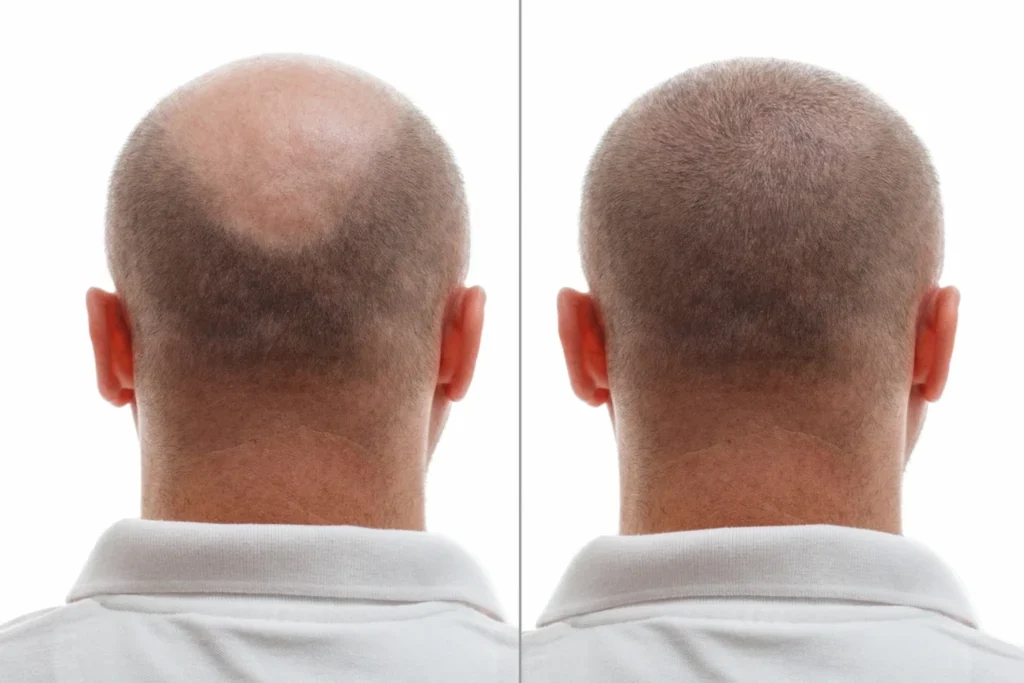
Norwood Stage 6 is an advanced stage of male pattern baldness. At this point, the bald areas at the front and crown have joined. Hair usually remains along the sides and back of the scalp, but there may not be enough to cover every bald area.
Is Norwood 6 Reversible?
No, Norwood 6 hair loss is not naturally reversible because most hair follicles in the bald areas have stopped producing visible hair. Medications like finasteride and minoxidil may slow further hair loss and improve some thinning areas, but they cannot fully restore lost coverage.
A hair transplant can improve the appearance of bald areas by moving healthy follicles from the donor area, but it cannot reverse the underlying cause of male pattern baldness.
Norwood 5 vs. Norwood 6 vs. Norwood 7
Earlier stages, such as Norwood 2 hair transplant cases, often involve smaller areas of hair loss and different treatment needs. A Norwood 5 hair transplant may require fewer grafts than Stage 6 because some hair can still separate the frontal and crown areas.
| Stage | Hair Loss Pattern |
|---|---|
| Norwood 5 | Major hair loss at the front and crown, often with a thin strip of hair between them |
| Norwood 6 | The front and crown bald areas have joined |
| Norwood 7 | Most hair on top is gone, leaving a thinner band along the sides and back |
How Many Grafts Do You Need for Norwood 6?
Patients with this level of hair loss may need 4,500–6,000 or more grafts for wide scalp coverage. The number of grafts depends on the size of the bald area, donor hair supply, and desired results. Some patients need more grafts than their donor area can safely provide.
Donor Area and Graft Availability
The donor area is usually at the back and sides of the head. Hair in these areas is often more resistant to male pattern baldness. Doctors use scalp exams and close-up imaging, called trichoscopy, to check follicular units, hair thickness, and donor density.
They also look for miniaturization, which happens when hair follicles start producing thinner hairs. Removing too many grafts can leave visible thinning in the donor area. Thick or curly hair may create fuller-looking coverage, while selected patients may also use beard or body hair grafts.
Hair Transplant Options for Norwood 6
The right method depends on donor hair, scalp health, and treatment goals. Doctors plan where to place grafts, how many to remove, and how to protect the donor area. Patients should know who performs each part of the procedure and how the medical team handles complications.
The number of hair transplants you may need depends on donor supply, the size of the bald area, and whether treatment can be completed in one session.
FUE vs. FUT
A follicular unit extraction (FUE) hair transplant removes small groups of hair follicles one at a time. Follicular unit transplantation (FUT) removes a thin strip of scalp from the donor area, which is then divided into grafts. FUE leaves small, scattered scars, while FUT leaves a linear scar.
Both methods can restore hair in suitable patients. Direct hair implantation (DHI) uses a pen-shaped tool to place grafts into the scalp. It is a placement method, not a separate way to collect donor hair.
Norwood 6 Hair Transplant Results
Results depend on donor hair quality, graft survival, and how surgeons spread the grafts. Patients may achieve better coverage at the front while keeping less density in the crown. Even when transplanted hair grows well, the scalp may not look as full as it did before hair loss began.
Hair Transplant for Norwood 6 Before and After
Before-and-after photos help show how surgery changes hair coverage. Good comparisons use similar lighting, camera angles, and clear treatment details. The two published cases below show how different surgical methods can treat advanced hair loss.
Case 1: 6,048 FUE Grafts
Hasson & Wong report a Norwood 6 patient treated by Dr. Victor Hasson on October 1, 2020. The surgery used 6,048 FUE grafts to treat major hair loss.
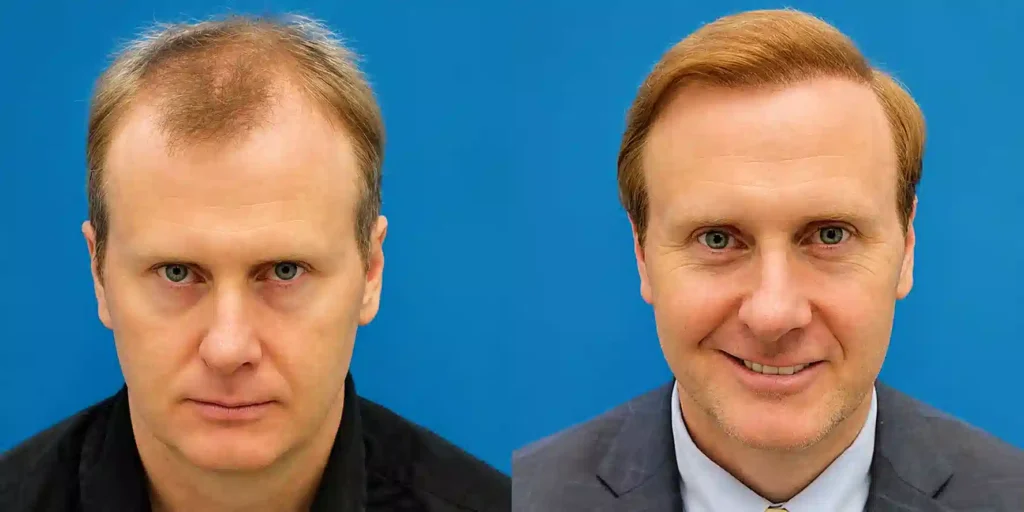
Case 2: 5,474 FUT Grafts
Another published case shows a Norwood 6 patient who received 5,474 FUT grafts from Dr. Victor Hasson on August 22, 2018. This case shows how strip surgery can supply grafts for a large treatment area.
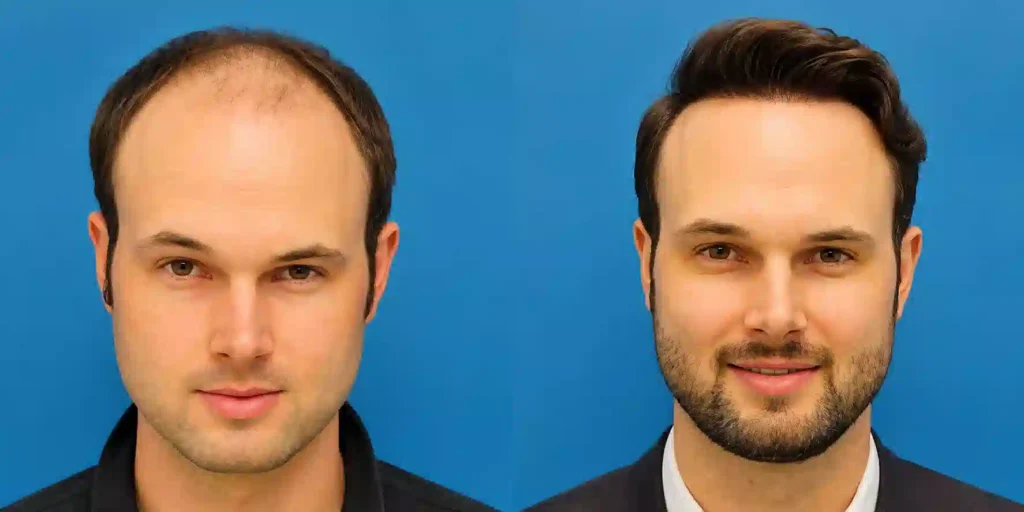
These cases come from Hasson & Wong, not Hair Transplant Mexico. The surgery dates do not tell us when the follow-up photos were taken. Results vary from patient to patient, even when the number of grafts is similar.
Norwood 6 Hair Transplant Success Rate
Hair transplants can achieve graft survival rates above 90%, although no single rate applies to all Norwood 6 patients. A 2020 study involving men with advanced hair loss reported 95.7% graft survival. Results depend on donor hair quality, surgical technique, and graft placement, and high survival does not guarantee full scalp coverage.
Recovery, Risks, and Long-Term Results
Hair Growth and Recovery Timeline
| Recovery Period | Expected Changes |
|---|---|
| Days 1–14 | Redness, scabs, and early healing |
| Weeks 2–8 | Temporary shedding of transplanted hair |
| Months 3–4 | Early new growth may begin |
| Months 6–9 | Visible improvement in coverage |
| Months 12–18 | Continued growth and maturation |
Recovery varies between hair transplant patients. Follow-up visits are part of hair transplant recovery and help doctors check healing, track hair growth, and find problems early. Patients should follow their doctor’s advice about washing, activity, and medicine.
Complications and Treatment Limitations
Hair transplant surgery can cause bleeding, infection, scars, temporary hair shedding, or poor graft growth. Removing too many grafts may also cause lasting thinning in the donor area. Doctors should explain these risks and discuss what surgery can realistically achieve before treatment begins.
How Long Do Norwood 6 Results Last?
Norwood 6 hair transplant results can last a lifetime because follicles taken from stable donor areas are often resistant to male pattern baldness. Still, surrounding natural hair may continue to thin over time. Medications such as finasteride or minoxidil may help preserve existing hair, while some patients may need further treatment.
How Much Is a Norwood 6 Hair Transplant in Mexico?
The cost of a Norwood 6 hair transplant in Mexico depends on the number of grafts, surgical method, and treatment sessions. Hair Transplant Mexico lists full FUE prices of $6,000–$10,000 USD in its procedure guides, while its Monterrey location page lists a $6,000 full FUE price. These are published prices, not a confirmed quote for an individual Norwood 6 procedure.
Patients often compare Mexico, Turkey, and the United States when researching hair restoration costs and medical care. They should review doctor qualifications, local medical rules, clinic oversight, and follow-up services. Clinics may also differ in who performs surgery and how they manage post-treatment care.
A Norwood 6 hair transplant requires careful planning to achieve realistic results. Schedule your free consultation with Dr. Antonio Aguilar at Hair Transplant Mexico to assess your donor hair, discuss treatment options, and create a plan based on your needs.
Medical References
- Hair Transplant Practice Guidelines – Journal of Cutaneous and Aesthetic Surgery. Guidance on donor assessment, surgical planning, and safe extraction.
- Trichoscopy for the Hair Transplant Surgeon – Clinical discussion of donor density, miniaturization, and scalp examination.
- Hair Transplantation – StatPearls, NCBI Bookshelf. Medical reference covering surgical methods, recovery, and risks.
- International Expert Consensus on Hair Transplantation Care – Journal of Dermatological Treatment, 2023. Expert guidance on care before and after surgery.
- ISHRS Surgical Treatments for Hair Loss – Patient information about FUE, FUT, and surgical safety.