

Dr. Antonio Aguilar is a doctor who focuses on FUE and hair restoration. Hair Transplant Mexico is a doctor-led clinic in San Pedro Garza García, Monterrey, an affluent area in northern Mexico. This medical setting helps explain how doctors review hair loss, donor hair, treatment choices, and likely results.
Key Takeaways
- Ben Stiller has not confirmed having a hair transplant, and there is no verified proof that he had one.
- Changes in his hairline or density may come from styling, light, drugs, age, hairpieces, or surgery.
- Photos cannot confirm treatment because angles, image quality, and hair length can change how the scalp looks.
- FUE, FUT, DHI, and nonsurgical care may improve coverage in some patients, but results depend on the cause of hair loss and donor supply.
- A trained doctor should review health history, risks, recovery, and follow-up before suggesting treatment.
Did Ben Stiller Have a Hair Transplant?
There is no public proof that the actor had one. Similar discussions have surrounded other celebrities, including Anderson .Paak’s hair transplant, where public photos have also led to speculation rather than confirmed medical information. Online photos may show a fuller front area or more density, but they do not prove surgery. Ben Stiller’s hair restoration history remains private and unconfirmed.
Visible Hair Changes
Older and newer photos may show changes in the hairline and crown. The crown can look thinner under bright light because hair grows in a circle there. Longer hair, styling products, or camera position can also make the hair look fuller.
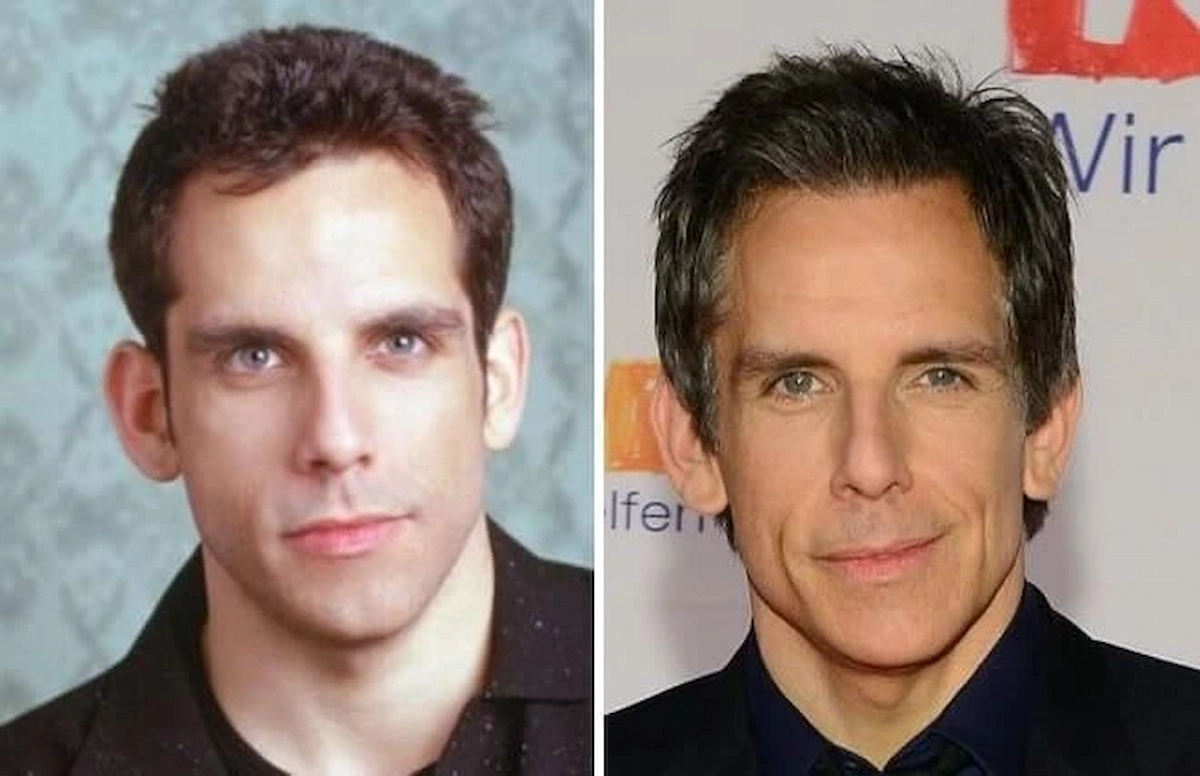
Doctors may review these signs:
- Hairline shape and position
- Hair density and growth direction
- How much scalp can be seen
- Changes in the donor area
These signs may point to treatment, but only an in-person exam can assess them well.
Possible Treatment Options
FUE (Follicular Unit Extraction) removes single hair groups from the donor area and places them in thin spots. If you’re unfamiliar with the process, learning how hair transplants work can help explain each step.
FUT (Follicular Unit Transplantation) removes a small strip of scalp before the hair groups are prepared for use. DHI (Direct Hair Implantation) uses a pen-like tool to place grafts, but the tool alone does not ensure better results.
Nonsurgical drugs may slow some types of hair loss or help keep existing hair. Hair transplants move available follicles, so donor supply limits how much area can be covered. Transplanted hair may stay stable, while untreated hair may keep thinning.
Can Photos Confirm a Procedure?
Before-and-after photos cannot prove a medical history. Light, styling, photo quality, and camera angle can change how dense the hair looks. A doctor must review the scalp, donor hair, loss pattern, and health history before suggesting care.

What Should Patients Consider?
Patients comparing Mexico, Turkey, or the United States should review doctor involvement, medical care, consent, rules, and follow-up. Clinic standards can vary in every country. Results also depend on the cause of hair loss, graft care, donor supply, healing, and long-term planning.