
Later photos show fuller coverage. Yet no public medical records confirm his graft count, surgery dates, or measured results. Hair Transplant Mexico is based in San Pedro, Monterrey, and provides doctor-led care.
Key Takeaways
- The actor confirmed that he had four procedures in Los Angeles. He spent about $10,000 in total.
- His early treatment used the FUT strip method. He later moved to FUE.
- Public photos show fuller coverage. They cannot confirm graft counts, surgery dates, or medical results.
- Some patients need several sessions because thinning can continue. Donor supply also limits how much coverage surgery can provide.
- Patients should check the doctor’s license, role, follow-up plan, and consent process before choosing a clinic.
What Did Joel McHale Do to His Hair?
McHale spoke about his experience on the We Might Be Drunk podcast with Mark Normand and Sam Morril. He said he would be bald without the four procedures. His comments made him one of the best-known celebrity hair transplant patients.
What He Confirmed
His first treatment used strip surgery. He later chose a method that removes single follicles from the donor area. He spent about $10,000 across multiple hair transplant surgeries.
What Remains Unknown
He has not shared the dates, graft counts, medical team, or areas treated. He has not released medical before-and-after records. Claims about these details would be guesses.
Joel McHale’s Hair Loss Timeline
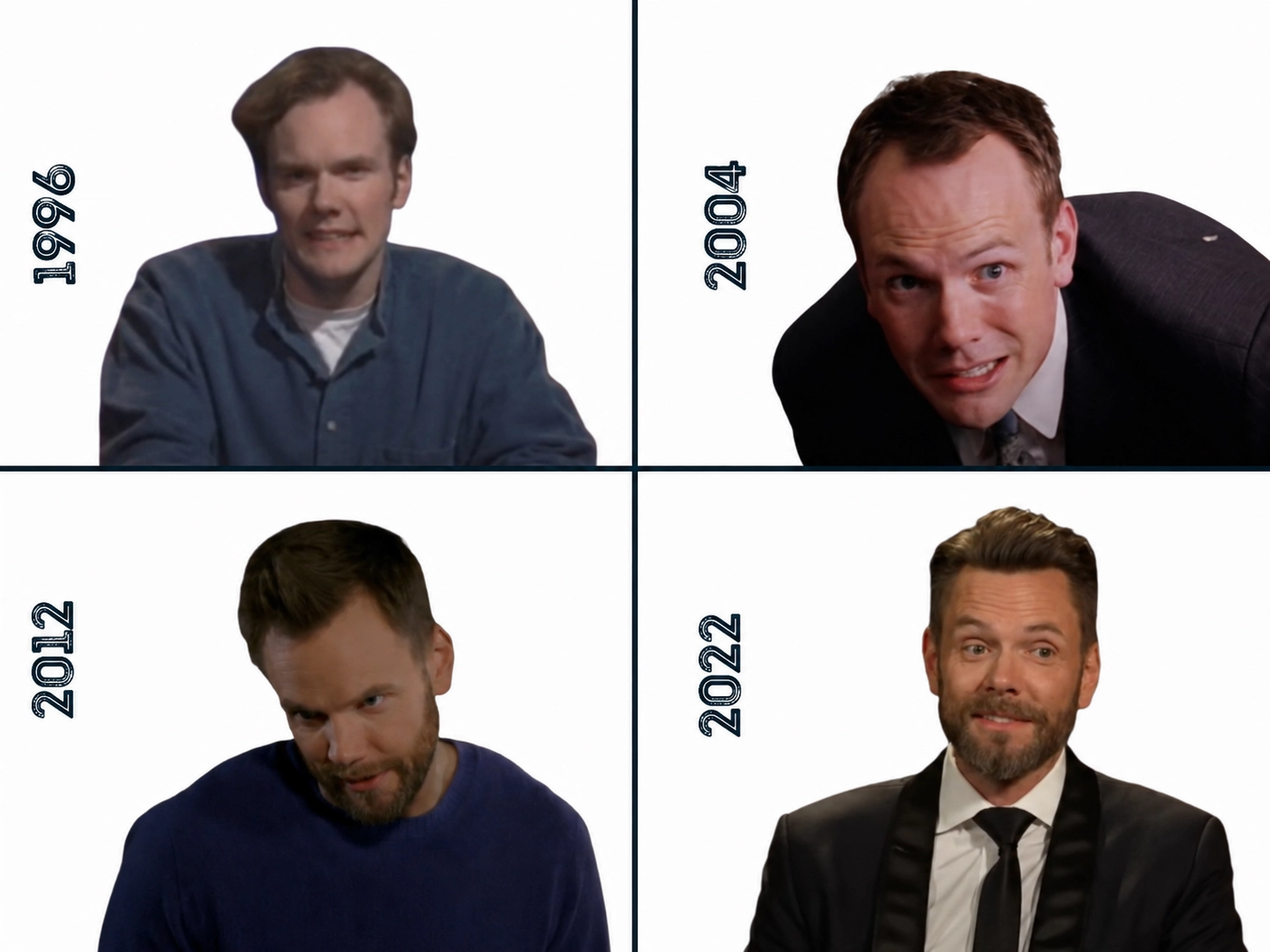
The actor was born on November 20, 1971, in Rome, Italy. He later built a career in American entertainment. Older photos show changes in his frontal coverage. They do not show when each surgery took place.
Early Signs of Thinning
Early photos seem to show recession near the front and temples. This pattern may occur with male pattern baldness. Only a doctor can confirm the cause.

Changes After His Procedures
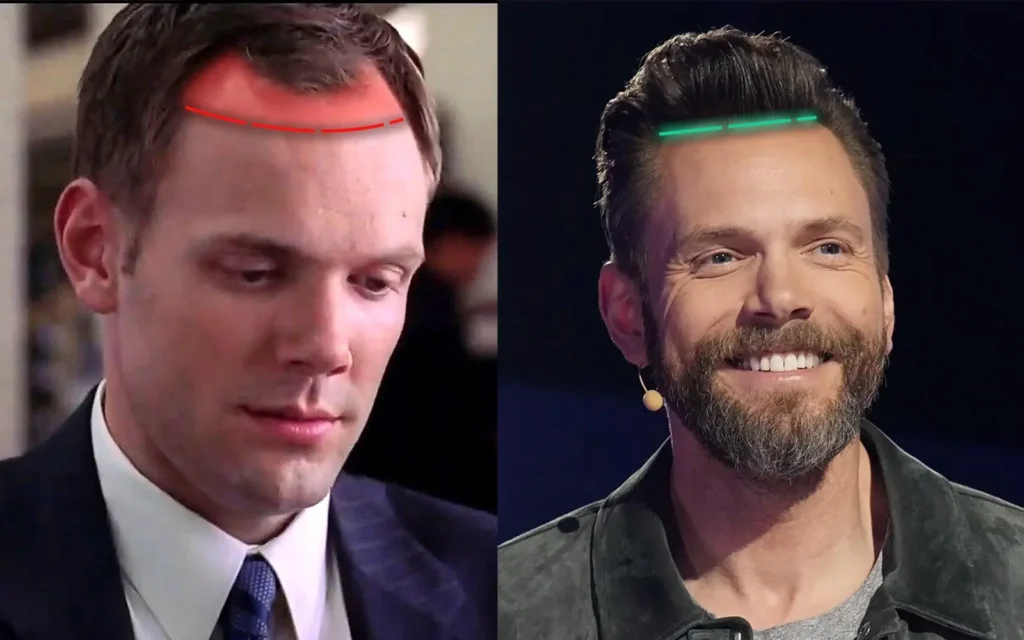
Later photos show more coverage in the frontal area. His style and hair density also look more stable in recent images. These changes appear to have occurred over several years.
Joel McHale Hair Transplant Before and After
Images may show changes in coverage, shape, and style. They cannot show how many grafts survived. They also cannot show whether medicine affected the result.

What Photographs May Show
Photos can show broad changes over time. Fair comparisons need similar light, angles, styles, and image quality. These details make changes in the temples and frontal line easier to see.
Limits of Visual Comparisons
Fibers, styling products, light, and camera distance can change how thick the scalp coverage looks. A photo cannot measure graft growth or damage to the donor area. Claims that he gained “gorgeous thick hair” are opinions, not medical findings.
Joel McHale Hair Restoration Methods
His public account describes both follicular unit transplantation and follicular unit extraction (FUE). Both methods move follicles from a donor area to a part of the scalp with less coverage. The main difference is how the medical team removes the grafts.
His Earlier FUT Procedures
FUT (follicular unit transplantation) involves removing a strip of scalp from the back or side of the head. The medical team divides the tissue into small follicular units. This method can provide many grafts, but it leaves a line-shaped scar.
His Later FUE Procedures
FUE (follicular unit extraction) removes single follicular units with small punch tools. DHI (direct hair implantation) is a placement method that may use a pen-shaped tool to insert the grafts. Neither method can promise a set result.
Why He Preferred FUE
The comedian said his strip surgery was painful. He spoke more positively about the method that removed single follicles. This was his own experience. Pain, healing, and scars differ for each patient.
Cost, Location, and Surgeon Details
His hair transplant story includes a total cost and treatment location. These details don’t show what a similar case would cost today. Fees depend on graft needs, the treatment plan, the doctor’s role, and follow-up care, so reviewing the typical hair transplant cost in Mexico can help patients compare estimates.
How Much Did He Spend?
He reported spending about $10,000 across four procedures. He did not list the cost of each session. Do not use his total as a current price estimate.
Where Did He Receive Treatment?
The procedures took place in Los Angeles. He joked about finding a provider for a hair transplant in Turkey. He did not say that he received treatment there.
Is His Doctor Known?
No trusted public source names the treating doctor. Online articles may review his appearance without access to his medical files. Privacy rules may also limit what a clinic can share.
Is His Surgeon Known?
The surgeon’s name has not been confirmed. A visible result cannot prove who performed the work. It also cannot show which parts of the operation the physician completed.
Does Joel McHale Wear a Hairpiece?
The performer has confirmed surgery, but he has not said that he wears a hairpiece. Photos cannot settle this issue. Styling products and cosmetic fibers can change how his scalp coverage looks.
Medical Context for His Procedures
A hair transplant procedure requires more than placing grafts. A doctor should review the cause of thinning, donor supply, health history, future loss, and treatment goals. The consent process should explain the risks, other options, recovery, and possible need for more care.
Why Multiple Sessions May Be Needed
Some patients need more than one hair transplant surgery to add coverage or treat new thinning. Large areas may require several sessions because donor follicles are limited. Four sessions don’t mean each one had the same goal or size.
FUT and FUE Scarring
FUT often leaves a line-shaped scar where the strip was removed. FUE leaves many small marks across the donor area. Scar size and visibility depend on healing, hairstyle, skin response, and surgical skill.
Recovery and Results
Redness, swelling, scabs, and short-term shedding can occur after surgery. New growth often starts after a few months. The final change may take 12 months or more. Follow-up visits and proper post-hair transplant care help the doctor check healing, growth, and possible problems.
Donor Supply and Future Loss
Moved follicles may resist the process that caused the first signs of thinning. Natural strands around those follicles may still weaken. A long-term plan should protect the donor area and account for future loss.
What Can Patients Learn?
This case shows that restoration may involve several sessions over many years. Patients who compare Mexico, the United States, Turkey, or other countries should review:
- The doctor’s role during surgery
- Local rules and clinic oversight
- The number of patients treated each day
- Access to follow-up care
- Pricing, consent, and plans for problems
Results Vary Between Patients
A celebrity result cannot predict another person’s outcome. Donor quality, age, healing, loss pattern, and surgical planning all affect growth. Surgery cannot create an endless supply of donor follicles.
Medical Evaluation Matters
A doctor should find the cause of thinning before suggesting surgery. Some patients may need medicine, tests, or more time to track their condition. Good candidates need enough donor follicles and realistic goals.
Surgeon Credentials Require Verification
Patients should check the surgeon’s license, training, role, and follow-up plan. Rules and clinic oversight vary by country. Hair Transplant Mexico operates in San Pedro, an affluent area in northern Mexico. Dr. Antonio Aguilar provides doctor-led evaluation and care.
Schedule a Consultation
If you are considering hair restoration, a medical evaluation can help confirm your candidacy and treatment options. Schedule a free consultation with Dr. Antonio Aguilar to discuss your hair loss, donor supply, and goals.