

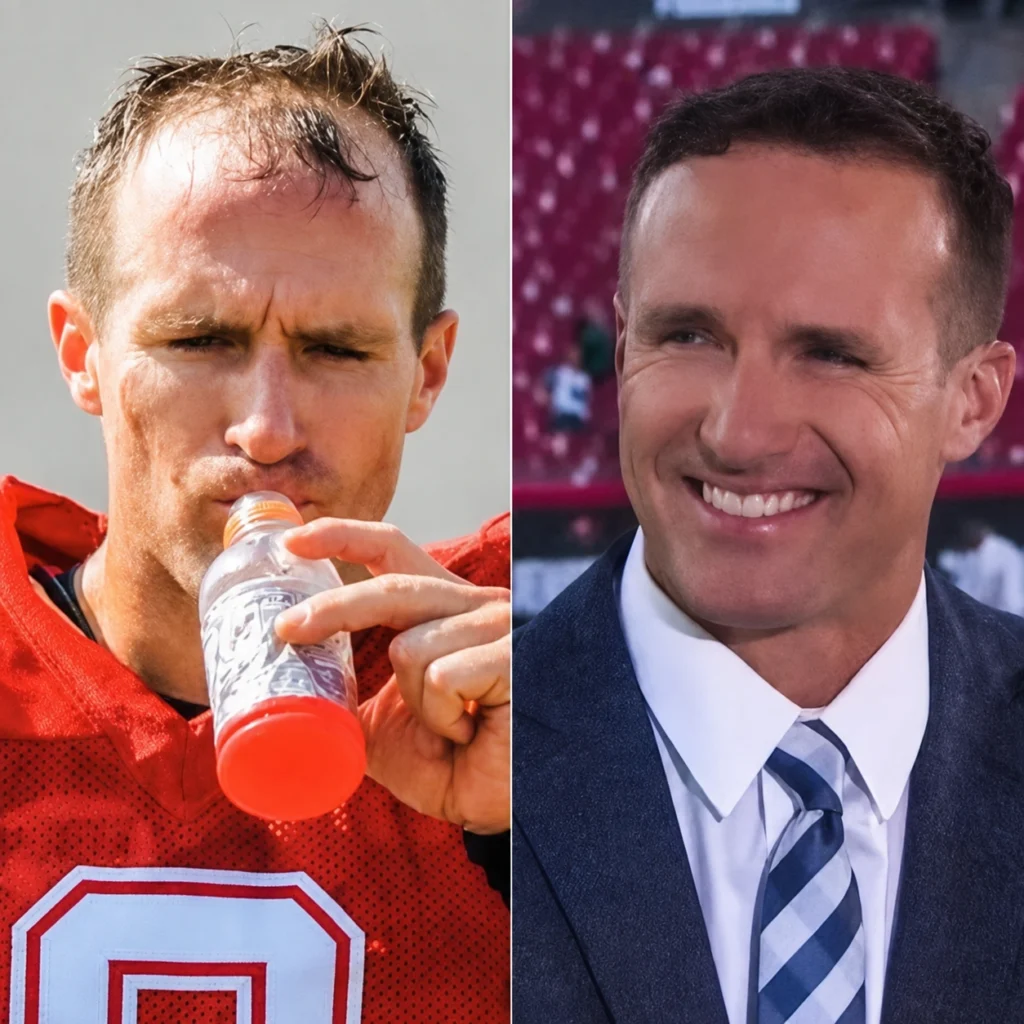
Later photos show more coverage at the front and less visible temple recession. Some images also show a more even frontal line. These changes do not confirm a medical procedure because lighting, length, styling, and photo quality can affect how the scalp looks.
Hair Transplant Mexico uses celebrity cases, including an analysis of Donald Cerrone’s hair transplant, only as educational examples, as each patient needs a personal medical review.
Key Takeaways
- Drew Brees has not confirmed receiving surgical treatment, so claims about the procedure rely on public photos rather than medical records.
- Later images show stronger frontal coverage and less visible temple recession, but lighting and styling can affect the perceived density.
- FUE, FUT, medication, cosmetic fibers, and styling could all explain the change, and photos cannot prove which method was used.
- A similar frontal restoration may require 1,500 to 3,000 grafts, but only a donor-area exam can provide a reliable estimate.
- Patients should compare the level of doctor involvement, medical care, follow-up, cost, and local rules before choosing a treatment.
Did Drew Brees Get a Hair Transplant?
The most accurate answer is that the procedure remains unconfirmed. The former NFL quarterback has not chosen to openly discuss surgery, name a doctor, or share medical records. Claims about Drew Brees’s hair restoration are based on visual comparisons rather than verified facts.
Public details focus on his career with the New Orleans Saints and his Super Bowl win. They do not confirm a cosmetic procedure. Reports that present surgery as certain go beyond publicly known facts.
Drew Brees Before and After Hair Transplant
Earlier photos from his playing career suggest gradual hair loss near the frontal corners. His central forelock looked stronger than the temple areas. This created the appearance of a receding hairline with mild hair thinning behind it.
Later television appearances show a fuller head of hair and better coverage across the front. The temples look less open, and the front edge appears more even in some photos. These signs may fit with treatment, but they do not prove what was done or when it happened.
Limits of Photo Comparisons
Public photos cannot show donor density, scars, scalp health, follicle quality, or future loss. Hair products, longer styles, cosmetic fibers, and camera settings can also change how the scalp appears. A doctor needs a medical history and scalp exam before estimating treatment needs.
What Did Drew Brees Do to His Hair?
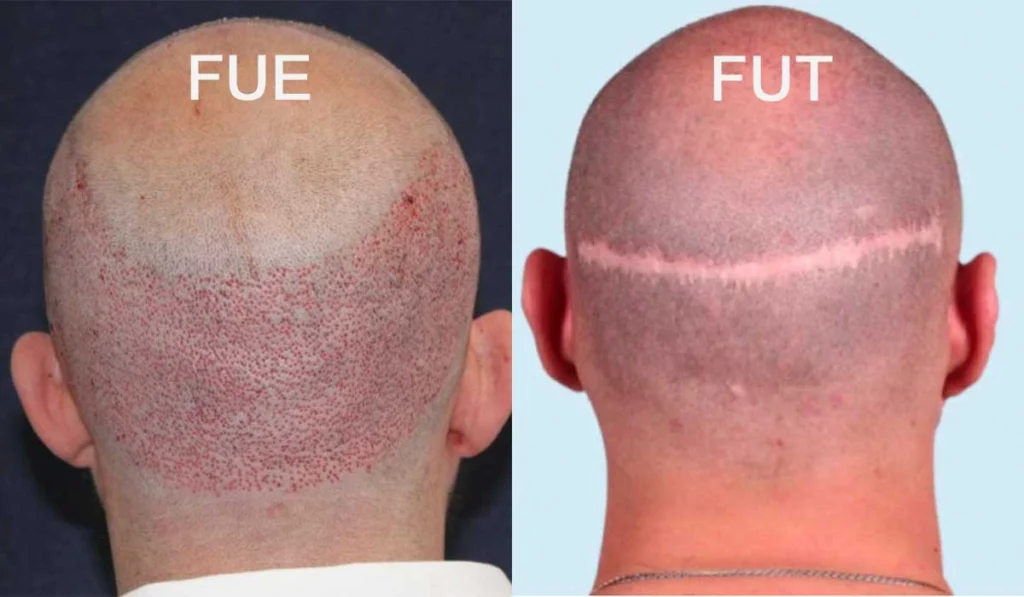
Several explanations could account for the visible change. These include Follicular Unit Extraction (FUE), Follicular Unit Transplantation (FUT), medication, cosmetic fibers, a hair system, or a new style. There is insufficient evidence to confidently identify a single method.
Possible FUE or DHI Treatment
FUE removes individual follicular units from the back and sides of the scalp. The medical team then creates small recipient sites before transplanting hair into thinning areas. DHI (Direct Hair Implantation) uses the same basic removal method but may place grafts with an implantation pen.
The pen helps control depth, angle, and direction during placement. It does not guarantee better growth or a natural hairline on its own. Results also depend on donor quality, planning, graft care, placement, and follow-up.
Possible FUT or Non-Surgical Treatment
FUT removes a strip of donor tissue and divides it into individual follicular units. It can provide many grafts, but it leaves a thin linear scar in the donor area. Medication, cosmetic fibers, and styling can also make thinning areas look denser without surgery.
Where Did Drew Brees Get His Hair Transplant?
No trusted source names a clinic, doctor, city, or country. Commercial articles make different claims, but they do not provide medical records or a direct statement from the football star. The treatment site and provider remain unknown.
Medical care is private unless the patient chooses to share it. A clinic should not identify a patient without consent. Any claim about the location should be treated as speculation unless supported by a reliable source.
How Many Grafts Might Be Needed?
A similar change at the front may require about 1,500 to 3,000 grafts. Public photos cannot support an exact number. The total depends on the area size, current density, donor supply, strand thickness, curl, scalp contrast, and future loss.
A doctor usually reviews:
- Current and expected future loss
- Donor density and follicle quality
- Size of the frontal area
- Desired frontal-line height and shape
- Strand thickness, curl, and scalp contrast
A careful plan protects donor follicles for possible future treatment. It also lowers the risk of using too many grafts at the front while leaving too few for later thinning.
How Much Do 3,000 FUE Grafts Cost?
The cost of 3,000 grafts varies by country, clinic model, doctor involvement, and follow-up care. At Hair Transplant Mexico, a single-area FUE procedure for the crown or hairline starts at about $4,500 and can reach $8,000. A full FUE procedure ranges from about $6,000 to $10,000.
Patients often compare Mexico, Turkey, and the United States because travel, medical care, clinic rules, and follow-up can differ. Prices also vary among Monterrey, Tijuana, Cancun, Mexico City, and other locations. The treating physician, facility standards, graft needs, and long-term care affect the final cost.
What Patients Should Consider
A celebrity case cannot show whether another person is a good candidate. A doctor should review the cause of hair loss, donor density, scalp health, medical history, and expected progression before recommending a hair transplant. Wide thinning, scalp disease, weak donor follicles, or unrealistic goals may limit treatment.
Hair Transplant Mexico is located in San Pedro, Monterrey, Mexico, an affluent area in northern Mexico. Dr. Antonio Aguilar is a specialist in FUE Micrografting and Hair Restoration who reviews candidacy, donor supply, and treatment plans. This process helps patients set clear and realistic goals before surgery.
Hair Transplant Safety
Hair surgery requires informed consent, sterile methods, medical checks, and a clear follow-up plan. Patients should ask who performs graft removal, site creation, implantation, and aftercare. Rules about doctor and technician roles can differ by country and clinic.
Recovery may include short-term redness, crusting, swelling, soreness, and shedding. New growth appears slowly over several months, and results vary from person to person. Follow-up visits and proper post-hair transplant care help the medical team check healing, answer questions, and guide recovery without promising a fixed result.
Schedule a Consultation
A medical evaluation can help determine your candidacy, graft needs, and treatment options. Schedule a free consultation with Hair Transplant Mexico to review your goals and receive a personalized assessment.