
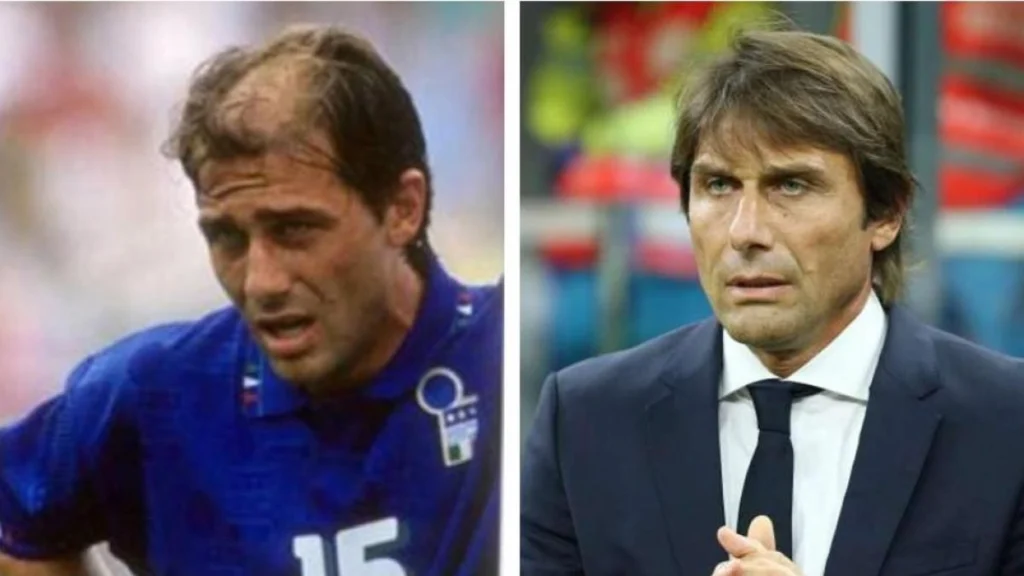
His case shows how medical planning, donor supply, and long-term maintenance can affect scalp coverage. Hair Transplant Mexico is located in San Pedro, Monterrey, Mexico, an affluent area in northern Mexico. Dr. Antonio Aguilar, a specialist in FUE Hair Transplant and Hair Restoration, provides relevant medical context for understanding why diagnosis, donor area quality, and future thinning matter before surgery.
Key Takeaways
- Conte’s scalp coverage appears much fuller than it did in earlier public photos, but the exact procedure, clinic, graft count, and treatment plan remain unconfirmed.
- His before-and-after change appears consistent with surgical restoration, particularly in the frontal zone and upper scalp.
- Public photos can suggest patterns of restoration, but they cannot confirm whether he had FUE, FUT, medication, a system, or a combination of treatments.
- Hair transplant results depend on donor quality, hairline design, graft survival, recovery, and long-term maintenance.
- Anyone considering a similar procedure should start with a medical evaluation to assess candidacy, donor supply, scalp health, and realistic expectations.
Did Conte Have a Procedure?
Conte has not provided a detailed public confirmation of every step of the treatment. Still, many observers believe he underwent hair transplant surgery because his frontal density changed across different stages of his public life.
The change appears too large to be explained solely by styling, lighting, or short-term hair growth. A careful answer should say that a surgical procedure is plausible, but the exact clinic, method, and plan remain unverified.
What Photos Suggest
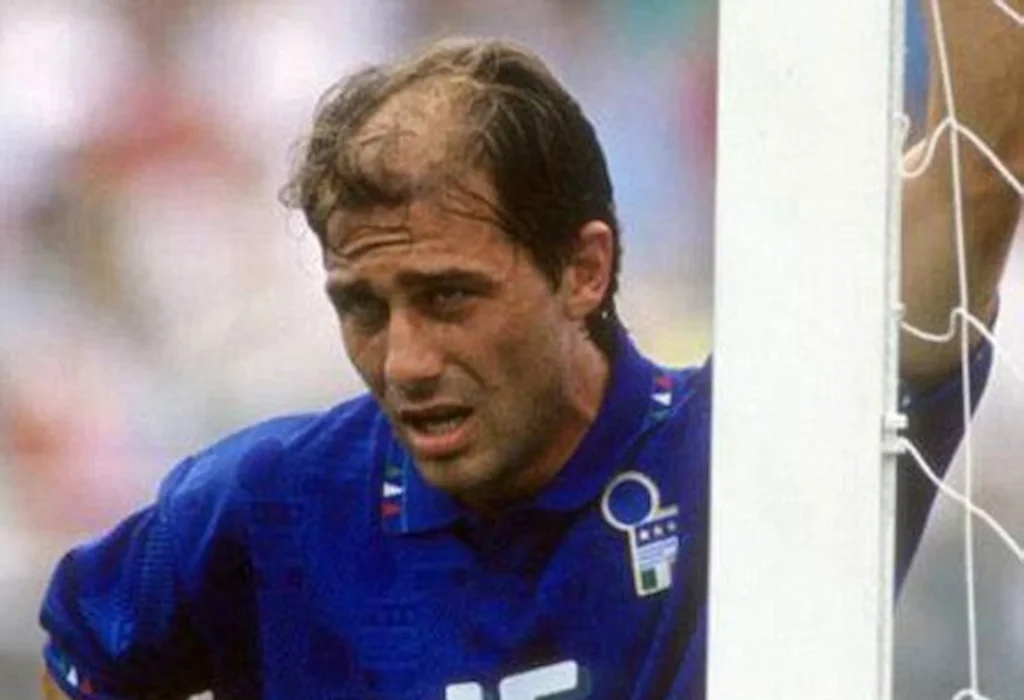
Older photos show clear thinning in the frontal and upper scalp. By the time of Euro 2000, his recession and reduced facial density were more noticeable in public images. Later photos show stronger coverage and a fuller look around the front. These changes match patterns often seen after a hair transplant procedure, but photos cannot prove the medical details.
What Remains Unconfirmed
Public images do not confirm the surgeon, clinic, graft count, medications, or exact timeline. They also do not confirm whether he used FUE, FUT, a system, medication, or a combination. This matters because online articles often repeat claims without direct evidence. A medical guide should mark those claims as speculation unless a verified source confirms them.
Before-and-After Changes
Conte’s earlier photos show visible thinning across the frontal scalp, temples, and upper scalp. During his playing years and early football management career, scalp visibility was more noticeable, especially under bright lighting and short hairstyles. In later photos, his frontal density appears stronger, and the overall coverage looks more even.
This before-and-after change is consistent with surgical restoration, but photos alone cannot confirm the method used. A proper analysis should consider density, frontal shape, crown coverage, donor supply, and the possibility of ongoing maintenance.

Early Thinning and Shaved Years
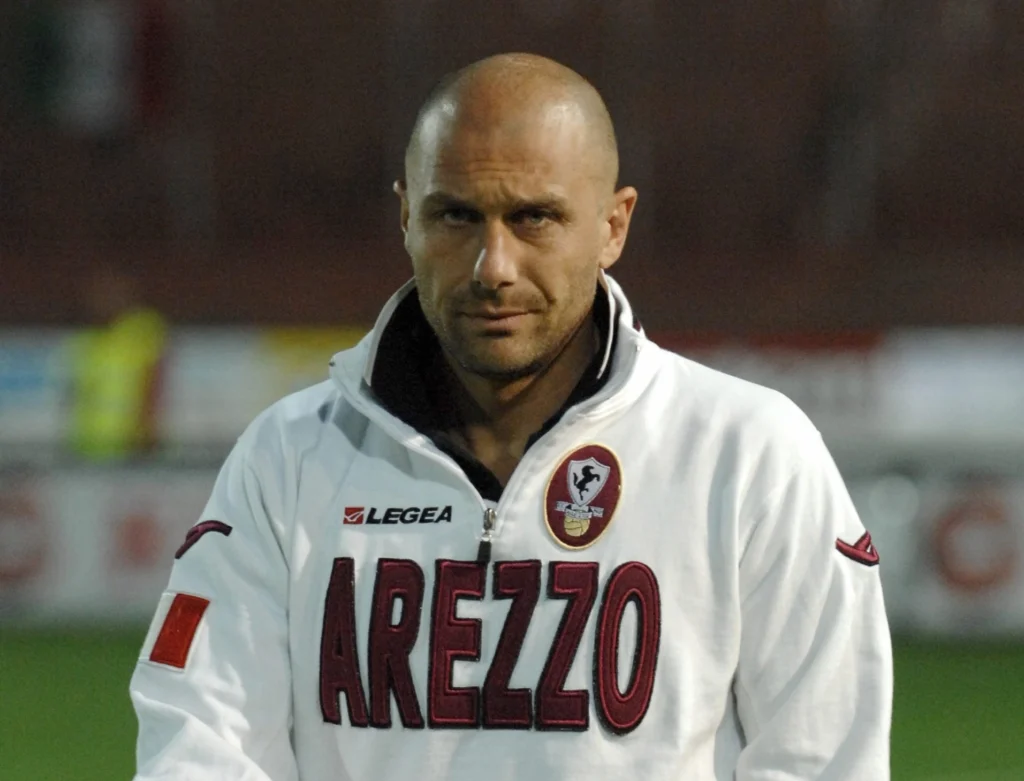
Conte showed visible thinning during his years as a professional footballer. This pattern fits male pattern baldness, which often affects the temples, frontal scalp, and crown. Later, he wore his scalp closely shaved, which can reduce contrast between thicker donor zones and balding areas.
A shaved look does not confirm treatment, but it often appears when patients manage visible loss before or between procedures.
Fuller Look in Recent Photos
Later photos show a fuller appearance across the frontal scalp and top. This type of change often leads readers to ask about Antonio Conte’s hair restoration. A natural-looking result depends on donor supply, graft placement, strand caliber, and long-term maintenance. Some transformations occur in stages because a single session may not cover every area.

Procedure, Wig, or Technique
A transplant moves living hair follicles from donor zones into thinning zones, while a wig or system sits above the scalp. Both can change appearance, but they show different visual clues over time. Photos alone cannot confirm which method was used.
Surgical or System Signs
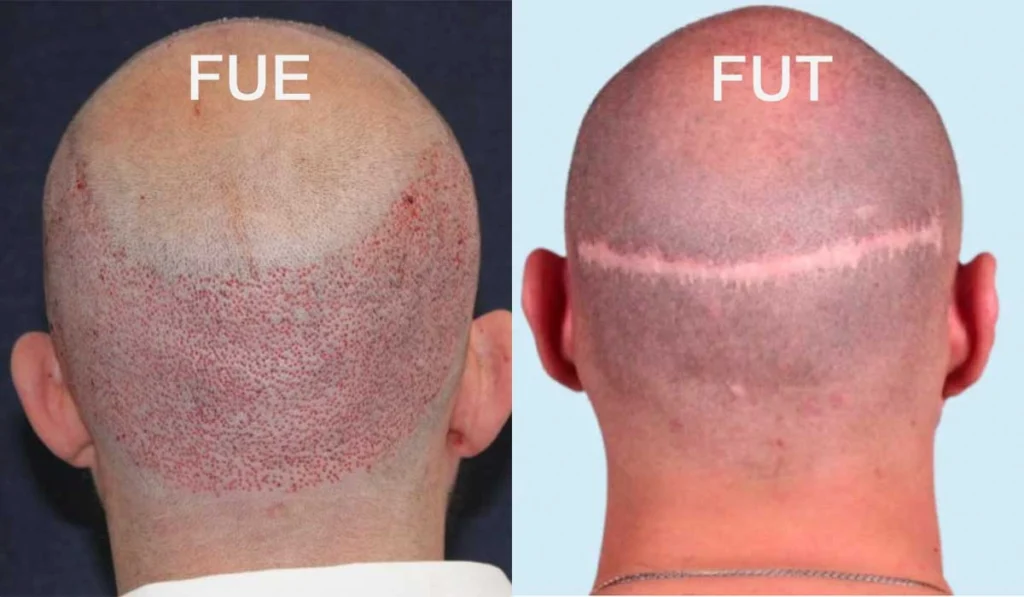
Common surgical signs include a stronger front line, improved density, and gradual improvement after recovery. A FUE (Follicular Unit Extraction) can produce small dot-like marks in the donor area, while FUT (Follicular Unit Transplantation) may leave a linear scar.
Systems may show a very uniform density, sudden changes, or a front edge that appears too consistent over time. A responsible article should avoid stating that he wears a wig without proof.
FUE vs FUT
FUE harvests individual follicular units using small punches. FUT, also called strip surgery, removes a thin donor strip that is divided into grafts. DHI (Direct Hair Implantation) is another approach that places grafts using a pen-like tool after extraction. These tools help with placement control, but no method guarantees a result.
Scarring and Recovery
FUE may leave many tiny dot marks rather than one long line. Some clinics say FUE can leave no visible scars, but that wording needs care, as scarring can still occur even when it is hard to see. FUT may suit some patients who need more grafts, but the linear scar is important for those who prefer very short cuts.
Recovery usually starts with mild swelling, redness, crusting, and scalp sensitivity during the first week. Most crusts fall off within 7 to 14 days, while redness can last longer depending on skin type and the size of the procedure.
Transplanted grafts often shed in the first few weeks, with new growth starting around 3 to 4 months. Visible density usually improves between 6 and 12 months, while final results may take 12 to 18 months.
Clinic, Cost, and Grafts
The specific clinic has not been clearly confirmed through a reliable public medical source. Claims about different countries appear online, but they vary. Readers should separate confirmed facts from repeated online statements.
Patients often compare countries because cost, access, physician involvement, regulatory standards, and follow-up can vary. Mexico, Turkey, and the United States may differ in clinic oversight, patient follow-up, and continuity of care.
High-volume or minimally supervised models can create risks when medical planning receives too little attention. Patients should evaluate who performs the procedure, who designs the plan, and who handles long-term review.
Cost and graft count remain estimates unless the patient or treating clinic confirms them. A large transformation may require thousands of grafts, especially if the frontal scalp and crown need coverage. A physician must assess donor supply before estimating a safe graft range.
At Hair Transplant Mexico, a single-area FUE procedure, such as the crown or hairline, typically ranges from $4,500 to $8,000. A full FUE hair transplant typically ranges from $6,000 to $10,000. The final price depends on the technique, number of grafts, physician involvement, location, and follow-up.
Does Conte Take Finasteride?
There is no reliable public confirmation that Conte takes finasteride. Finasteride can support maintenance in some men with male pattern baldness, but it requires medical review. It may help slow miniaturization in existing hair follicles. It does not replace surgical planning when balding areas already need graft coverage.
Medication decisions depend on age, diagnosis, risk profile, and tolerance. Public photos do not reveal whether a patient uses finasteride, minoxidil, PRP, or other non-surgical treatment options. Native density around implanted areas can still thin over time. Follow-up visits help track shedding, density, scalp health, and future treatment needs.
Medical Lessons From His Case
This case shows why visible restoration requires planning, not guesswork. A strong result depends on diagnosis, donor supply, graft survival, and realistic goals. Donor supply is limited, so a surgeon must decide how many grafts can be harvested without excessively weakening the donor area. This is why long-term planning matters more than short-term density alone.
Age also affects candidacy, as younger patients may experience greater loss of native growth in the future. Good candidates usually have enough donor density, clear goals, and realistic expectations.
A patient with active scalp disease, unstable loss, or a poor donor supply may need other treatment first, especially if they match the poor candidacy factors explained. A qualified medical evaluation helps define the safest plan before surgery.
Can Results Look Natural?
Yes, surgical restoration can look natural when the plan fits the patient. Natural results depend on front-line design, graft angle, density planning, graft distribution, donor quality, and follow-up. They also depend on how future thinning is managed. No result is guaranteed, so patients need a qualified medical evaluation before choosing surgery.
If you are considering a similar procedure, start with a medical evaluation to understand your donor supply, scalp health, and realistic options. Hair Transplant Mexico can review your case and explain whether FUE may be appropriate for your goals. Schedule a free consultation.