

At this stage, mild itching, small pimples, scalp sensitivity, and limited early regrowth can all be part of normal healing. However, worsening pain, pus, persistent bleeding, spreading redness, or a foul odor should be evaluated by a doctor.
At Hair Restoration Mexico in San Pedro, Monterrey, Dr. Antonio Aguilar provides clinical context on DHI recovery, including how healing, graft security, and future growth can vary from patient to patient.
Key Takeaways
- At month two, shedding, sparse growth, and patchy coverage can still be normal after the procedure. This stage is usually too early to judge the final result.
- The implanted follicles may remain under the scalp even when visible strands shed. New growth often becomes easier to see around months 3 to 4.
- Mild itching, small pimples, and scalp sensitivity can happen during recovery. Worsening pain, pus, bleeding, spreading redness, or foul odor should be reviewed by a doctor.
- Progress photos can help track healing, but lighting, length, and camera angle can make results look different. Consistent monthly photos give a clearer comparison.
- Full DHI results often take around 12 months, and in some cases, continue maturing after that. Hairline, crown, and donor area recovery can progress at different speeds.
Month-Two Recovery Overview
The second month can feel confusing because the scalp may look healed, but the implanted area may not yet look fuller. Many transplanted shafts have already shed, and the follicles are often in a resting phase before new growth starts. This can make the treated area look thin, uneven, or less dense than expected.
This does not mean the hair transplant procedure failed. In many cases, visible improvement starts around months 3 to 4, with clearer changes between months 6 and 12.
The early stage is part of the hair transplant recovery process, not a reliable preview of the outcome, and a broader 2-month after hair transplant guide can help compare this phase across different techniques.
What Your Hair Should Look Like
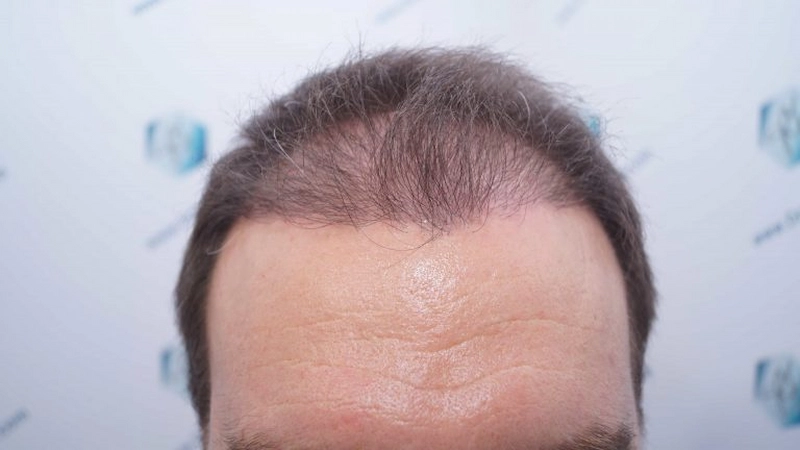
At this point, the recipient area may show short strands, gaps, mild redness, or small uneven patches. The scalp may look cleaner than it did during the first weeks because crusting and scabbing have usually resolved. The final pattern is not visible yet because most follicles have not entered active growth.
The frontal line may look faint or irregular. The crown may look thinner because this area often takes longer to show visible change. If existing hair was present before surgery, it may also look weaker due to temporary hair shedding.
Shock Loss and Sparse Growth
Shock loss refers to temporary shedding after surgery, which is why hair fall after a hair restoration surgery can occur even when the follicles remain active beneath the scalp. It can affect transplanted shafts and nearby native strands. This usually happens in the early weeks and can continue to affect how the scalp looks during the second month.
Sparse growth is common because the visible strand can fall while the follicle stays active under the skin. The scalp may look empty even when the graft remains in place. This is why this stage is too early to judge hair density.
Early Signs of New Growth
Some patients see tiny new strands by the end of this stage. Others see no visible change until month three or later. Early regrowth may look fine, light, or uneven before it matures.
A clearer way to understand it is that new growth often begins slowly, then improves in texture and coverage over time. Early growth does not always predict the final result.
How Healing Can Vary
Healing depends on skin type, hair type, graft count, technique, aftercare, and general health. Some people have lingering redness, while others show little change in their skin after a few weeks. Curly, coarse, or high-contrast strands can also make early results look more uneven.
Patients also compare countries when researching hair restoration because cost, clinic structure, medical oversight, and follow-up models vary by region. Mexico, Turkey, and the United States can all include qualified providers, but regulations and clinic oversight may differ.
A careful comparison should focus on physician involvement, informed consent, and continuity of care rather than price alone.
DHI Hair Transplant After 2 Months: Pictures
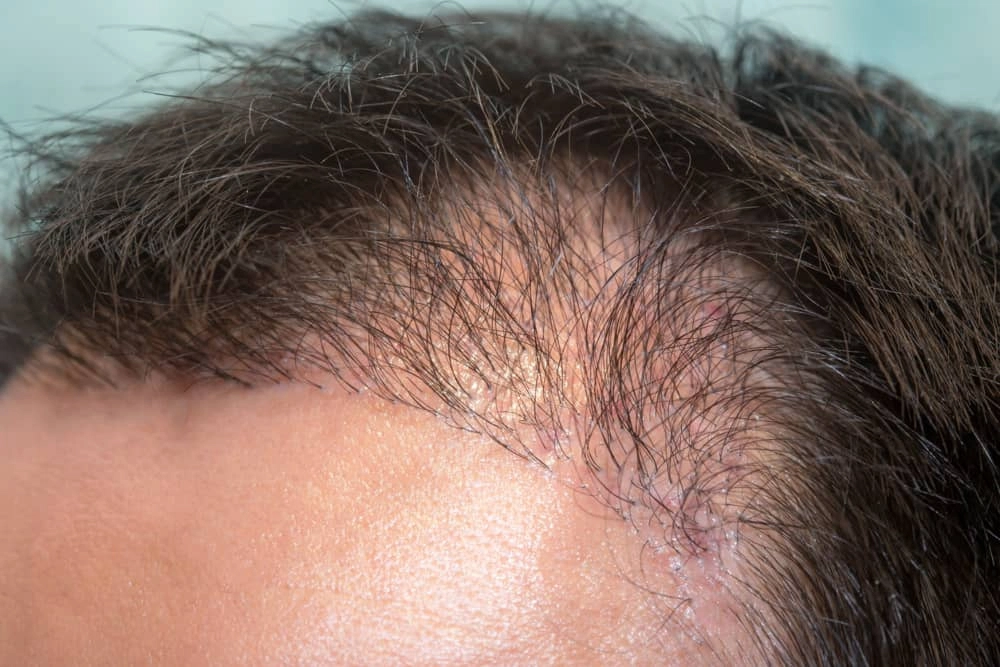
Photos often show patchy coverage, short, broken-looking strands, and visible scalp. The implanted zone may look less dense than expected because many shafts have shed. This stage may look especially underdeveloped if the patient had dense packing or a large treated area.
Are Grafts Secure After 2 Months?
By the second month, grafts are usually secure under the skin. The early risk period is much closer to the first days after implantation, when patients must avoid rubbing, scratching, and direct trauma. At this point, normal, gentle washing and daily contact are usually allowed if the physician has cleared them.
Grafts begin to anchor during the early recovery period. The exact timing can vary, but shedding at this stage usually reflects the growth cycle rather than graft loss. Patients often mistake fallen strands for failed grafts, but in many cases, the visible shaft sheds while the follicle remains.
This does not mean the scalp should be handled aggressively. The skin may still feel sensitive, and some follicles may still be cycling beneath the surface. Gentle washing, low-friction styling, and careful product use can support comfort during the healing process.
Normal Symptoms and Warning Signs
Mild symptoms can continue into the second month. Common issues include itching, small pimples, tightness, dryness, and mild sensitivity, which are often discussed as possible side effects of a hair transplant. These symptoms often improve as the scalp calms and follicles move through the recovery cycle.
Some symptoms need medical review. Infection, inflamed follicles, or poor wound healing can look different from normal irritation. The key is whether symptoms are mild and improving, or painful, spreading, and worsening.
Mild Itching, Pimples, or Sensitivity
Itching can happen as the scalp heals and new strands start to emerge. Small pimples may appear when follicles become blocked or irritated. Mild tenderness can also occur in the recipient or donor area.
Small bumps may resemble folliculitis, which is inflammation around follicles, but a raised or uneven skin texture may also lead patients to research concerns about cobblestone hair transplants. This can feel itchy or sore. If bumps become painful, widespread, or filled with pus, the patient should contact the treating team.
Pain, Pus, Bleeding, or Odor
Pain that gets worse, pus, bleeding, heat, spreading redness, or a bad odor should not be treated as normal recovery. These signs may indicate an infection or another complication that requires medical attention. The patient should contact the clinic instead of trying to manage it alone.
A few practical red flags include:
- Increasing pain or swelling
- Yellow discharge, pus, or foul smell
- Bleeding that returns after healing
- Fever or expanding redness
- Pimples that become painful or widespread
When to Contact Your Doctor
Contact your doctor if symptoms worsen, spread, or do not respond to basic care instructions. You should also reach out if you are unsure whether a bump, scab, rash, or sore area is normal. A timely review can prevent small issues from becoming larger problems.
Medical oversight helps separate normal recovery from signs that require treatment. This is especially important for patients traveling from another city or country. Post-procedure guidance should come from a qualified physician, not from online photo comparisons.
How to Care for Your Scalp
At this stage, aftercare usually becomes less restrictive, but it still matters. The goal is to keep the scalp clean, reduce irritation, and follow the physician’s plan. Patients should not add strong products or aggressive treatments without approval.
- Wash gently: Most patients can wash more normally by this phase. Use a gentle shampoo unless the physician recommends another product.
- Use fingertips, not nails: Clean the scalp with light pressure. Rinse well and avoid scrubbing hard.
- Limit irritation: Sun exposure, sweat, and friction can still bother healing skin. Heavy training may already be allowed for many patients, but the timeline can vary based on scalp condition.
- Avoid harsh products: Hats, helmets, tight styles, dyes, sprays, or strong gels should be avoided if they cause redness or discomfort.
- Keep follow-up structured: Follow-up visits give the patient a clear place to ask about the shedding phase, scalp symptoms, medication, and product use. This continuity of care is one reason patients compare clinics and destinations before choosing where to have surgery.
DHI Hair Transplant Timeline
A DHI procedure uses implantation tools, often called pens, to place grafts into the recipient area. This method is similar to modern FUE (Follicular Unit Extraction) based hair restoration, in which follicles are individually extracted before placement.
An FUE hair transplant and a DHI approach can differ in their implantation workflows, but both require careful planning, graft handling, and medical supervision.
No technique guarantees a specific result. Hair density depends on donor supply, graft survival, recipient area size, strand caliber, and long-term hair loss planning, which makes the donor area an important part of surgical planning. A realistic timeline helps patients avoid judging the outcome too early.
Months 1 to 2
The first month focuses on early healing, scab resolution, and initial shedding, while earlier milestones, such as 10 days after the restoration surgery, usually focus more on scab care and graft protection. By month two, many patients are in the resting phase. The scalp may appear calm, yet visible density remains limited.
This period can feel discouraging because the treated area may not yet meet the patient’s expectations. That reaction is common. The visible result usually takes more time to become meaningful.
Months 3 to 6
New growth often starts around months 3 to 4, which is why hair transplantation after 3 months is a more useful time point for assessing early regrowth. Early strands may look fine, weak, or irregular. Over the next few months, more strands may appear and begin to grow in length.
By month six, many patients see a clearer cosmetic change. Coverage may still look incomplete, especially in the crown or larger areas. The result should continue to mature after this point.
Months 6 to 12 and Beyond
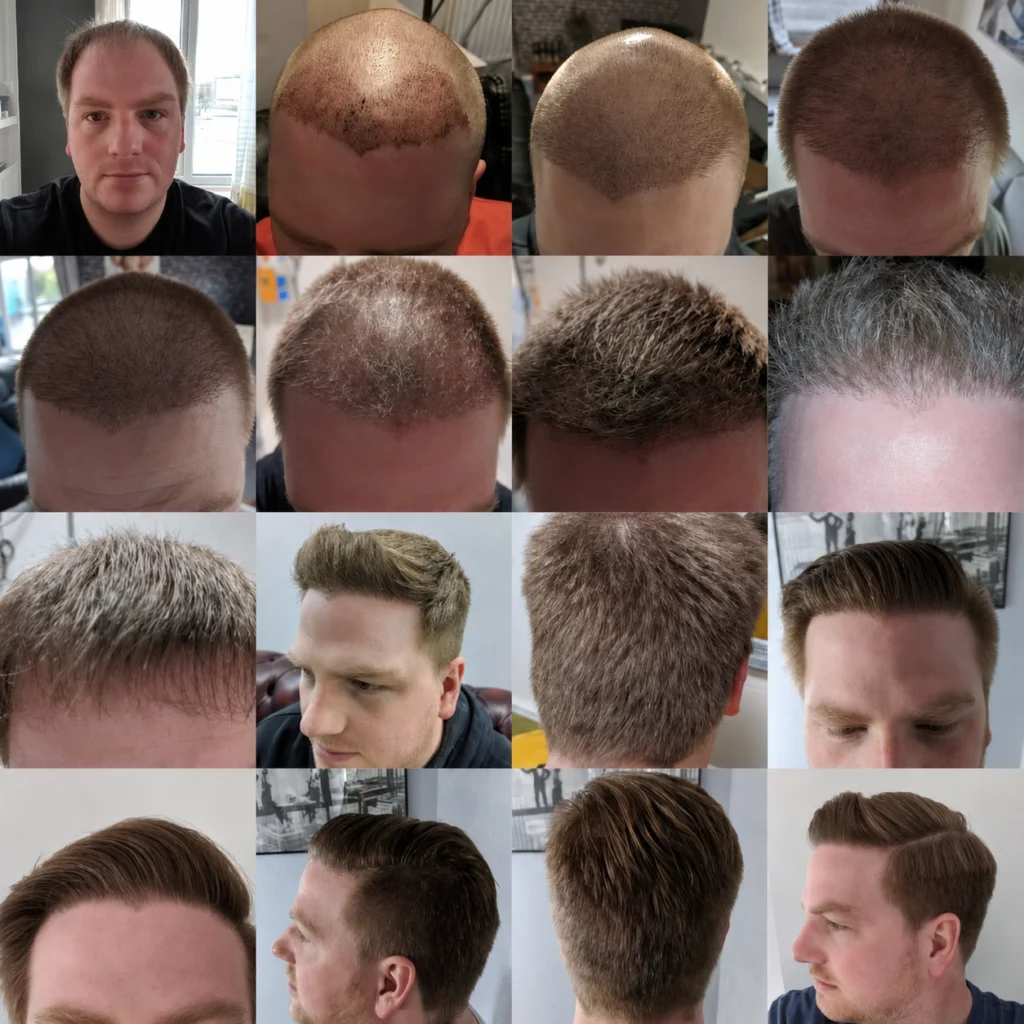
From months 6 to 12, the result usually becomes easier to judge. Hair often gains length, texture, and visual coverage. Many patients assess the final result at around 12 months, although some cases continue to improve beyond that.
It does not mean every patient finishes at the same time. Slower growth can occur, especially in larger cases or crown restoration.
2-Month DHI Hair Transplant FAQs
These questions reflect common concerns during early recovery. They also show why this phase can feel confusing. The scalp may look stable, but the cosmetic result has not yet fully begun.
Is Shedding Normal After DHI?
Yes, shedding is common after this type of procedure. The visible strands may fall out while the follicles remain under the skin. This process often happens before stronger regrowth begins.
Hair shedding can also involve nearby existing hair. This may make the treated area look thinner for a short period. If shedding appears severe or is accompanied by pain, redness, or scaling, a medical review is appropriate.
Is 2 Months Post-DHI Hair Transplant Too Early?
Yes, 2 months post-DHI hair transplant is too early to judge the outcome. The follicles may still be resting, and new growth may not be visible yet. Early appearance can change a lot over the next several months.
Patients should avoid judging success solely by early photos. A better approach is to follow the care plan and attend scheduled reviews. Progress should be assessed across the full recovery timeline.
How Many Months After Hair Transplant Do You See Results?
Many patients start seeing early growth around months 3-4. More visible improvement often appears between months 6 and 9. The final result is commonly assessed around month 12, with some cases taking longer.
This timing can vary by patient and treatment area. The crown may take longer than the frontal zone. Large cases may also need more time before density looks balanced.
How Long for Full Results if DHI Transplant?
Full results with this method often take about 12 months, and some patients continue to mature beyond that point. The implanted strands need time to shed, rest, regrow, thicken, and blend with surrounding coverage. This is why the second month is only one early stage in a longer process.
A qualified physician should evaluate delayed growth, unusual symptoms, or concerns about density. The key is to assess recovery over time, with medical guidance and realistic expectations.
If you are unsure whether your recovery looks normal, a medical review can help clarify your next steps. Schedule a free consultation with Hair Restoration Mexico to discuss your healing, growth timeline, and any concerns with a qualified physician.