

Norwood 2 can be a normal mature hairline rather than a sign of ongoing hair loss. Doctors may suggest checking for thinning follicles or trying finasteride or minoxidil before surgery. Hairline stability, donor hair supply, and the risk of future hair loss all affect the treatment plan. At Hair Transplant Mexico in San Pedro Garza García, Monterrey, Dr. Antonio Aguilar specializes in FUE hair restoration and assesses these factors when evaluating patients.
Key Takeaways
- Surgery is not always needed at Norwood 2. Mild temple recession may be a normal mature hairline rather than a sign of ongoing hair loss.
- Graft needs depend on the treatment area. Some procedures use around 1,000–2,000 grafts, based on hair density, donor supply, and the desired shape.
- Recovery and results take time. Early shedding is common, and visible hair growth develops gradually over 9–12 months or longer.
- Medication may help manage early hair loss. Finasteride and minoxidil can slow thinning and support hair growth in suitable patients.
- Costs vary across clinics in Mexico. Published prices range from about $2,000–$6,000 USD, depending on the procedure and services included.
Should You Get a Hair Transplant at Norwood 2?
Not necessarily. Most people at Norwood 2 do not need an immediate hair transplant, especially if their hairline is stable or shows only mild temple recession. Surgery may be appropriate when hair loss is established, donor hair is healthy, and the patient wants to restore areas unlikely to regrow naturally. A doctor must first determine whether the recession is a mature hairline or androgenetic alopecia, also called genetic pattern hair loss.
Patients with ongoing hair loss may benefit from medication, such as finasteride or minoxidil, before considering surgery. These treatments can help slow thinning and preserve existing hair, although results vary. A transplant becomes a more reasonable option when the patient understands the risk of future hair loss and has a suitable long-term treatment plan.
The best next step depends on the patient’s hair loss pattern and scalp health.
| Hair Loss Pattern | Possible Next Step |
|---|---|
| Stable mature hairline with no clear thinning | Monitor the hairline over time |
| Early signs of thinning follicles | Consider medication and track changes |
| Stable recession with healthy donor hair | Discuss surgical options with a doctor |
| Fast or ongoing recession | Check the cause and plan long-term treatment |
These are general guidelines, not fixed rules for every patient. A stable hairline does not always mean surgery is suitable, and active hair loss does not always rule it out. A doctor must assess each case before suggesting treatment.
Who Is a Good Candidate?
A good candidate usually has enough donor hair, a healthy scalp, a clear diagnosis, and realistic goals. Age also matters because younger patients may lose more hair as they get older. Surgery done too early can leave gaps if the surrounding natural hair continues to thin.
Doctors review the scalp, medical history, family history, and past hair loss before suggesting surgery. They may also check for miniaturization, which happens when hair follicles slowly produce thinner strands. Patients with stable recession and a healthy donor area may be suitable, while others may need more time to track their hair loss.
Norwood 2 is not too late for treatment because it is still an early stage of recession. Some patients may not need a transplant, especially when their hairline remains stable. The decision depends on follicle health, future hair loss risk, and personal goals, not the Norwood stage alone.
What Is a Norwood 2 Hairline?
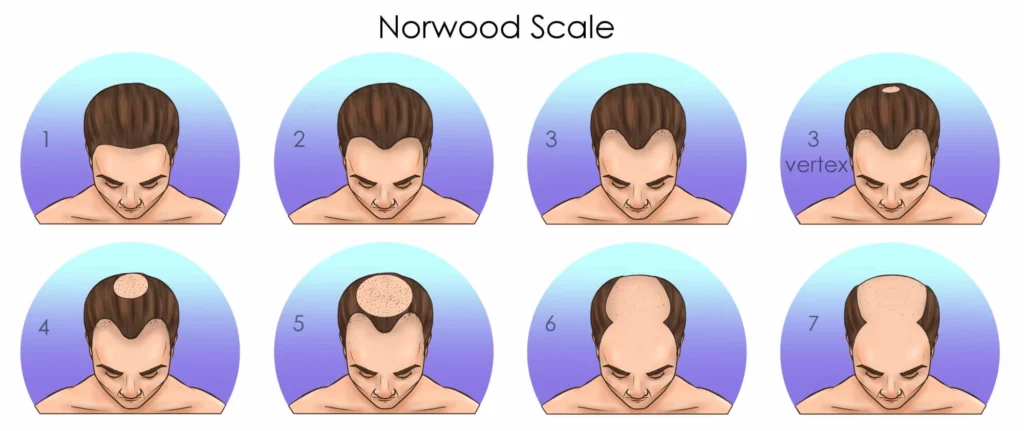
A Norwood 2 hairline has mild recession at the temples while most hair remains along the front and crown. It is an early stage on the Hamilton Norwood Scale, a classification system used to describe male pattern baldness. The hairline often forms a slight M or V shape without the deeper recession seen in later stages.
Male pattern hair loss often starts with thinning at the temples or crown. It is linked to a hormone called dihydrotestosterone (DHT), which can cause certain hair follicles to shrink over time. Still, a receding hairline does not always mean someone is going bald, so doctors must check whether the loss is getting worse.
The Hamilton Norwood Scale mainly describes common patterns of hair loss in men. It does not cover every type of hair loss, including many cases of female pattern hair loss. Doctors must find the cause of thinning instead of relying only on how the hairline looks.
Norwood 2 vs. a Mature Hairline
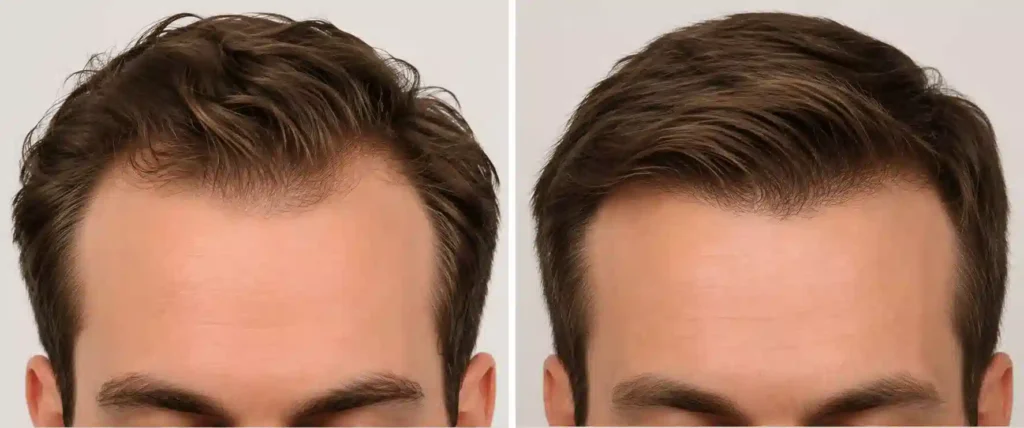
A mature hairline forms when the front hairline moves slightly backward as a person gets older. This change may cause mild temple recession without leading to major hair loss. Because a Norwood 2 hairline can look similar, doctors may need older photos or a scalp exam to tell them apart.
A mature hairline often stays in roughly the same position for years. Genetic hair loss may cause deeper recession, thinner hair near the front, or lower density elsewhere. Photos taken in the same lighting and from the same angle can help track these changes, but they cannot confirm the cause on their own.
Norwood 2 vs. Norwood 3
Norwood 2 usually involves mild temple recession with most frontal hair still present. Norwood 3 shows deeper recession and is often the first stage with clearer signs of significant balding. Some patients also develop thinning at the crown, which doctors may classify as a separate vertex pattern.
These stages describe where hair loss occurs and how much hair has been lost. They do not show the health of each follicle or predict how fast hair loss will progress. Two people at the same stage may have different donor hair quality, hair thickness, and treatment needs.

How Long Does Norwood 2 Last?
Norwood 2 can last for several years, decades, or even a lifetime if the hairline remains stable. There is no fixed timeline for progressing to Norwood 3, and some people never develop more advanced hair loss. Those with active male pattern baldness may experience deeper recession over months or years, depending on genetics, age, and hormone sensitivity.
A stable Norwood 2 hairline may simply be a mature hairline that does not require treatment. If recession continues, regular photos and scalp exams can help track changes and detect thinning follicles. A dermatologist may recommend finasteride or minoxidil to help slow further hair loss, although neither treatment guarantees that progression will stop.
Norwood 2 Hair Transplant Number of Grafts
Some Norwood 2 patients need around 1,000–2,000 grafts to restore mild temple recession. This is a general estimate, and some procedures use fewer or more grafts based on the treatment area. Published Norwood 2 cases include procedures with 1,250, 1,950, and more than 3,000 grafts, showing how much treatment plans can vary.
A graft is a small piece of tissue that contains one or more hair follicles. The graft count is not the same as the number of hairs because each graft can contain several hair strands. Doctors must consider this when planning how much hair to place in each area.
For example, a patient with small temple gaps may need fewer grafts than someone who wants a lower frontal hairline. In some cases, a 500-graft hair transplant may be considered for a small, targeted area. Hair thickness, curl, and scalp visibility also affect how much coverage the grafts can create. The goal is to improve the hairline without using more donor hair than needed.
How Doctors Determine Graft Requirements
Doctors estimate graft needs by measuring the area being treated and checking the density of the surrounding hair. They also examine hair thickness, curl, donor hair quality, and the difference between hair and skin color. These factors help determine hair transplant density and how much coverage each graft may provide.
A modest hairline design may require fewer grafts than a major change to the frontal hairline. Removing too many follicles can reduce the donor hair available for future procedures. This matters because some patients may continue losing hair as they age.
A scalp exam can also reveal thin or weak follicles that are hard to see in normal photos. Doctors use this information to decide where grafts should go and whether medication may also help. The final graft count should be based on a personal treatment plan rather than a fixed number.
How Does a Norwood 2 Hair Transplant Work?
A hair transplant moves healthy follicles from the donor area, usually the back or sides of the head, to areas with thinning or recession. The process includes a scalp exam, local anesthesia, graft removal, graft preparation, and placement. If the follicles survive and heal well, they can begin growing hair in the treated area.
Two common methods for collecting donor hair are follicular unit extraction (FUE) and follicular unit transplantation (FUT). FUE removes follicular units one at a time, while FUT removes a thin strip of scalp, which is then divided into grafts. Both methods involve surgery and have possible risks, including scarring and healing problems.
The International Society of Hair Restoration Surgery stresses the need for trained physicians and proper medical care during hair transplantation. Patients should know who performs the exam, removes the grafts, creates the recipient sites, and places the follicles. Each member of the medical team must work within the rules and licensing requirements of the treatment location.
Recovery and Hair Growth Timeline
During the first few days after surgery, patients may notice redness, tenderness, and small crusts around the grafts. Some also develop swelling around the forehead or mild pain in the donor area. Healing time depends on the procedure, skin response, health, and postoperative care.
Transplanted hair often sheds during the first few weeks, even when the follicles remain healthy. New hair usually starts appearing after several months and becomes thicker over time. Patients often see clearer results around 9–12 months, although growth and hair texture may continue to improve afterward.
Doctors provide instructions for washing, sleeping, exercise, and protecting the scalp during recovery. Follow-up visits help them check healing and track new hair growth. These visits are especially useful for patients who travel abroad because they may need care or advice after returning home.
Norwood 2 Hair Transplant Before and After Results
Before-and-after photos often show changes in temple coverage, frontal hair density, and the overall hairline shape. Some patients only want to fill small temple gaps, while others want a more defined frontal hairline. Results depend on the number of surviving grafts, donor hair quality, surgical planning, and future hair loss.
Published patient cases can help show how results differ between individuals. The examples below are from another clinic and are included for educational purposes.
Published Case 1: 1,250 Grafts
ASMED documents a Norwood 2 patient who received 1,250 FUE grafts collected with a manual punch. The published case includes photos taken before surgery and at a 10-month follow-up. It shows an example of a smaller graft procedure, but the results cannot predict how another patient will respond.
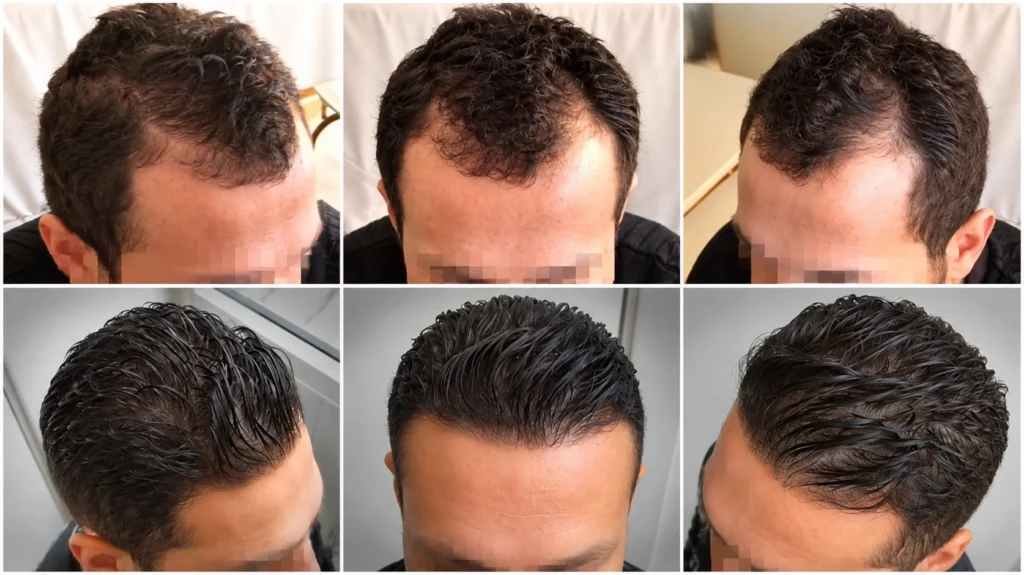
View the Original 1,250-Graft Case
Published Case 2: 1,950 Grafts
Another ASMED case documents a patient who received 1,950 FUE grafts using a manual punch. The published photos include views taken before surgery and at 20 and 27 months after treatment. The case shows how results may look over a longer period, but it does not guarantee the same outcome for others.
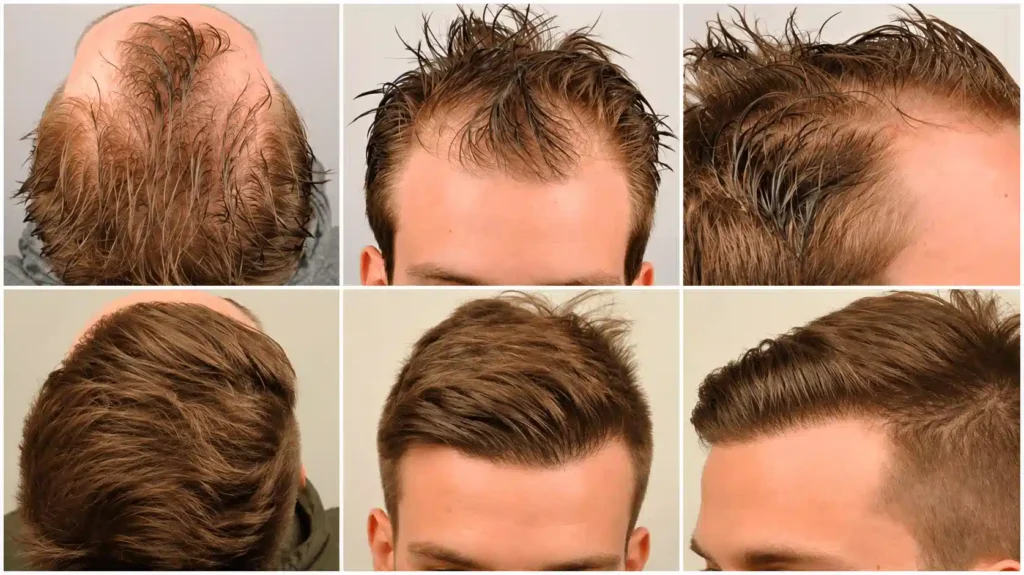
View the Original 1,950-Graft Case
A good cosmetic result does not always mean restoring the hairline a patient had as a teenager. A modest design can preserve some natural temple recession while improving the front of the scalp. Hair thickness, growth direction, and graft placement can affect the final look as much as graft count.
When comparing photos, patients should check that the lighting, camera angle, hair length, and follow-up dates are similar. Wet hair, styling products, and different camera positions can make hair density look higher or lower. Published results should be used as examples, not promises of what surgery can achieve.
How Much Does a Norwood 2 Hair Transplant Cost?
The price of a Norwood 2 procedure depends on the number of grafts, surgical method, physician involvement, and clinic fees. Some clinics charge for each graft, while others offer a fixed price or a package. A smaller procedure may cost less, but fewer grafts do not always mean a much lower price.
Patients should request a written estimate that explains what the price includes. Medical tests, anesthesia, medications, follow-up visits, and other services may affect the total. Those traveling for surgery should also include transportation and hotel expenses in their budget.
Hair Transplant Costs in Mexico
A 2026 review of Mexican clinic listings by Bookimed reports prices of about $2,000–$6,000 USD, with a narrower reported country range of $2,500–$3,300 USD. These prices cover hair transplants in general and are not specific to Norwood 2. Actual costs may be higher or lower depending on the clinic, treatment plan, and services included.
Patients comparing Mexico with the United States or Turkey should look beyond the advertised price. They should check physician credentials, medical oversight, clinic standards, follow-up care, and included services. Quality and safety can vary between clinics in the same country, so location alone does not determine the standard of care.
Patients traveling abroad should also ask who will handle problems or questions after they return home. They should confirm which doctor will perform the procedure and how follow-up visits will work. Comparing the same services across clinics makes it easier to understand the true cost of treatment.
Can Norwood 2 Improve Without Surgery?
Some people with early hairline recession can keep or improve their existing hair through medication. Treatment may slow the process that causes follicles to shrink and may help some follicles grow thicker hair. Results vary, and medication may not restore areas where follicles have stopped producing hair.
A dermatologist can check whether the patient has androgenetic alopecia or another cause of hair loss. An exam is especially important when shedding starts suddenly, creates a clear bald spot, or occurs with redness, itching, or scalp scars. These signs may point to a condition that needs different treatment.
Finasteride and Minoxidil
Finasteride is a prescription drug that lowers DHT levels by reducing the conversion of testosterone into DHT. It can slow male pattern hair loss and help some patients grow more hair. Patients should discuss possible side effects and their medical history with a doctor before starting treatment.
Minoxidil is another common treatment that may help keep hair growing and improve thickness. Topical minoxidil is widely available, while oral minoxidil is sometimes prescribed off-label for hair loss and requires medical supervision. Patients usually need several months of regular use before they can judge the results.
The American Academy of Dermatology explains that finasteride and minoxidil can help treat genetic hair loss, although results vary from patient to patient. Most people must continue treatment to maintain the benefits, and stopping medication may lead to renewed hair loss. A doctor can help decide whether medication, surgery, or monitoring is the better option.
Risks and Long-Term Hair Loss Planning
Hair transplant surgery has possible risks, including infection, bleeding, scarring, temporary shedding, poor graft growth, and an unnatural hairline. Not every patient develops problems, but the risk depends on health, surgical technique, and aftercare. A doctor should explain these risks, possible results, and other treatment options before surgery.
One concern with early hair restoration is that untreated hair may continue to recede after the procedure. A patient may first see better temple coverage but later lose hair behind the transplanted area. This can create an uneven look that may require medication, another procedure, or changes in hairstyling.
Donor hair is limited, and each procedure uses follicles that may be needed later. Lowering the hairline too much can use grafts that might be helpful if thinning spreads toward the crown. A more modest plan can help protect the donor supply while still improving the hairline. Some patients may also need to consider how many hair transplants they might need if hair loss continues.
Patients should also understand that surgery moves hair follicles but does not stop genetic hair loss. Even follicles taken from areas that usually resist thinning may not survive forever, and untreated natural hair can continue to change. Some patients may need ongoing medication or further treatment to manage future hair loss.
A qualified physician should confirm the cause of hair loss, explain the procedure, and discuss realistic results before treatment. Patients traveling abroad should also know how they will receive care if problems occur after returning home. The final decision should be based on scalp health, future hair loss risk, medical advice, and personal treatment goals.
Schedule a Hair Transplant Consultation
If you’re considering a hair transplant at Norwood 2, a medical evaluation can help determine whether surgery is right for you. Schedule your free consultation with Hair Transplant Mexico to discuss your hair loss, donor hair health, and available treatment options.
References
1. American Academy of Dermatology – Male Pattern Hair Loss Treatment. Information about male pattern hair loss, finasteride, minoxidil, and treatment options.
2. International Expert Consensus on Hair Transplantation Care (2023). Published medical guidance on patient selection, treatment planning, and postoperative care.
3. International Society of Hair Restoration Surgery – Surgical Treatments. Information about FUE, FUT, surgical techniques, and physician involvement.
4. Bookimed – Hair Transplant Costs in Mexico. Published clinic pricing information for hair transplant procedures in Mexico.
5. ASMED – Norwood 2 Hair Transplant, 1,250 Grafts. Published FUE patient case with a 10-month follow-up.
6. ASMED – Norwood 2 Hair Transplant, 1,950 Grafts. Published FUE patient case with 20- and 27-month follow-ups.