
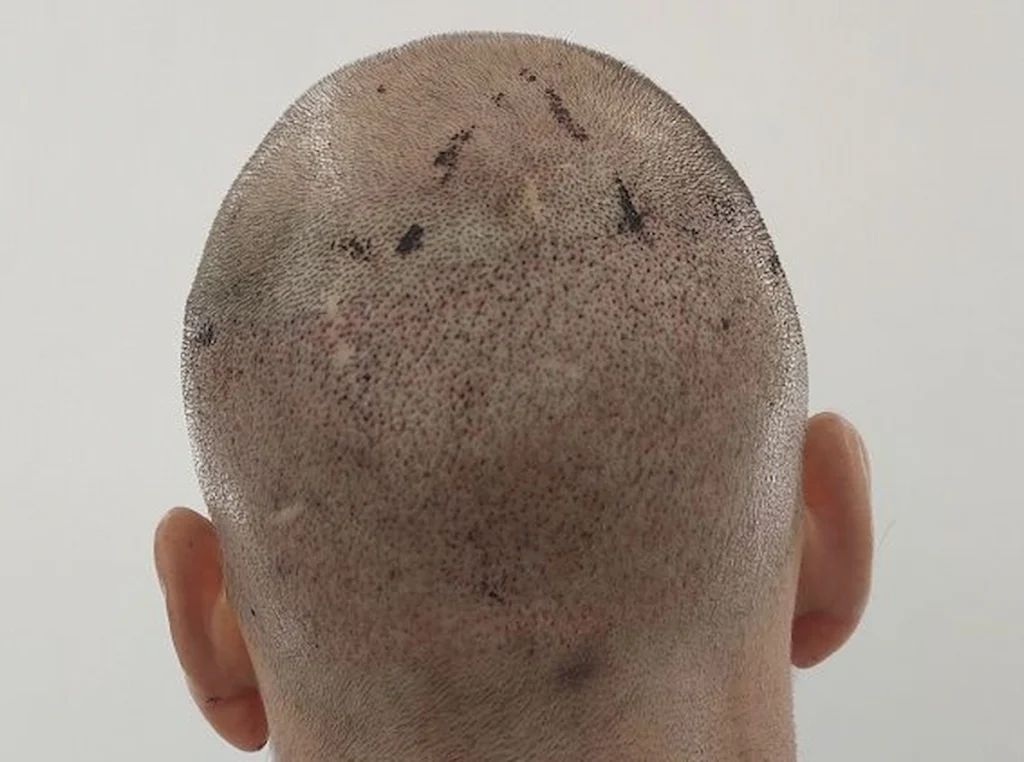
Long-term appearance depends on the surgical method, number of grafts removed, and remaining hair density. FUE leaves small dot scars, while FUT leaves a linear scar that may take 6–12 months or longer to mature. Removing too many grafts can cause lasting thinning. At Hair Transplant Mexico in San Pedro Garza García, Monterrey, Dr. Antonio Aguilar specializes in FUE hair restoration and evaluates donor density before planning extraction.
Key Takeaways
- The donor area often becomes red, tender, and covered with small scabs after surgery. Most surface wounds heal within 7–14 days, but full recovery takes longer.
- Removed hair follicles do not grow back in their original spots. The hair left behind keeps growing and often hides the small extraction marks.
- Temporary shock loss may cause extra shedding after surgery. Hair can grow back over several months if the follicles remain healthy.
- FUE leaves small dot scars, while FUT leaves a long, narrow scar. Removing too many grafts can cause lasting thinning and limit future procedures.
- Gentle washing, avoiding friction, and following your surgeon’s instructions help the scalp heal. Worsening pain, spreading redness, fever, or unusual discharge needs medical attention.
Hair Transplant Donor Area Recovery Timeline
This process happens in stages after the hair transplant procedure. In FUE (follicular unit extraction) surgery, the doctor removes individual follicular units through tiny openings in the skin. These extraction sites form small scabs as the wounds begin to heal. Most surface wounds close within 7–14 days, but redness and changes in skin sensation may last longer.
Patients who undergo FUT (follicular unit transplantation) may need more time for their surgical incision to heal. Recovery also depends on how many grafts were removed, the patient’s skin, and the aftercare routine. The following timeline describes common changes after FUE.
| Recovery Period | Expected Changes | General Appearance |
|---|---|---|
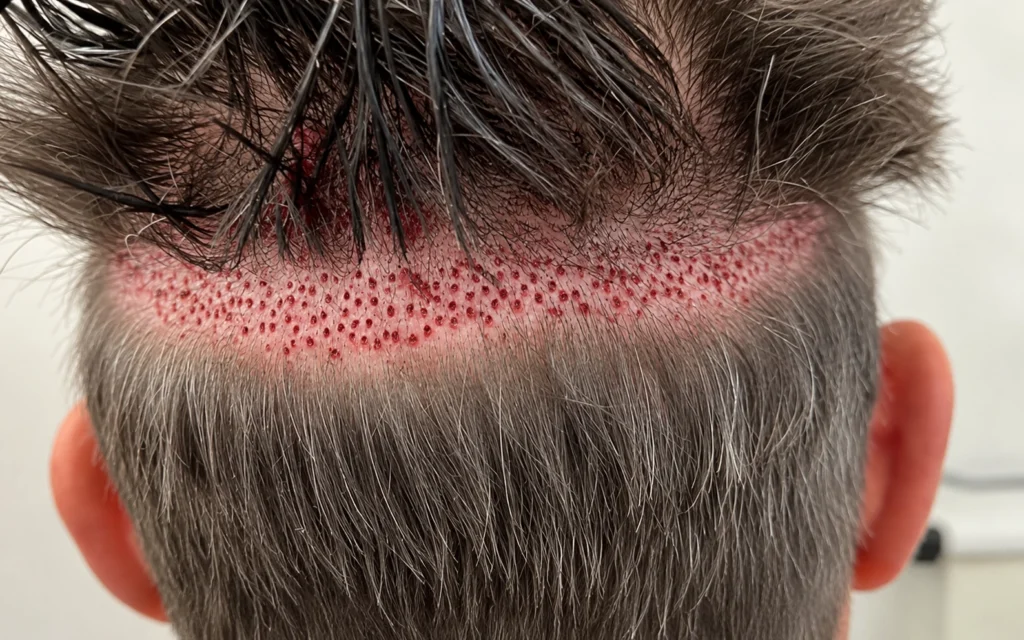
| First 72 Hours | Redness, tenderness, small wounds, and early scabs | Visible red extraction marks |
| Days 4–14 | Scabs loosen, pain decreases, and wounds close | Redness gradually fades |
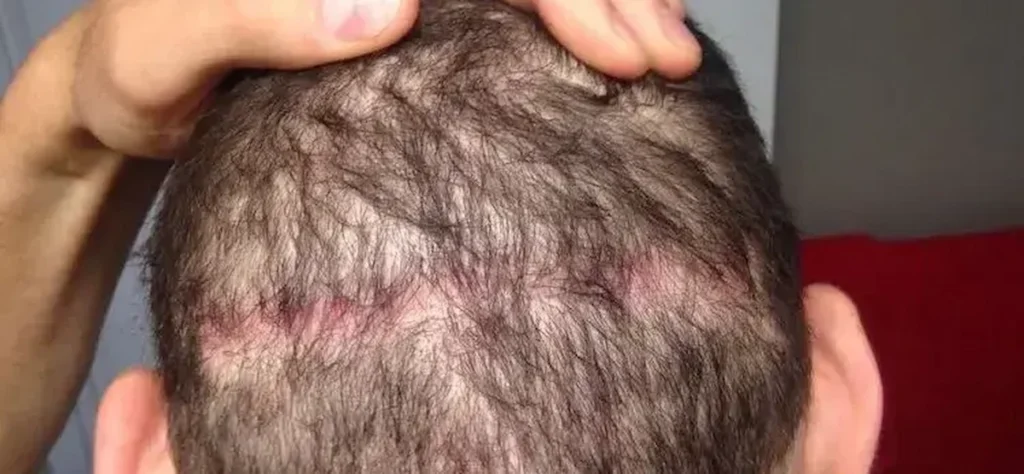
| After 1 Month | Most surface wounds have healed; temporary shedding may occur | Hair hides many extraction marks |
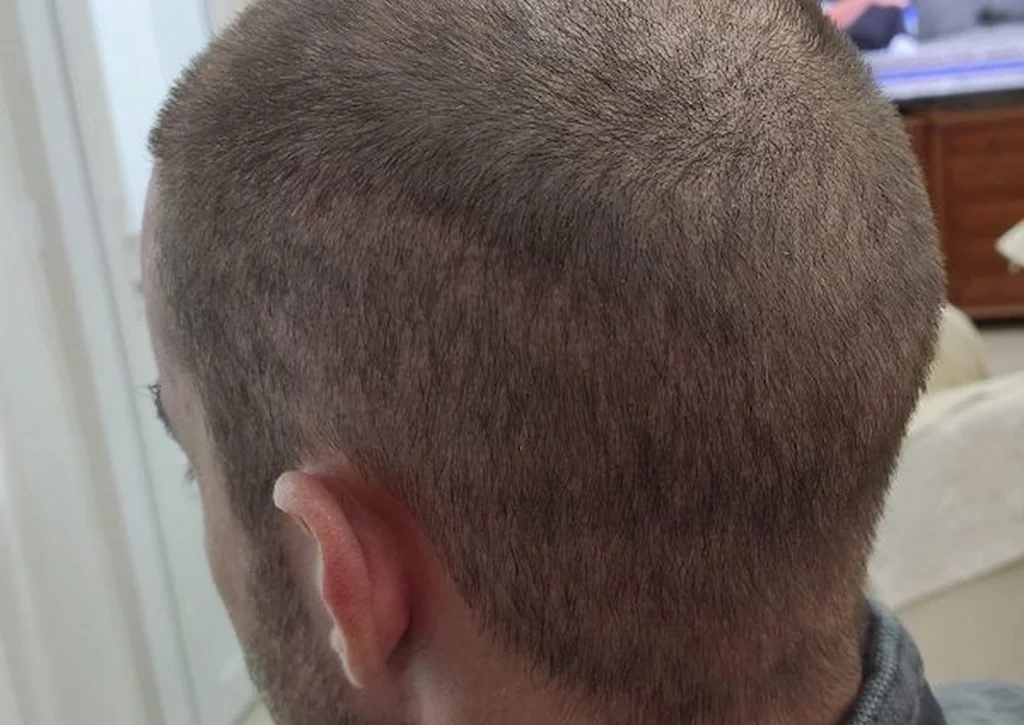
| After 3 Months | Some shed hair may start growing back; scars keep healing | Coverage becomes easier to assess |
First 72 Hours
During the first three days, the scalp may show small red dots where grafts were removed. Mild swelling, itching, and tenderness are common. Some patients also notice temporary numbness or tightness as the skin begins to heal.
The scalp needs gentle care during this stage. Patients should follow their doctor’s instructions for washing, sleeping, and taking medicine. Heavy exercise and activities that cause excessive sweating may need to wait.
Days 4–14
Small wounds begin closing, and scabs gradually fall off. Redness and discomfort usually decrease, although mild itching may continue. Many patients notice clear signs of healing by the second week.
Patients should avoid scratching or forcibly removing scabs. Small marks may remain visible, especially with short hair. Worsening redness or unusual discharge should be checked by a doctor.
Donor Area After 1 Month
After one month, most surface wounds have healed. Nearby hair growth often makes extraction marks less visible. Some patients still experience mild redness, numbness, or temporary thinning caused by shock loss.
The appearance at this stage is not the final result. Hair affected by surgical stress may still be recovering. Small scars can also continue changing over several months.
Donor Area After 3 Months
By three months, the first stage of skin healing is usually complete. Some patients begin seeing hair regrowth in spots affected by shock loss. Others may need more time.
Hair density affects how well the scalp hides extraction marks. Patients with extensive harvesting may notice lasting gaps. A doctor can assess whether thinning is temporary or permanent.
Does Hair Grow Back in the Donor Area?
Hair can keep growing in the donor region, but follicles removed during surgery do not return to their original spots. The surgeon moves these follicles to thinning areas rather than creating new ones. Hair left behind continues growing and may cover the extraction marks.
Hair Regrowth After FUE and FUT
Hair follicles removed during FUE or FUT do not grow back in their original locations. Both methods permanently reduce the number of follicles in the donor region. The remaining hair continues growing and may cover the areas where grafts were taken.
After FUE, nearby hair often hides the small extraction marks as it grows longer. After FUT, hair around the surgical scar may also grow long enough to conceal it. Neither method restores the follicles that were removed.
The amount of visible thinning depends on the original hair density, number of grafts taken, and hair thickness. Short hairstyles may make gaps or scars easier to see. Careful surgical planning helps preserve enough hair for natural-looking coverage and possible future procedures.
Temporary Shock Loss vs. Permanent Removal
Shock loss is temporary shedding caused by surgical stress. It may affect existing hair near the extraction sites, making the scalp look thinner several weeks after treatment. The affected follicles often remain healthy.
Hair may start growing again over the following months. In contrast, fully removed follicles cannot produce new hair in their original spots. A doctor can help determine whether ongoing thinning is temporary or permanent.
How to Care for the Donor Area
Proper aftercare supports donor area healing and helps reduce irritation. The right routine depends on the surgical method and the condition of the wounds. Patients should follow their surgeon’s instructions rather than using unapproved treatments.
What to Put on the Donor Area
Doctors may recommend saline solution or a mild shampoo during early recovery. Washing instructions vary depending on the procedure. Some patients may also receive specific medicines or skin products.
Avoid applying strong shampoos, hair dyes, alcohol-based products, or oils without medical approval. These products may irritate healing skin. Use antibiotic creams only when recommended by a medical professional.
Touching, Washing, and Daily Activities
Gentle contact may be allowed during washing once the doctor approves it. Patients should avoid scratching, rubbing, or pressing hard on healing wounds. Clean hands and careful washing help keep the area free of dirt.
Heavy exercise, swimming, and prolonged sun exposure may need to be avoided temporarily. Patients should return to these activities based on their doctor’s advice. Those traveling for surgery should also arrange follow-up care before returning home.
Does the Donor Area Scar?
Both FUE and FUT leave scars because they involve removing tissue from the scalp. Their appearance depends on the surgical method, wound size, and healing process. Nearby hair often makes these scars less noticeable.
FUE vs. FUT Scarring
FUE creates many tiny round wounds that heal into small dot scars. These marks may be hard to see when enough hair remains. Very short hairstyles can make them more visible.
FUT, also called strip surgery, removes a narrow strip of scalp. The surgeon closes the wound, leaving a linear scar. Scalp laxity, or how easily the skin stretches, can affect how the wound heals.
Neither method prevents scarring completely. A doctor should assess hair density, scalp health, and treatment goals before choosing an approach.
Overharvesting and Permanent Thinning
Overharvesting happens when too many grafts are removed or poorly spread across the scalp. This can leave thin patches, visible scars, or uneven coverage. The loss of extracted follicles is permanent.
Doctors reduce this risk by assessing available hair density and carefully planning graft removal. They also consider future hair loss and how much hair can be safely harvested. Removing too many follicles during one procedure can limit later treatment options.
Can the Donor Area Be Used Again?
The donor region may support another transplant if enough healthy follicles remain. Previous hair transplant surgery does not always prevent another procedure, but it reduces the available hair supply. A doctor must assess remaining density and previous extraction patterns.
The evaluation also considers age, medical history, and future hair loss. Not all follicles on the back and sides of the scalp resist thinning equally. Doctors must identify areas where hair is likely to remain stable over time.
For FUT patients, existing scars and scalp laxity affect whether another strip can be removed. For FUE patients, the remaining follicle density helps determine how many more grafts may be available. Some patients may not have enough suitable hair for another procedure.
When Should You Contact Your Surgeon?
Mild redness, itching, tenderness, and small scabs are normal during early healing. These symptoms should gradually improve. Patients should contact their surgeon if pain, redness, or swelling becomes worse.
Warning signs include fever, unusual discharge, spreading redness, and bleeding that does not stop. Wounds that reopen or skin that becomes unusually dark also require medical attention. Severe bleeding or rapidly worsening symptoms need urgent care.
Follow-up visits help doctors assess wound healing, scarring, and changes in hair density. Recovery times vary, so medical advice should reflect each patient’s condition. Regular checks can help identify problems before they become more serious.
Understanding how the donor area heals can help you set realistic expectations before a hair transplant. If you’re considering treatment, schedule a consultation with Hair Transplant Mexico to assess your donor hair density, discuss your options, and develop a treatment plan based on your needs.
Clinical References
1. Arencibia Pérez N, Guerrero Roldán MJ. Donor Site Healing in Follicular Unit Extraction Hair Transplantation: Current Evidence, Cellular Mechanisms, and Future Research Directions. Cellular and Molecular Biology. 2025;71(8):93–98. View research.
2. Hair Transplant Practice Guidelines. Journal of Cutaneous and Aesthetic Surgery. 2021. Read guidelines.
3. Follicular Unit Extraction (FUE) Hair Transplant: Curves Ahead. 2019. Read clinical review.
4. International Society of Hair Restoration Surgery. FUE Guidelines. 2019. Read guidelines.
5. National Health Service. Hair Transplant: Recovery, Risks, and Aftercare. Read NHS guidance.