
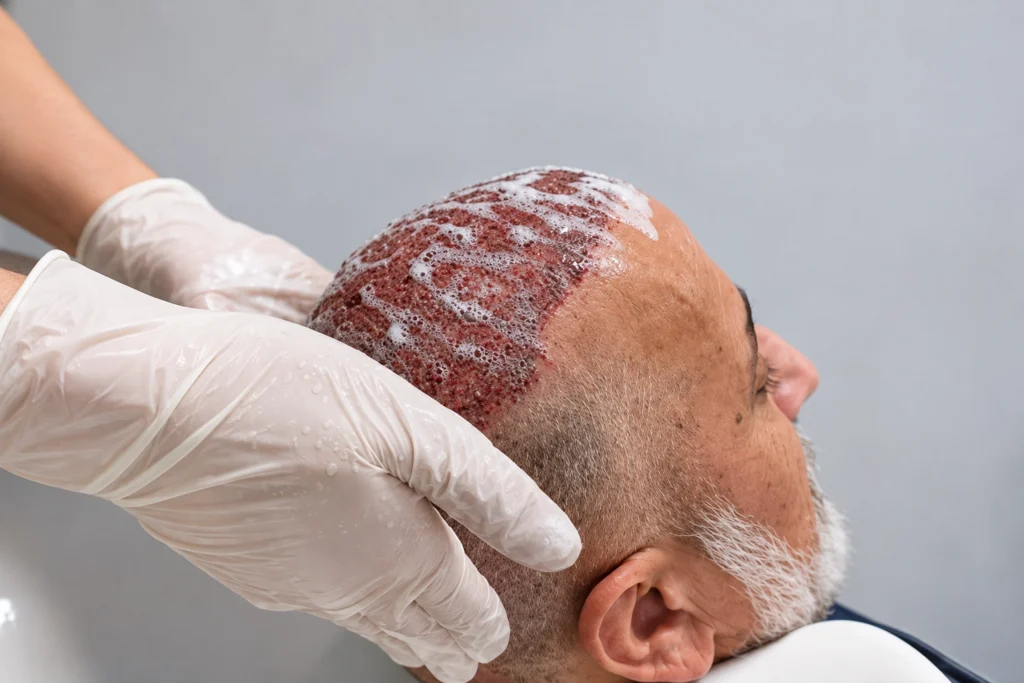
The transplanted area needs more care than the donor area, especially during the first week. Avoid strong shower pressure, scratching, and forcibly removing scabs until your surgeon approves normal scalp contact. At Hair Transplant Mexico, located in San Pedro Garza García, Monterrey, Dr. Antonio Aguilar specializes in FUE hair restoration and has over 10 years of experience performing hair transplants.
Key Takeaways
- First wash timing: Gentle cleaning often begins within 24–72 hours after surgery. Your surgeon will set the right schedule based on your procedure and healing progress.
- Proper technique: Use mild shampoo, lukewarm water, and gentle patting motions. Avoid rubbing the transplanted area or using strong water pressure.
- Washing frequency: Many surgeons recommend gentle daily washing for the first 7–14 days. This helps remove oil, dried blood, and loose scabs.
- Normal washing: Most patients can slowly return to their regular shampoo routine around days 10–14, as long as the scalp heals well.
- Scalp protection: Avoid scratching, picking at scabs, and using harsh products. Contact your surgeon if pain, redness, swelling, or bleeding gets worse.
When Can You Wash Your Hair After a Transplant?
Patients can often begin gentle scalp cleaning within 24–72 hours after hair transplant surgery. Some surgeons allow washing after 24 hours, while others recommend waiting 48–72 hours or longer. Some clinics also provide a supervised first wash to show patients how to clean their scalp safely.
The right schedule depends on the surgical method, scalp condition, and your surgeon’s instructions. FUE (follicular unit extraction) and DHI (direct hair implantation) procedures both involve placing hair follicles into the scalp. DHI typically uses a special pen to insert grafts, while FUE refers to removing follicles from the donor area. Both methods require careful scalp care during early healing.
How to Wash Your Hair After a Transplant
A safe hair wash after a hair transplant limits rubbing, heat, and direct pressure on the scalp. Once your surgeon approves cleaning, follow these steps:
- Prepare the scalp: If prescribed, apply a post-surgery lotion using light patting motions. Leave it on for the time your surgeon recommends.
- Prepare the shampoo: Mix a mild, approved shampoo with water to create a light foam.
- Clean gently: Place the foam onto the transplanted area without rubbing or scratching.
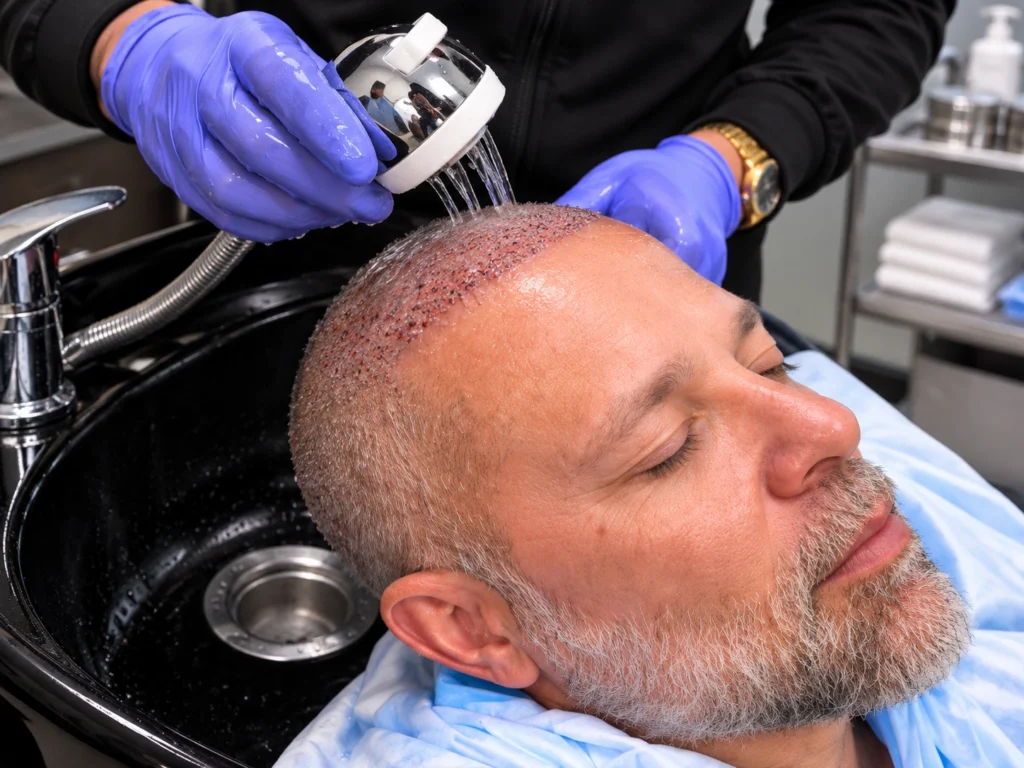
- Rinse carefully: Slowly pour lukewarm water from a clean cup or use another approved low-pressure method.
- Dry safely: Let your scalp air dry or follow your surgeon’s drying instructions.
Choosing the Right Shampoo
Choose a mild, pH-balanced shampoo or one recommended by your surgeon. Avoid strong cleaning products, scalp scrubs, and medicated shampoos unless your physician approves them. These products may cause dryness or irritation while your scalp heals.
Before you apply shampoo, mix it with water or create foam between your palms. This makes it easier to spread the product without rubbing the grafts.
Washing the Recipient and Donor Areas
The recipient area contains newly implanted follicles and needs gentle cleaning during the first few days. Avoid pressing your fingers against the transplanted grafts or rubbing the skin. Instead, carefully place shampoo foam onto the surface and rinse as instructed.
The donor area, usually at the back or sides of the scalp, may tolerate gentle cleaning sooner. Light fingertip movements can help remove buildup once your surgeon allows them. Avoid scratching either area while the skin is still healing.
Rinsing and Drying Your Hair Safely
Use lukewarm water instead of hot water, which can irritate sensitive skin. Avoid placing your head under a strong shower stream or using massage jets. Pour water slowly from a cup to control water pressure.
Air drying helps prevent rubbing against the grafts. If your surgeon allows a hair dryer, use a cool, low-speed setting and keep it away from your scalp. Avoid rubbing the transplanted area with a regular towel during early recovery.
Hair Washing Timeline After a Transplant
Your scalp heals gradually, so your washing routine will change during hair transplant recovery. The following timeline explains when you can begin gentle cleaning, how to care for your grafts, and when normal shampooing may resume. Follow your surgeon’s instructions if they differ from these general guidelines.
| Recovery Period | Recommended Hair Care |
|---|---|
| First 24–48 Hours | Protect the grafts and follow instructions for saline sprays, rinsing, or supervised cleaning. |
| Days 3–7 | Wash gently with approved shampoo and low-pressure water. Avoid rubbing the recipient area. |
| Days 7–14 | Slowly begin light fingertip cleaning if your surgeon approves. Let scabs loosen naturally. |
| After 14 Days | Most patients can return to normal shampooing if the scalp is healing well. |
| After One Month | Regular washing is usually safe, but ongoing irritation may need medical care. |
When Can You Wash Your Hair Normally?
Follow-up visits help your surgeon check healing and adjust your post-hair transplant care instructions when needed. By this stage, the grafts are usually more firmly attached to the scalp, although healing times vary. Start slowly and watch for any remaining scabs or tenderness.
Normal washing does not mean every hair treatment is safe. Hair dyes, chemical treatments, and strong styling products may require more healing time.
How Often Should You Wash Your Hair?
Many surgeons recommend gentle daily washing during the first one to two weeks. This routine helps remove oil, dried blood, and surface buildup while the skin heals. Patients with sensitive skin or healing problems may need a different schedule.
After recovery, washing frequency depends on your scalp, hair type, and daily routine.
Washing Your Hair After One Month
One month after surgery, most patients can follow their usual shampoo routine. Gentle fingertip massage and regular showering are generally comfortable once the scalp has healed. If redness, irritation, or tenderness continues, ask your surgeon before using stronger products.
Some transplanted hairs may still shed during this stage. This is often part of the normal hair growth cycle and does not always mean the grafts have failed.
Are Hair Grafts Secure After 7 Days?
Hair grafts become more secure as the surrounding skin heals. A study in Dermatologic Surgery involving 42 patients found that pulling hair no longer dislodged grafts by day six. Attached scabs could still pose a risk earlier in recovery, but by day nine, grafts in the study were no longer dislodged during testing.
These findings help explain why surgeons recommend extra care during the first 7–10 days. Healing can vary, so the same timeline may not apply to everyone. Avoid scratching or forcefully removing scabs until your surgeon approves normal scalp contact.
Common Washing Mistakes and Scalp Care
Proper scalp care helps protect newly implanted grafts during recovery. Avoid these common mistakes to reduce irritation and support healing:
- Rubbing too hard: Scrubbing or scratching the scalp can disturb grafts and irritate healing skin.
- Using strong water pressure: Direct shower streams may put unnecessary pressure on sensitive areas.
- Removing scabs too soon: Picking at attached scabs can damage healing tissue and increase the risk of bleeding.
- Choosing harsh shampoos: Products with strong fragrances or irritating ingredients may cause dryness and discomfort.
- Washing too often: Excessive cleaning or using too much shampoo can dry out the scalp without improving healing.
Follow your surgeon’s care plan and avoid trying new scalp products without medical approval.
How to Handle Scabs and Itching
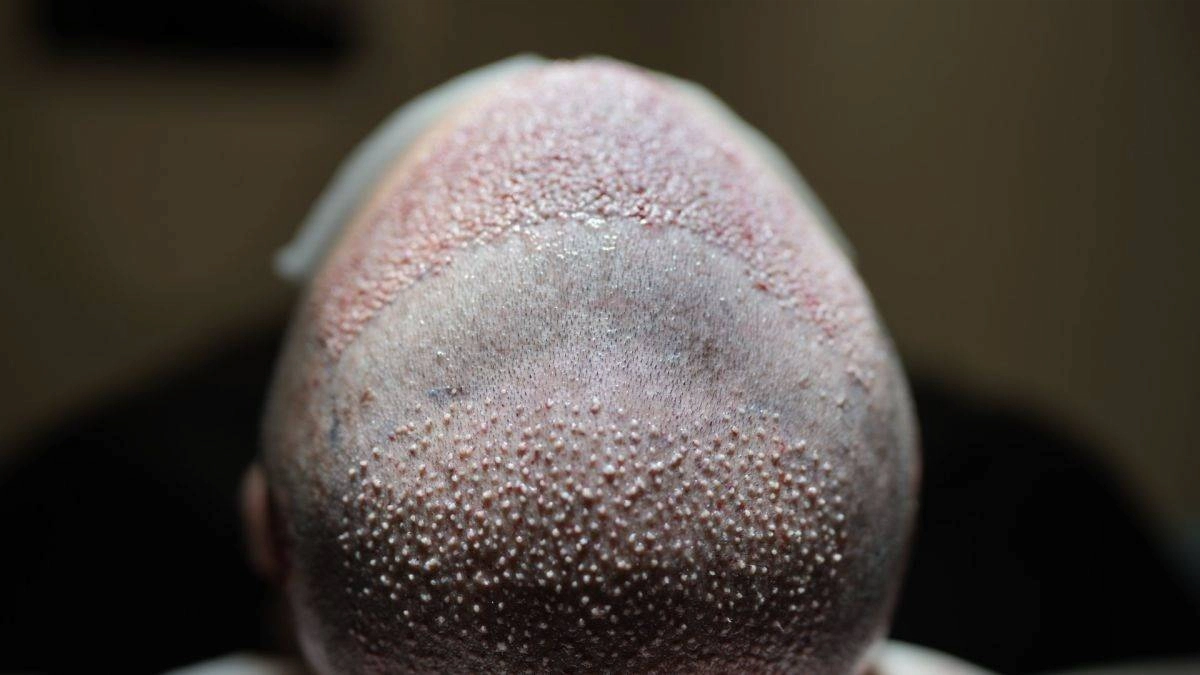
Small scabs often form around the implanted follicles as the skin heals. They usually loosen and fall off during the first one to two weeks. Picking at attached scabs can damage the skin and should be avoided.
Mild itching is also common during recovery, but scratching can make it worse. Use only approved shampoos, lotions, or other products to ease discomfort.
 When to Contact Your Surgeon
Contact your surgeon if you notice worsening pain, increasing redness, unusual discharge, fever, or bleeding that does not stop. These symptoms may point to a problem that needs medical care.
Heavy bleeding or symptoms that get worse quickly require prompt attention. Mild swelling is common during the first few days, but hair transplant swelling that gets worse or lasts longer than expected may need medical attention.
Follow-up visits help your surgeon check healing and adjust your care instructions when needed. Patients traveling to another country for hair restoration should also confirm how the clinic handles follow-up care after they return home.
If you are considering a hair transplant in Mexico or have questions about the procedure and recovery, schedule a free consultation with Hair Transplant Mexico to discuss your options with Dr. Antonio Aguilar.
Clinical References
- Bernstein RM, Rassman WR. Graft Anchoring in Hair Transplantation. Dermatologic Surgery. 2006;32(2):198–204.
- Hair Transplantation. StatPearls, NCBI Bookshelf.
- An International Expert Consensus Statement Focusing on Pre- and Post-Hair Transplantation Care. Journal of Dermatological Treatment. 2023.