

A medical review would require a doctor to check the scalp, donor area, loss pattern, and health history. Hair Transplant Mexico, located in San Pedro Garza García, Monterrey, shows how doctors assess these factors before they consider surgery.
Key Takeaways
- There is no public confirmation that he has undergone surgical restoration, so claims about a procedure are still unproven.
- Changes in the Justin Theroux hairline may come from styling, length, treatment, a cosmetic system, or surgery.
- Before-and-after photos can show clear differences, but lighting, angles, and grooming can change how the scalp looks.
- FUE can add density or reshape a receding frontal line, but candidacy depends on donor supply, scalp health, and future loss.
- A doctor can assess thinning more accurately through a scalp exam, medical history, and donor review than through photos alone.
Did Justin Theroux Have a Hair Transplant?
No verified public statement confirms he had a surgical restoration procedure. Some newer photos show a fuller frontal area, while other images still show his long-standing widow’s peak and temple recession. The current evidence does not support a firm answer.
A doctor would need to check donor density, scalp health, age, loss pattern, and how the appearance changed over time. Without that review, any claim about surgery is only a guess.
Justin Theroux’s Hairline Changes Over Time
His Earlier Hairline
Earlier photos and film roles show a clear widow’s peak with recession near the temples. The frontal pattern has stayed the same for years, though it can look different depending on length and style. Light and camera angles can also make the temples look more or less exposed.
Justin Theroux Before and After
Before-and-after photos sometimes show a fuller frontal area in newer images. The center may look denser, while the temples may look less open than in some older photos. These changes explain the interest, but a fair comparison would require proper medical photos.
Similar before-and-after discussions also appear in other celebrity cases, including speculation about a Jordan Peterson hair transplant, where photos can raise questions without confirming surgery.
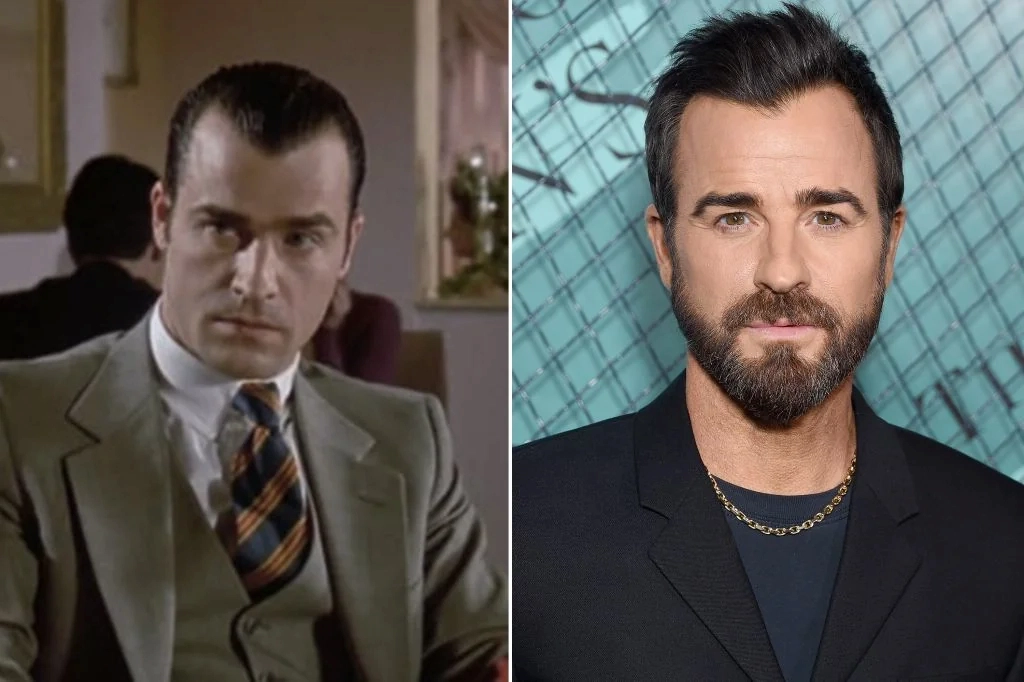
What Could Explain His Hair Changes?
Several things can change how full the scalp looks without proving that surgery took place:
- Hairstyle, length, and styling products
- Medical treatment for thinning
- A cosmetic system or concealer
- Lighting and photo differences
- Surgical restoration, such as FUE
A scalp exam gives doctors better information about density, donor supply, thinning, and signs of past surgery. Public photos cannot show those details with the same level of accuracy.
Does Justin Theroux Wear a Hair System?
There is no reliable proof that he wears a cosmetic system. Modern systems, fibers, and concealers can add density and hide temple recession. They can also be hard to spot in photos.
A fuller look does not prove that a person uses a system or has had surgery. Styling and grooming can create similar changes.
Hairstyling and Hair Length
He has worn textured, slicked-back, and shorter styles. Longer or textured strands can cover temple recession, while slicked-back styling shows more of the frontal line. This can make the same level of density look very different.
Possible FUE Hair Transplant
FUE, or follicular unit extraction, removes small groups of follicles from a donor area and places them in thinner zones. DHI (direct hair implantation) places grafts with a pen-shaped tool. Photos cannot confirm whether either method was used.
Doctor planning, donor care, graft handling, and follow-up all affect results. No method can promise a set level of density or a certain long-term look.

How FUE Could Affect His Hairline
If someone with temple recession had FUE, grafts could be placed in the frontal area to add density or reduce the look of recession through a hair transplant for the temples. This can make the front edge look more even while keeping a natural shape for the person’s age. It does not prove that this type of treatment took place.
Patients often compare Mexico, the United States, Turkey, and other places when they research surgery. They should consider doctor involvement, medical oversight, local regulations, and follow-up care instead of judging a clinic by location alone. High-volume or lightly supervised clinics can exist in many regions, so patients should ask who performs each part of the procedure.
Hairline Graft Placement
Frontal design depends on facial shape, donor supply, current recession, future loss, and natural growth direction. Doctors adjust graft angle, direction, and spacing so the front edge doesn’t look too straight. Dr. Antonio Aguilar, a specialist in FUE and Hair Restoration with more than 10 years of experience, reviews these factors when assessing patients and planning treatment.
For anyone considering hair restoration, a medical evaluation can help clarify candidacy, treatment options, and realistic expectations. You can schedule a consultation with Hair Transplant Mexico to review your hair loss pattern and discuss whether FUE or another approach may be appropriate.