

This article reviews the public evidence, possible procedures, graft estimates, recovery, and limits of photo analysis. It also explains candidacy, donor supply, medical care, and treatment options in Mexico. Hair Transplant Mexico is a doctor-led clinic in San Pedro Garza García, an affluent area of Monterrey, Mexico.
Key Takeaways
- He has never confirmed or denied having a restoration procedure, so the claims remain unverified.
- Changes in the frontal hairline and temples may match surgical treatment, but photos cannot confirm the method, graft count, clinic, or final result.
- FUE is often named as the likely method, although FUT, medication, styling, and other factors cannot be ruled out.
- A failed procedure cannot be diagnosed from public photos because lighting, length, ongoing loss, and normal healing can change how the result looks.
- Patients should base treatment choices on a medical exam, donor supply, doctor involvement, follow-up care, and realistic goals rather than celebrity results.
Did Conor McGregor Get a Hair Transplant?
There is no verified public statement confirming that the Irish mixed martial artist had surgery. Discussion of Conor McGregor’s hair loss stems from older photos showing temple recession and newer images showing a fuller frontal line. These changes may match restoration, but they do not prove that an operation took place.
What Public Evidence Shows
Older photos show recession near the temples and less coverage at the front. Newer images sometimes show a straighter outline and less visible scalp. Length, styling, cosmetic fibers, medication, and lighting may also explain part of the change.
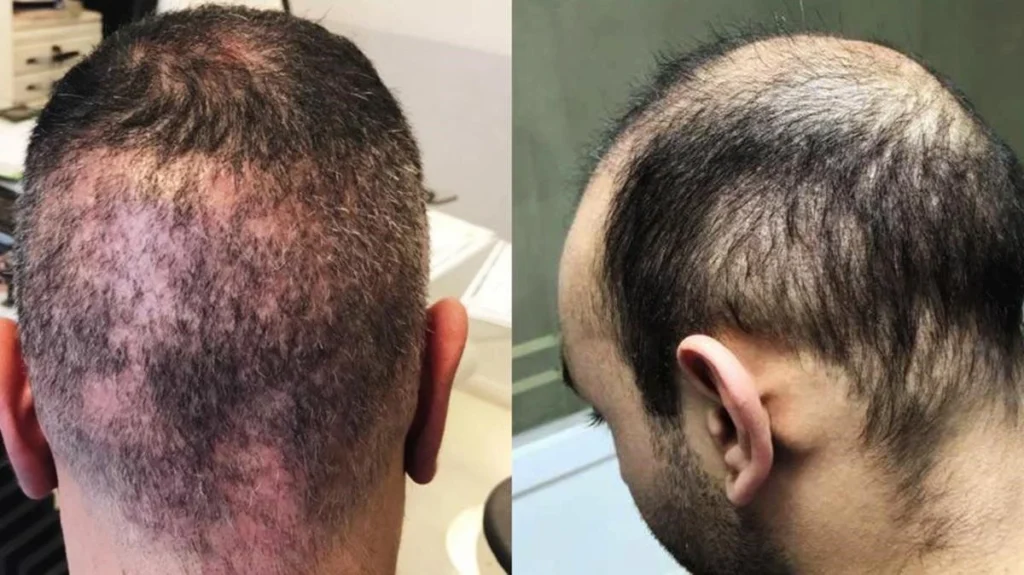
Conor McGregor Hair Restoration Timeline
His earlier appearances often showed an uneven frontal edge and recession at both temples. Photos taken after 2021 sometimes show better frontal coverage and a more defined shape. A doctor would still need to examine his scalp before confirming the cause of the loss or any treatment.
Limits of Photo Comparisons
Before-and-after photos can show changes in shape and visible density, but they cannot confirm:
- The procedure or treatment date
- The number and survival of grafts
- The health of the donor area
- The use of medication or cosmetic products
- Whether one or more sessions took place
Reliable comparisons need the same light, angle, length, and styling. Public photos rarely meet these conditions.

Which Procedure Did He Have?
FUE is the method most often associated with the case because it removes grafts one by one without removing a strip of scalp. It leaves small round scars across the donor area instead of one long scar. However, there is no public evidence confirming that he underwent FUE.
Why FUE Appears Possible
FUE is often used to rebuild the frontal corners and temples. Each follicular unit may hold one or more hair follicles. The surgeon places these grafts into small openings in the thinning area.
DHI (Direct Hair Implantation) uses a similar extraction method but places the grafts with an implantation pen. The tool may help control angle, depth, and direction. Still, neither FUE nor DHI can promise specific hair transplant results.
Could He Have Had FUT?
FUT (Follicular Unit Transplantation) removes a thin strip of scalp from the back or sides of the head. The tissue is then divided into single follicular units before placement. Since public photos do not clearly show the back of his scalp, FUT cannot be ruled out.
Estimated Number of Grafts
Published estimates range from about 500 to 2,200 grafts. A small temple procedure may need fewer grafts than treatment across the full front of the scalp. Strand thickness, original density, frontal design, and the number of follicles in each graft all affect the total.
Was the Procedure a Failure?
There is not enough evidence to call the possible treatment a failure. Searches for a “celebrity hair transplant gone wrong” often come from reactions to selected photos rather than medical findings.
Other public figures, such as CM Punk and his reported hair transplant, have also faced similar online speculation based mainly on changes seen in photos. Short strands, wet styling, strong lighting, and ongoing native loss can all change how the result looks.
A fair review would require clear images, a scalp exam, and treatment records. Public photos cannot confirm graft survival or prove that the implanted follicles failed.
Normal Recovery Versus Failure
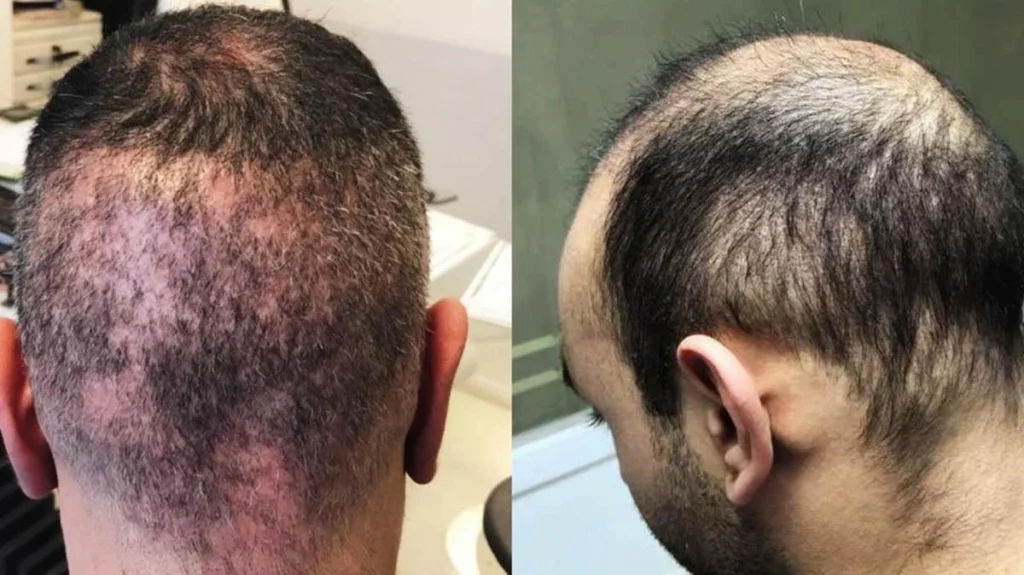
Transplanted strands often shed in the first few weeks. New growth may start after three to four months. Density can then improve for about 12 months.
Signs of concern may include low density, unnatural direction, visible scars, or too much graft removal from the donor area. A doctor must examine the scalp and review the full healing period before judging the outcome.
Where Did He Get the Procedure?
No reliable public source names the surgeon, clinic, city, or country involved. Online claims about the location have not been directly confirmed. Medical privacy also allows public figures to keep cosmetic procedures private.
Medical Evaluation and Patient Safety
A celebrity case cannot show whether another person is a good candidate. A medical exam should review the diagnosis, age, medical history, pattern of loss, scalp health, donor supply, and future risk of thinning. Dr. Antonio Aguilar, a specialist in FUE micrografting and hair restoration, reviews these factors when planning treatment.
Candidacy and Donor Supply
A healthy donor area is important because the number of grafts is limited. Taking too many may leave visible thinning at the back or sides. A good plan should save enough donor tissue for future treatment if needed.
Doctor-Performed Procedures
Doctor involvement matters during diagnosis, frontal design, graft planning, recipient-site creation, and treatment of complications. Rules and staff roles vary by clinic and country. Patients should ask who performs each stage and who provides follow-up care.
Recovery and Follow-Up
Follow-up visits help track healing, shedding, signs of infection, and early growth. Patients often receive guidance on washing, sleep position, exercise, sun exposure, and medication. Regular care helps separate normal healing from a problem that needs treatment.
Hair Transplant Options in Mexico
Patients often compare Mexico, Turkey, and the United States based on cost, access to doctors, regulations, travel, and follow-up care. Quality can vary within each country, especially between doctor-led clinics and high-volume centers with little physician contact.
The team’s skill and the care model often matter more than the country itself, which is why patients should compare top hair transplant clinics in Mexico based on doctor involvement, safety standards, and follow-up care.
Why Choose Monterrey?
Hair Transplant Mexico is located in San Pedro Garza García, an affluent area of Monterrey in northern Mexico. The clinic uses a doctor-led model and offers FUE, DHI, implantation pens, and structured follow-up. Patients should still review the doctor’s credentials, treatment plan, donor management, and the role of each team member before choosing any clinic.