
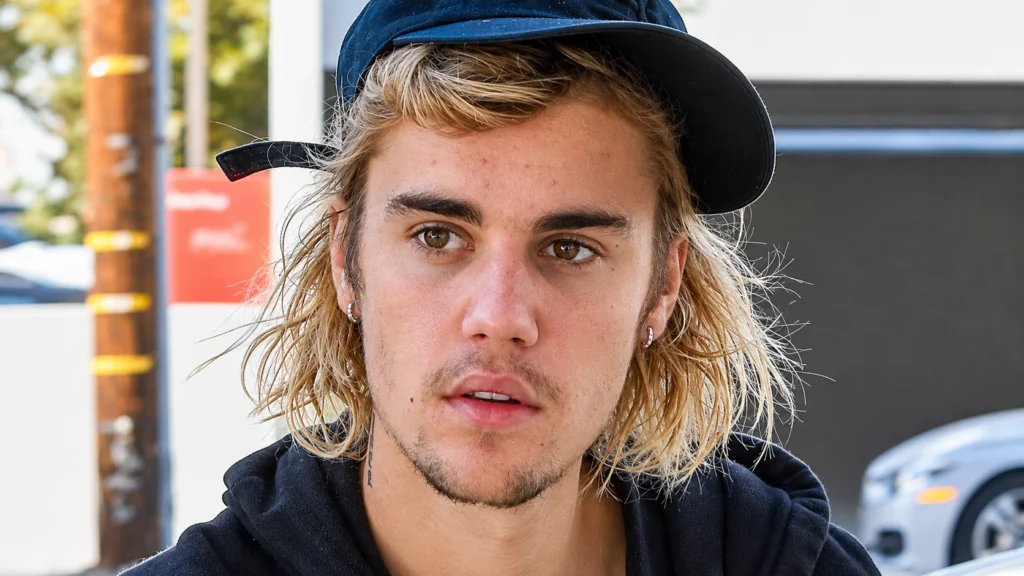
Fans and hair restoration experts continue to debate whether these changes suggest surgery. Photos alone cannot confirm a procedure or reveal the cause of hair loss. Dr. Antonio Aguilar, a physician at Hair Restoration Mexico in San Pedro Garza García, Monterrey, has over 10 years of experience in FUE hair restoration. Understanding how doctors assess hair loss helps separate medical facts from celebrity rumors.
Key Takeaways
- Justin Bieber has never publicly confirmed having a hair transplant, and no surgeon has confirmed treating him.
- Photos show changes in his hairline and temple density, but these changes do not prove he had surgery.
- FUE, FUT, and DHI are hair restoration methods, but there is no proof that Bieber received any of them.
- Nonsurgical treatments like minoxidil, finasteride, and PRP may help improve hair growth and density.
- Hair restoration results depend on proper medical care, healthy donor hair, surgical planning, and follow-up visits.
Did Justin Bieber Have a Hair Transplant?
There is no confirmed public evidence that Bieber has had a hair transplant. Photos from 2024 appeared to show a fuller hairline compared with images from 2021 and 2022. Some observers suggested follicular unit extraction (FUE), but Bieber has not confirmed receiving this treatment.
Hair length, lighting, and styling can make hair look thicker or thinner. Medical treatments can also help improve hair growth without surgery. Photos alone cannot reveal which factors caused these changes.
Who Did Justin Bieber’s Hair Transplant?
No doctor or clinic has confirmed performing a hair transplant on Bieber. Claims about his surgeon, treatment location, and number of procedures remain unconfirmed. Without reliable evidence, it is not possible to identify a treating physician.
Justin Bieber’s Hair Transplant Before and After
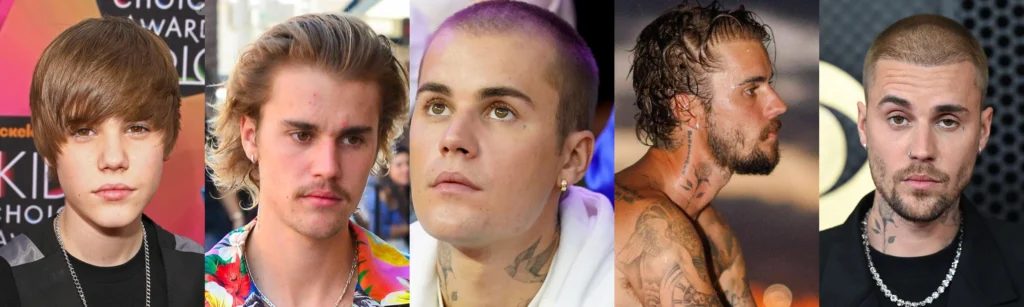
Photos from different stages of Bieber’s career show changes in his hairstyle and apparent hair density. Images from his early twenties appeared to show thinning around the temples. Later photos showed a fuller-looking hairline in some public appearances.
| Period | Reported Hairline Appearance |
|---|---|
| 2009–2015 | Longer hair covering the frontal hairline |
| 2018–2020 | More visible temple recession in some photos |
| 2021–2022 | Shorter hairstyles exposing the hairline |
| 2023–2024 | Fuller-looking hairline in selected photos |
| 2025–2026 | Continued debate about hairline changes |
These changes do not prove that Bieber had surgery. Camera angles, lighting, and hairstyles can affect how the scalp looks. A medical exam and treatment history would help establish the cause.
Is There a Visible Hair Transplant Scar?
No verified photos show a confirmed hair transplant scar on Bieber’s scalp. FUE leaves small, round scars in the donor area, while follicular unit transplantation (FUT) leaves a thin, linear scar. Small scars may be hard to see, even with short hair. The lack of visible scars does not rule out surgery.
What Happened to Justin Bieber’s Hair?
The cause of Bieber’s apparent hairline changes remains unknown. Male pattern baldness, also called androgenetic alopecia, is a common cause of thinning hair and receding temples in men. It occurs when genes and a hormone called dihydrotestosterone (DHT) cause hair follicles to shrink.
Other causes of hair loss include tight hairstyles, poor nutrition, and certain health conditions. A hairline can also change naturally as a man gets older. A doctor can examine the scalp and review the patient’s health history to find the cause.
Justin Bieber’s Hair Restoration: Possible Treatments
Both surgical and nonsurgical treatments can help improve hair density. Surgery moves healthy follicles to thinning areas, while medical treatments help protect existing hair. There is no confirmed evidence that Bieber has received any of these treatments.
FUE, FUT, and DHI Hair Transplants
Hair transplant surgery moves healthy follicles from the hair transplant donor area to parts of the scalp with thinning or bald spots. Doctors use different methods to remove and place these follicles. The main methods differ in how they work and the scars they leave.
| Method | How It Works | Scarring |
|---|---|---|
| FUE | Removes individual follicular units | Small circular scars |
| FUT | Removes a strip of donor scalp | Linear scar |
| DHI | Places harvested grafts using an implantation pen | Depends on the harvesting method |
DHI stands for direct hair implantation. It describes how doctors place grafts, not how they remove them. Doctors often combine DHI with FUE, depending on the patient’s donor hair, scalp health, and treatment goals.
Nonsurgical Hair Restoration Treatments
Minoxidil and finasteride are common treatments for male pattern hair loss. Minoxidil helps support hair growth, while finasteride lowers DHT levels. Both require continued use to maintain their benefits and can cause side effects.
Other options include platelet-rich plasma (PRP) and low-level laser therapy. These treatments may help improve hair growth in some patients, but results vary. A doctor can help determine which treatment suits the patient’s needs.
Hair Transplant Graft Counts and Costs
Treating mild to moderate hairline recession may require around 1,000 to 2,500 grafts. Patients with more advanced baldness may need more grafts or a second procedure. Bieber’s graft count and treatment costs remain unknown.
Patients often compare hair transplant costs in Mexico, Turkey, and the United States. Hair Restoration Mexico is located in San Pedro Garza García, an affluent area of metropolitan Monterrey in northern Mexico. FUE procedures start at $5,000 USD for a single area and $6,000 USD for full FUE treatment.
What to Expect From a Hair Transplant
A hair transplant begins with a medical exam. The doctor checks the scalp, donor hair, and hair loss pattern before creating a treatment plan. Patients seeking care abroad should also compare medical standards, doctor qualifications, and follow-up care.
Hair Transplant Candidacy and Risks
Good candidates usually have enough healthy donor hair, good overall health, and a stable pattern of hair loss. Possible risks include infection, bleeding, scarring, and poor graft growth. Younger patients may need medical treatment first to slow further thinning.
Before having surgery, patients should check:
- The doctor’s training and role during surgery.
- Clinic safety standards and medical supervision.
- Clear treatment costs and informed consent.
- Plans to protect the donor area.
- Follow-up visits and long-term care.
Clinics that treat large numbers of patients with limited medical oversight may provide less time for proper exams and care. Patients should consider these factors when choosing a clinic in any country. Direct physician involvement helps support patient safety and proper treatment planning.
Recovery and Long-Term Results
Healing times vary from person to person. Transplanted hair often falls out during the first few weeks before new growth begins. Most patients notice gradual changes over the following months.
| Recovery Period | Expected Changes |
|---|---|
| 1–2 weeks | Scalp heals and redness decreases |
| 2–8 weeks | Temporary hair shedding |
| 3–4 months | New hair begins to grow |
| 6–9 months | Hair becomes thicker |
| 12–18 months | Results continue to develop |
Transplanted hair can last for many years, but nearby natural hair may continue to thin. Medical treatments and regular follow-up visits can help manage further hair loss. Long-term results depend on donor hair quality, surgical planning, and the patient’s healing response.
Which Celebrities Have Had the Best Hair Transplants?
Wayne Rooney and James Nesbitt are examples of celebrities who have publicly confirmed having hair transplants. Their cases provide documented examples of celebrity hair restoration.
Unlike Bieber’s case, their procedures are not based solely on rumors. Other reported celebrity procedures, such as Gordon Ramsay’s hair transplant, have also drawn public attention to hairline restoration.
Good results depend on a natural hairline, suitable hair density, healthy donor hair, and lasting growth. Photos alone cannot show which celebrity had the best procedure. Patients should base treatment decisions on their own hair loss, health, and medical needs.
If you are experiencing hair loss or a receding hairline, a medical evaluation can help identify the cause and suitable treatment options. Schedule a free consultation with Dr. Antonio Aguilar to discuss your hair restoration needs and set realistic expectations.