At Hair Restoration Mexico, a single-area FUE hair transplant costs $5,000 USD, while a full FUE procedure costs $6,000 USD. Norwood 7 patients may need more than one session, which can increase the total cost. Results depend on donor hair, graft survival, and healing, with final growth often taking 12–18 months. Medicines may help protect existing hair, while scalp micropigmentation can make thin areas look fuller without growing new hair.
At Hair Restoration Mexico in San Pedro Garza García, Monterrey, Dr. Antonio Aguilar specializes in FUE hair restoration and evaluates patients to determine suitable treatment options.
Key Takeaways
- A Norwood 7 hair transplant is possible for some patients, but limited donor hair often prevents full scalp coverage.
- Extensive baldness may require 9,000 or more grafts for broad coverage, while most patients have fewer grafts available. Surgeons often focus on the hairline and front of the scalp.
- FUE, FUT, and body hair transplantation are possible options. Some patients may need more than one session or extra grafts from the beard.
- Results depend on donor density, graft survival, and surgical planning. Final hair growth often takes 12–18 months.
- Hair transplant prices in Mexico often range from $2,000 to $6,000 USD per procedure. Patients with advanced baldness may need more than one session, which raises the total cost.
Can a Norwood 7 Have a Hair Transplant?
Yes, a person with Norwood 7 baldness can have a hair transplant if enough healthy donor hair remains. The main problem is that the bald area is large, while the supply of donor hair is small. A doctor must check whether surgery can improve coverage without removing too much hair from the donor area.
Norwood 7 causes severe hair loss across the front, middle, and crown of the scalp. Most patients still have a narrow band of hair around the sides and back of the head. This remaining hair may provide enough grafts to rebuild part of the hairline or cover other areas.
Full coverage is not always possible, especially when the donor zone has low hair density. Surgeons often focus on the front of the scalp because it has a major effect on facial appearance. Some patients may also benefit from beard grafts or a second procedure.
The decision depends on more than the stage of baldness. Hair thickness, scalp health, age, medical history, and treatment goals all affect the outcome. Patients need a medical exam to learn how much coverage they can expect.
What Is Norwood 7 Hair Loss?
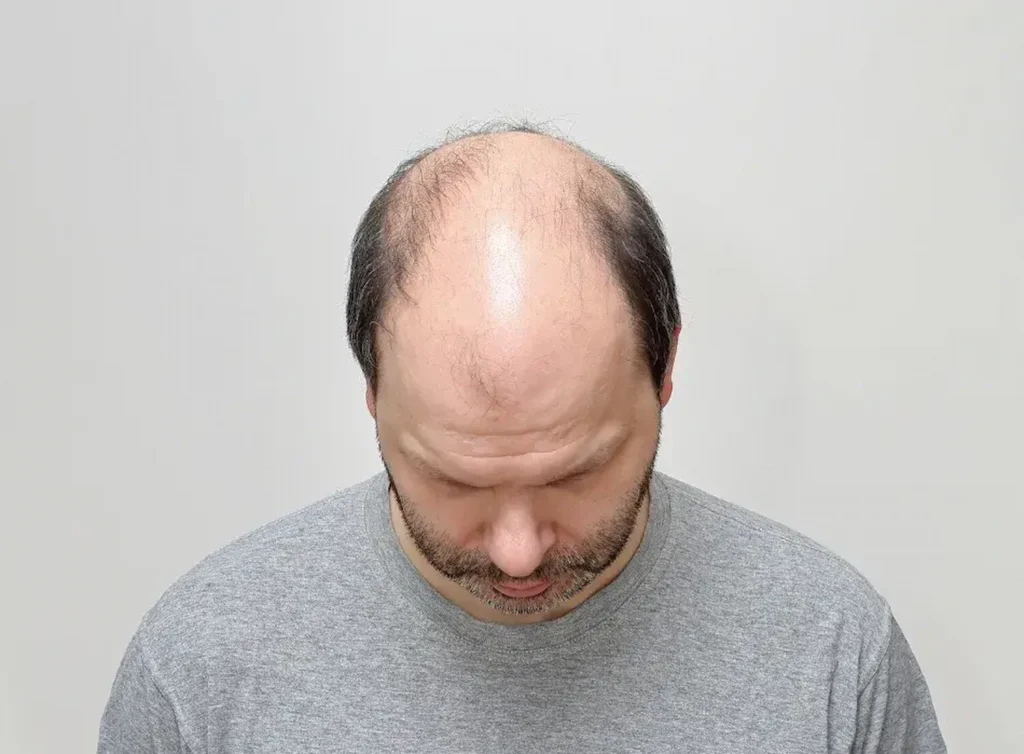
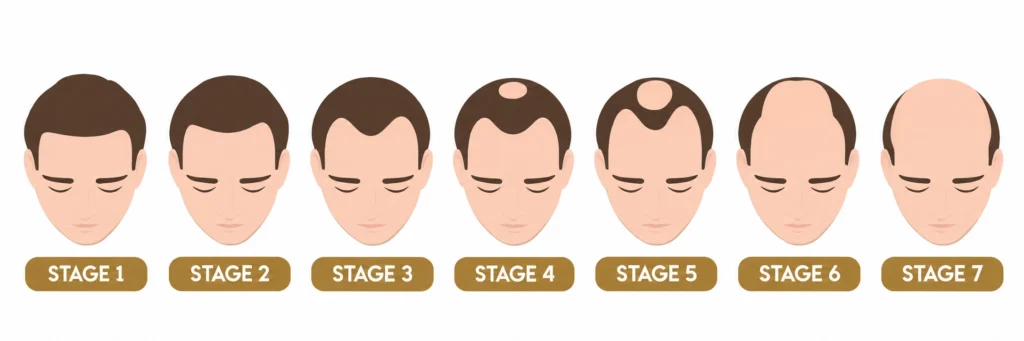
Norwood 7 is the most severe stage of male pattern hair loss on the Norwood-Hamilton scale. At this stage, most hair on top of the head is gone, leaving a horseshoe-shaped band around the sides and back. The hairline, mid-scalp, and crown often form one large bald area.
This pattern develops when hair follicles become smaller over time. The hormone dihydrotestosterone (DHT) plays a major role in this process. Follicles that are sensitive to DHT produce thinner, shorter hair until some stop producing visible strands.
The remaining scalp hair often comes from areas that are less sensitive to DHT. These follicles may keep growing after transplantation, although long-term results can vary. The amount and quality of this remaining hair affect how much restoration is possible.
Norwood 7 differs from earlier stages because the bald area is much larger than the available donor supply. Someone with mild hair loss may only need grafts along the hairline. A patient with advanced baldness may need treatment across most of the top of the head.
Who Qualifies for a Norwood 7 Transplant?
A suitable candidate has enough healthy donor follicles, good overall health, and realistic goals. Age alone does not determine eligibility, but doctors consider future hair loss and the stability of donor hair. Some patients can achieve partial coverage even when restoring a full head of hair is not possible.
The evaluation starts with a close look at the scalp and donor area. The doctor checks donor density, hair thickness, and signs of scalp disease or scarring. Medical history, current medicines, and past procedures also help guide the treatment plan.
Doctors may use a tool called a trichoscope to examine the follicles more closely. This helps them find thin hair and areas that may not be stable enough for graft harvesting. These checks are part of the donor assessment described in published hair transplant practice guidelines.
Some patients have enough donor hair to improve the front of the scalp but not the crown. Others may need beard grafts or nonsurgical options because their scalp donor supply is too small. The goal is to choose a treatment that offers a useful result without causing unnecessary damage.
What Norwood Stage Is Best for Transplants?
No single Norwood stage guarantees the best hair transplant results. Patients with stable, moderate hair loss often have a better balance between the number of grafts needed and the donor hair available. Norwood 3 hair transplant and Norwood 5 hair transplant procedures may allow wider coverage when the donor area is healthy.
Patients with Norwood 6 or 7 can still qualify for surgery. They often need a more limited plan that focuses on specific areas. Even patients with mild baldness may not qualify if their hair loss is still changing or their donor hair is weak.
How Many Grafts Does Norwood 7 Need?
A patient with Norwood 7 may need several thousand grafts to improve scalp coverage, but the exact number varies. Some treatment plans estimate 9,000 or more grafts for broad coverage across a large bald area. This is a possible treatment need, not the number every patient can safely receive.
Each graft contains a follicular unit with one or more hairs. Surgeons measure the bald area and decide how many grafts to place in each square centimeter. They then compare that number with the amount of healthy donor hair available.
For example, a patient may have a bald area of 250–300 cm² but only enough donor hair to cover part of it. Trying to spread too few grafts across the entire scalp may lead to very thin results. Focusing on the hairline and mid-scalp may create a fuller look in the areas that matter most to the patient.
Published studies of advanced hair loss discuss the gap between graft needs and donor supply. Some patients may have around 6,000 usable scalp grafts, while others have far fewer. Research on advanced baldness and body hair transplantation explains how surgeons may use other donor sources when scalp hair is limited.
The following table shows how the number of grafts can change based on the size of the treatment area and the planned density.
| Treatment Area | Area Size | Planned Density | Estimated Grafts |
|---|---|---|---|
| Frontal hairline and front | 80 cm² | 35 grafts/cm² | 2,800 |
| Front and mid scalp | 150 cm² | 35 grafts/cm² | 5,250 |
| Large scalp area | 250 cm² | 35 grafts/cm² | 8,750 |
| Extensive scalp coverage | 300 cm² | 40 grafts/cm² | 12,000 |
These are sample calculations, not fixed treatment requirements. Actual graft counts depend on donor supply, scalp size, hair type, and the density planned for each area.
Hair thickness also changes how full the result looks. Thick or curly hair can cover more visible scalp than fine, straight hair at the same graft count. A doctor considers these factors before setting a treatment goal.
Scalp Donor Hair Limitations
The donor area usually includes the back and sides of the scalp. Hair in these areas tends to resist the effects of DHT better than hair on top of the head. In Norwood 7, this donor zone may be narrow or may also show signs of thinning.
Some patients have retrograde alopecia, which causes thinning near the lower back and sides of the scalp. This condition can reduce the number of healthy grafts available. A doctor must identify these areas before planning surgery.
Surgeons measure donor density and check how many grafts they can safely remove. They must leave enough hair behind to maintain a natural appearance. Removing too many grafts may cause visible thinning and reduce the chance of future procedures.
Hair follicles removed from the donor site do not grow back in that same location. Each extraction reduces the number of follicles left behind. The International Society of Hair Restoration Surgery explains why donor assessment and careful planning matter before surgery.
Beard and Body Hair Grafts
Body hair transplantation may help patients who do not have enough scalp donor hair. Surgeons often consider beard hair because it is usually thick and can add visible density. Chest hair may also be used, although its growth pattern often differs from scalp hair.
Beard grafts can help fill areas behind the hairline or improve coverage in the mid scalp. Surgeons often prefer scalp hair for the front edge because it tends to match the natural hairline more closely. Hair thickness, curl, color, and growth direction all affect where grafts should be placed.
A study of 820 advanced-baldness cases examined how scalp, beard, and body hair grafts could be used together. The researchers found that adding other donor sources could help increase coverage in selected patients. The study did not show that every patient would achieve the same results.
Body hair may grow at a different speed or reach a different length than scalp hair. These differences can affect the final appearance and graft survival. Beard and chest harvesting can also cause small scars or changes in skin appearance.
Not every patient has enough suitable body hair for transplantation. A doctor must check each donor area before deciding whether those grafts will be useful. The goal is to improve coverage without creating new problems in the donor sites.
Hair Transplant Techniques for Norwood 7
Hair restoration surgery moves healthy follicles from a donor area to parts of the scalp affected by baldness. The two main harvesting methods are follicular unit extraction (FUE) and follicular unit transplantation (FUT). Both methods use the patient’s existing follicles to restore hair growth in selected areas.
Patients with severe baldness may need more than one surgery. The number of procedures depends on donor hair availability, the treatment area, and the planned coverage, as explained in this guide on how many hair transplants you may need.
The doctor first decides which areas should receive grafts and how many are available. The front of the scalp often receives priority because full coverage may not be possible.
Physician involvement is an important part of the procedure. A qualified doctor should assess the patient, plan the surgery, oversee medical safety, and perform the surgical steps required by their training and local rules. Other trained staff may help with tasks they are qualified and permitted to perform.
The surgical team must also protect the grafts after removal. Follicles can be damaged if they dry out, stay outside the body too long, or are handled poorly. Careful graft preparation and placement help support healthy growth.
FUE and FUT Procedures
FUE removes individual follicular units from the donor area with small surgical punches. This method leaves many tiny extraction wounds instead of one long incision. The wounds often heal within a few weeks, although small scars may remain.
FUT removes a strip of skin containing healthy follicles from the donor area. The surgeon closes the wound, leaving a linear scar, while the removed strip is divided into individual grafts. FUT may be an option when the donor area has enough hair and the scalp can be closed safely.
Neither method is best for every patient. FUE avoids a long scar but may cause widespread donor thinning if too many follicles are removed. FUT may allow surgeons to preserve other donor areas, but it requires an incision and leaves a linear scar.
Some clinics also offer direct hair implantation (DHI). DHI refers to placing prepared grafts with an implanter pen, while FUE describes how follicles are removed. These are different steps in hair transplantation rather than two completely separate ways of growing new hair.
Implanter pens allow the surgical team to place follicles directly into the scalp. Other methods use small openings made in advance, followed by graft placement with forceps. The tool used does not guarantee better survival rates or greater density.
For patients with severe baldness, a doctor may combine FUE and FUT or plan several sessions. Beard or other body hair grafts may also be considered when the scalp donor supply is low. Each approach requires careful planning to protect the remaining follicles and reduce scarring.
Norwood 7 Hair Transplant Results
Results depend on donor hair, surgical planning, graft placement, and healing. Patients with extensive baldness should expect improvements in selected areas rather than a return to their original hair density. A treatment may create a new hairline and improve frontal coverage while leaving the crown thin.
Surgeons often place more grafts along the front of the scalp because this area shapes facial appearance. When enough follicles remain, they may also improve coverage across the mid scalp. The crown may need a separate procedure or may remain untreated.
The number of transplanted grafts does not always show how full the final result will look. Hair thickness, curl, color, and styling all affect how much scalp is visible. Two patients with the same graft count can have different results.
Not every transplanted follicle will produce lasting growth. Some grafts may fail, while others may take longer to grow. Patients should understand that final outcomes can vary, even when surgery goes as planned.
Hair Transplant for Norwood 7 Before and After
Before-and-after photos can help show what surgery may achieve in patients with severe baldness. The most useful comparisons use similar lighting, camera angles, and hair length. Photos taken right after surgery do not show the final result.
A documented case should include the patient’s Norwood stage, graft count, donor sources, and surgery date. It should also show how many sessions were performed and when the follow-up photos were taken. These details help readers judge whether the example is relevant to their condition.
Published Clinical Case: 4,156 Grafts for Norwood 7
A published case from Hair Restoration Doctors in Sydney describes a 40-year-old patient with Norwood 7 baldness and severe retrograde alopecia. Dr. Yusuf Assem performed surgery using 3,548 scalp grafts and 608 beard grafts, for a total of 4,156 grafts. The treatment focused on restoring the hairline and improving the mid-scalp rather than covering the entire crown.
Norwood 7 Baldness | Hair Transplant Antalya – Hair Legends Antalya
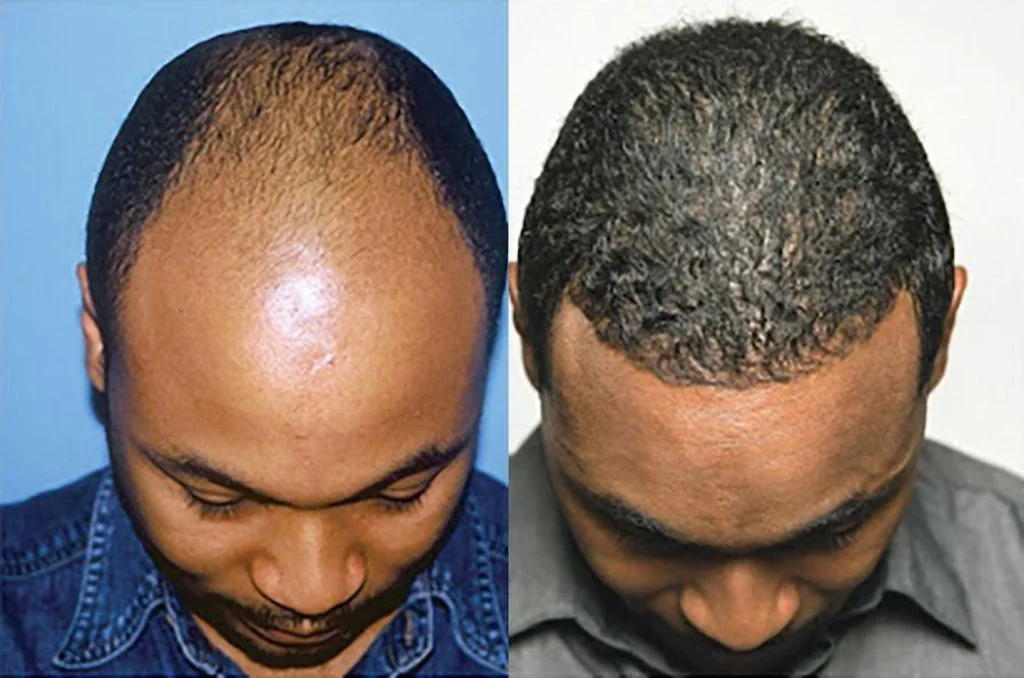
Published Norwood 7 Patient Case
The clinic reported frontal and mid-scalp growth after nine months and planned another procedure to improve coverage.
View the original patient case
At the nine-month follow-up, the clinic reported visible hair growth across the treated areas. The crown remained largely untreated, and another session was planned. This example shows how limited donor hair can lead to staged treatment.
The photographs show one patient’s outcome and do not prove that others will get similar results. Donor density, hair type, and healing can change the final appearance. The reported case details come from the treating clinic and have not been independently confirmed here.
Original patient cases can provide stronger evidence when they include clear records and consented photographs. Ideally, these records should show the graft count, donor areas, treatment dates, and results after 12–18 months. They should also include photos of the donor area after it has healed.
Recovery and Hair Growth Timeline
Hair transplant recovery includes a short period of scalp healing followed by several months of hair growth. Patients may have redness, swelling, soreness, or small crusts during the first days. Recovery times vary based on the method used and how the body heals.
| Recovery Period | What Patients May Experience |
|---|---|
| Days 1–7 | Mild swelling, redness, soreness, and small crusts |
| Days 8–14 | Most surface crusts fall away as the scalp heals |
| Weeks 2–8 | Transplanted hair may shed |
| Months 3–4 | New hair growth may begin |
| Months 5–6 | More hair becomes visible |
| Months 7–12 | Hair density and texture continue to improve |
| Months 12–18 | Hair matures and final results can be assessed |
Hair shedding after surgery does not always mean the grafts have failed. The hair shaft may fall out while the follicle remains beneath the skin. New hair can then grow as the follicle enters its next growth phase.
Patients should follow their doctor’s instructions for washing, sleeping, exercise, and medication. Follow-up visits help the medical team check healing and detect problems early. Patients who need more than one procedure may also require additional evaluations.
Norwood 7 Hair Transplant Cost
At Hair Restoration Mexico, a single-area FUE hair transplant costs $5,000 USD, while a full FUE procedure costs $6,000 USD. The cost of a Norwood 7 hair transplant depends on the number of grafts, the surgical method, and the number of sessions needed. These are standard procedure prices, not fixed quotes for patients with advanced baldness.
Complex cases may cost more because they require extra planning, longer surgery, or multiple sessions. Using beard or body hair grafts may also affect the total cost. A medical evaluation helps determine the treatment plan and final price.
Patients should compare more than the cost of surgery. Physician involvement, clinic standards, aftercare, and the cost of possible future procedures also matter. Travel and lodging can add to the total expense. For a broader breakdown of pricing and related expenses, see this guide to hair transplant cost in Mexico.
For patients traveling to Mexico, the clinic’s location can affect follow-up care. Hair Restoration Mexico is located in San Pedro Garza García, Monterrey, in northern Mexico. Patients should plan for recovery and make sure they can receive medical care after returning home.
Risks and Limitations of Norwood 7 Surgery
Hair transplantation is surgery, so complications are possible even with proper medical care. Common short-term effects include swelling, soreness, redness, and small crusts. Less common problems include infection, bleeding, scarring, poor hair growth, and changes in scalp sensation.
Patients with advanced baldness face extra limits because their donor supply is often small. Removing too many grafts can leave thin patches or permanent changes in the donor area. This risk grows when a surgeon tries to collect many grafts from a narrow donor zone.
The recipient area also needs careful planning. Grafts placed at the wrong angle can make the result look unnatural, while placing too many in one area may affect healing. Graft survival depends on the harvesting method, handling, scalp condition, and individual recovery.
Published medical research has described problems such as donor depletion, folliculitis, scarring, and poor cosmetic results after FUE surgery. Folliculitis occurs when hair follicles become inflamed, sometimes causing small red bumps or pustules. Proper patient selection and safe harvesting help reduce these risks.
Doctors must also review health conditions that may affect healing. Uncontrolled diabetes, active scalp infections, and some scarring disorders can increase the risk of problems. Patients may need treatment or further testing before surgery.
Before surgery, the physician should explain the expected coverage, graft limits, possible complications, and other treatment options. Patients should understand that the procedure uses donor follicles that cannot be replaced in their original location. This can limit the number of future surgeries.
Medical regulations and clinic oversight differ by country. In Mexico, COFEPRIS oversees sanitary requirements for regulated healthcare facilities, while other laws govern medical practice and surgical care. Patients comparing Mexico, Turkey, and the United States should check physician credentials, facility standards, and post-surgery care.
High-volume clinics may differ in how much time physicians spend with each patient and how closely they oversee surgical work. These differences can exist in any country. Patients should know who will perform each part of the procedure and how the clinic handles follow-up care or complications.
Alternatives to a Norwood 7 Hair Transplant
Not every patient with severe baldness has enough donor hair for surgery. When the donor supply is too small, nonsurgical options may provide a better fit. These options differ in appearance, cost, maintenance, and medical needs.
- Scalp micropigmentation (SMP) places small dots of pigment in the scalp to create the look of closely shaved hair. It does not grow new hair or increase real density. Some patients use SMP alone, while others combine it with surgery to make thin areas less visible.
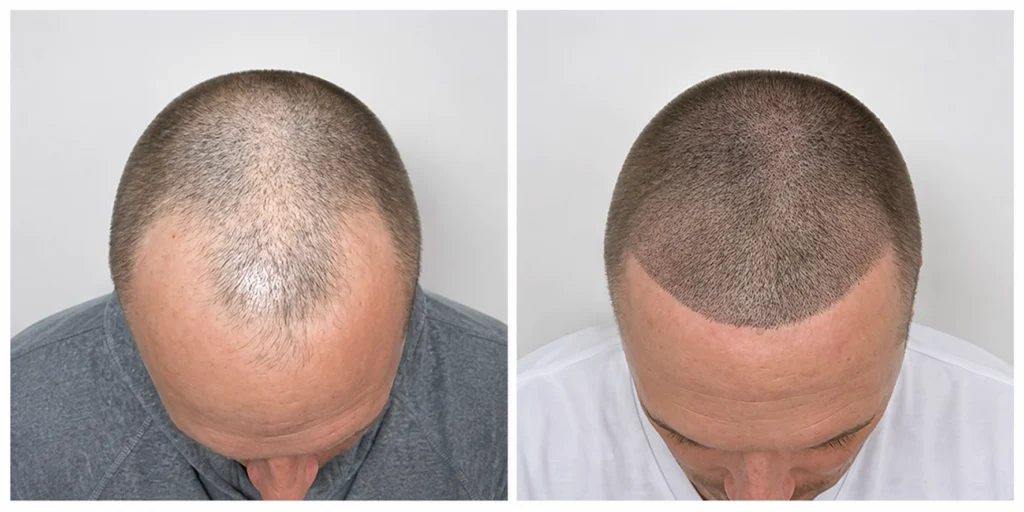
- Hair systems use natural or synthetic hair attached to a base that covers bald areas. They can create the look of fuller hair without removing donor follicles. Regular cleaning, maintenance, and replacement are needed.
- Medical treatments, including finasteride, dutasteride, and minoxidil, may help protect or improve hair that is still growing. These treatments do not reliably restore large bald areas where active follicles are no longer present. A doctor should review possible side effects and decide whether the medicine suits the patient.
- A shaved or closely cropped hairstyle is another option that does not require surgery. Some patients choose this approach because it avoids scars, donor hair loss, and recovery time. The decision depends on personal preference and treatment goals.
For some patients, limited transplantation combined with SMP or another nonsurgical treatment may improve the overall appearance. Others may be better served by avoiding surgery. The right approach depends on donor supply, scalp health, and realistic expectations.
Norwood 7 is difficult to treat because the bald area is often much larger than the supply of healthy donor hair. A medical exam can help determine whether partial restoration, multiple procedures, or a nonsurgical option makes sense. Long-term results depend on careful planning, protecting the donor area, and proper follow-up care.
If you have Norwood 7 hair loss, a medical evaluation can help determine whether a hair transplant is possible and what results you can expect. Schedule a free consultation with Hair Restoration Mexico to review your donor hair, treatment options, and estimated costs.
Medical References
- Hair Transplant Practice Guidelines. Journal of Cutaneous and Aesthetic Surgery, 2021.
- Combination Grafting of Scalp and Body Hair. Journal of Cutaneous and Aesthetic Surgery, 2020.
- Hair Transplantation in Advanced Grade Baldness: Analysis of 820 Cases. Journal of Cutaneous and Aesthetic Surgery, 2020.
- Body Hair Transplant by FUE: Experience With 122 Patients. Journal of Cutaneous and Aesthetic Surgery, 2016.
- Complications in Follicular Unit Excision Hair Transplantation. Literature review, 2026.
- A Guide to Hair Transplant Surgery. International Society of Hair Restoration Surgery.
- Hair Transplantation. StatPearls, NCBI Bookshelf.