Not everyone with this level of hair loss needs surgery. Age, donor hair density, and hair loss rate all affect the treatment plan. At Hair Transplant Mexico, based in San Pedro Garza García, Monterrey, Dr. Antonio Aguilar has over 10 years of experience performing FUE hair transplants. He assesses donor hair, graft needs, and future hair loss before planning treatment.
Key Takeaways
- Candidacy matters: Norwood 3 patients may qualify for surgery, but age, donor density, and future hair loss affect the treatment plan.
- Hair loss patterns differ: Norwood 3 mainly affects the temples, while Norwood 3 Vertex also involves crown thinning and may need more grafts.
- Donor hair is limited: A natural hairline requires careful graft placement and enough healthy follicles for possible future procedures.
- Results vary: Hair thickness, graft survival, and ongoing hair loss affect the final appearance. Surgery cannot guarantee full density.
- Long-term care matters: Transplanted hair can last for years, but surrounding hair may continue thinning. Medication and follow-up care can help maintain coverage.
Is Norwood 3 Good for a Hair Transplant?
Yes, Norwood 3 can be a good stage for hair transplant surgery. Many patients still have enough healthy hair in the donor area for treatment. This stage of male pattern baldness often causes temple recession while leaving much of the scalp covered.
A hair transplant surgeon must check the patient’s age, donor supply, and hair loss pattern. Younger patients with active androgenetic alopecia may need medication before surgery. This helps protect existing hair and plan for future loss.
What Does a Norwood 3 Hairline Look Like?
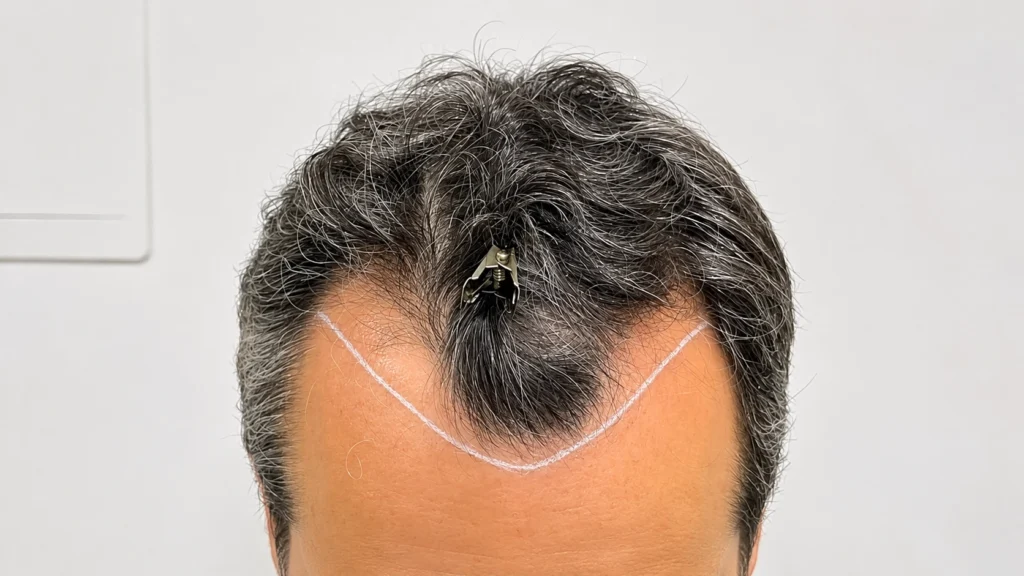
A Norwood 3 hairline has deep recession at both temples. This often creates an M-shaped pattern with clear bald spots near the forehead. The Hamilton Norwood scale uses this stage to describe clear signs of male pattern hair loss, but it does not mean a person is fully bald.
Norwood 2 vs. Norwood 3
A Norwood 2 hair transplant may be considered for patients with mild temple recession, although this pattern can also reflect a mature hairline. Norwood 3 has deeper recession and more visible thinning near the front. Comparing these Norwood stages helps show how far hair loss has progressed.
Norwood 3 vs. Norwood 3 Vertex
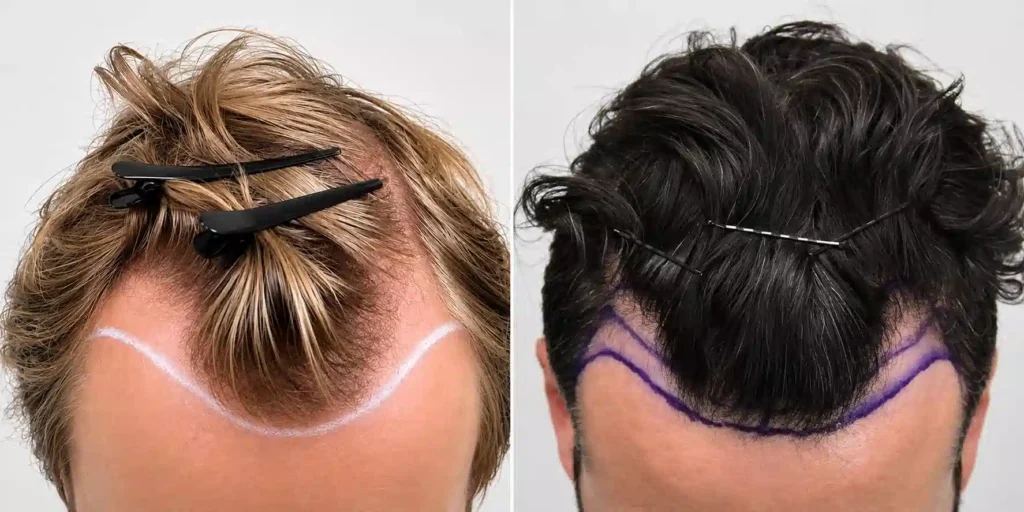
Norwood 3 causes deep recession at the temples, creating an M-shaped hairline. Norwood 3 Vertex involves hair loss at the crown (the top-back part of the scalp) and may also include temple recession. The main difference is the location of thinning, not just how much hair is lost.
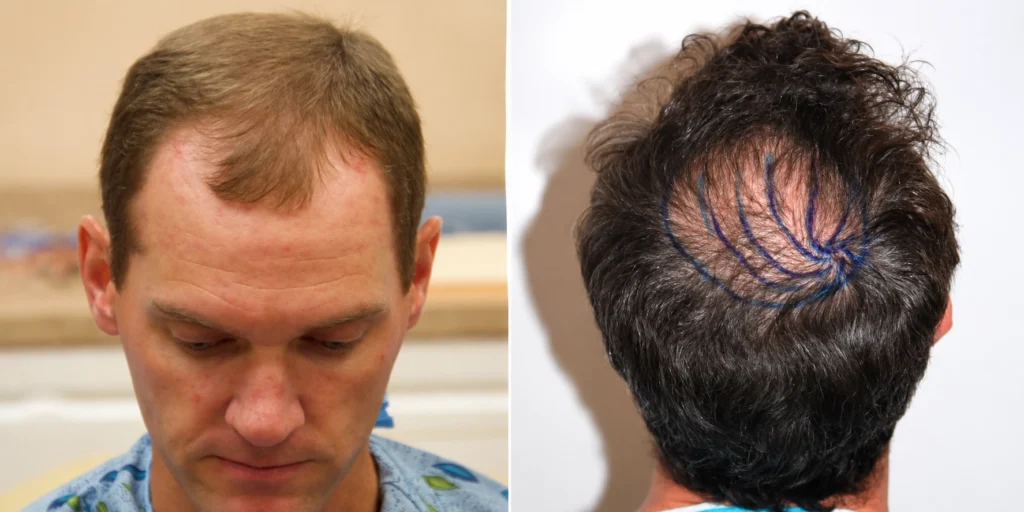
How Many Grafts Does Norwood 3 Need?
A Norwood 3 hair transplant typically requires 1,000 to 2,000 grafts to restore the frontal hairline and temples. Patients with more extensive recession or crown thinning may need 2,000 to 3,000 grafts or more. The exact number depends on the size of the bald area, hair thickness, and donor density.
| Treatment Area | Estimated Grafts |
|---|---|
| Small hairline or temple areas | 800–1,500 |
| Larger frontal area | 1,500–2,500 |
| Front hairline and crown | 2,000–3,000+ |
These ranges are estimates, not fixed requirements. A surgeon must assess the donor area and desired hair density to determine how many grafts are needed.
Hairline Design and Donor Assessment
Surgeons check the donor area to see how many healthy hair follicles are available. Each graft usually contains one follicular unit, which may hold one to four hairs or more. The surgeon also plans a natural-looking hairline while saving enough donor hair for possible future treatment.
Norwood 3 Hair Transplant Procedure
The surgeon moves healthy follicles from the back or sides of the scalp to areas with hair loss. The process includes planning, removing grafts, and placing them in the new area. Local anesthesia helps control pain during the procedure, which may take several hours.
FUE vs. FUT
Doctors use different methods to collect and place grafts:
- FUE (Follicular Unit Extraction): Removes grafts one by one, leaving small, scattered scars.
- FUT (Follicular Unit Transplantation): Removes a strip of scalp from the donor area, leaving a linear scar.
- DHI (Direct Hair Implantation): Uses a pen-like tool to place grafts into the scalp. It can be used with FUE.
Each method has benefits and limits. The right choice depends on donor hair, scalp health, and treatment goals.
Risks and Surgical Limitations
Possible side effects of a hair transplant include bleeding, infection, scarring, temporary hair shedding, and poor graft growth. Hair transplant surgery also has limits because donor hair is finite, and full density may not be possible.
The procedure cannot stop future hair loss, and patients with weak donor areas or active scalp conditions may not qualify. Removing too many grafts can leave the donor area visibly thin, while proper medical care and follow-up help reduce complications.
Norwood 3 Hair Transplant Before and After
Before-and-after photos can show changes in hairline shape, temple coverage, and hair density. Results depend on graft survival, hair type, and the surgical team’s skill. Photos should use the same angles and lighting to make changes easier to judge.
Published Norwood 3 Patient Cases
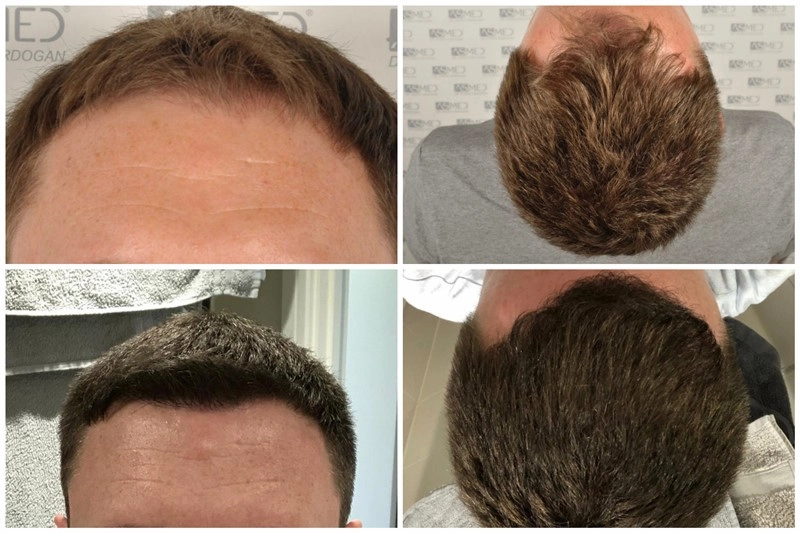
Two published ASMED Hair Transplant cases show how graft needs can differ:
- Case 1: A 39-year-old patient received 2,004 FUE grafts across a 45 cm² frontal area. Photos show the results after 12 months.
- Case 2: A 35-year-old patient received 2,617 FUE grafts across a 60 cm² frontal area. Follow-up photos were taken after 18 months.
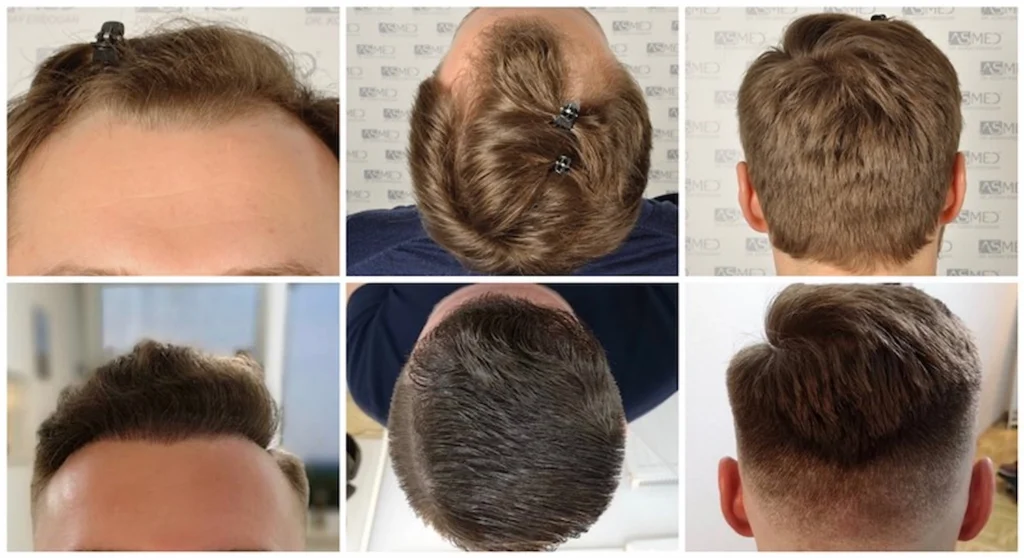
Both patients had frontal hair restoration, but their treatment areas differed. These cases show why graft counts must be based on each patient’s needs. The patients were treated by ASMED, not Hair Transplant Mexico.
Sources: 2,004-graft case and 2,617-graft case.
Recovery and Hair Growth Timeline
During hair transplant recovery, the scalp heals before new hair starts to grow. Most patients lose the transplanted hair shafts during the first few weeks, but the follicles often remain in place.
TimelineWhat to ExpectDays 1–14Redness, swelling, scabs, and early healingWeeks 2–8Temporary sheddingMonths 3–4Early new growthMonths 6–9Better hair coverageMonths 12–18Fuller growth and hair maturity
Most patients can return to light daily tasks within one to two weeks. Healing times vary, and follow-up visits help doctors check progress.
Norwood 3 Hair Transplant Cost
At Hair Transplant Mexico, a single-area FUE hair transplant costs $5,000 USD, while a full FUE hair transplant costs $6,000 USD. For Norwood 3 patients, the price depends on whether treatment focuses on the frontal hairline, temples, or additional areas such as the crown. The final treatment plan depends on the number of grafts needed and the extent of hair loss.
Can Norwood 3 Be Saved Without Surgery?
Medication may slow hair loss and help keep existing hair. It works best when follicles are still active and may be less useful in areas that have been bald for years. The results depend on the cause and stage of hair loss.
Finasteride and Minoxidil
Finasteride lowers dihydrotestosterone (DHT), a hormone linked to male pattern hair loss. Minoxidil can help some follicles grow thicker hair and improve coverage. Both treatments need ongoing use to keep their benefits, and a doctor should explain possible side effects.
Preventing Further Hair Loss
Long-term care may include medication and regular scalp checks. Some doctors suggest trying medication for several months before surgery, mainly for younger patients with active hair loss. Surgery does not stop future thinning, so keeping enough donor hair is important.
Frequently Asked Questions
At What Age Should You Consider Surgery?
There is no single age that makes someone ready for surgery. Younger patients may have changing hair loss patterns, which can make long-term planning harder. A doctor should assess hair loss stability, donor density, and treatment goals.
Can Norwood 3 Progress to Norwood 4?
Yes, Norwood 3 can progress to Norwood 4 as male pattern hair loss continues. The hairline may recede further, and the crown may become thinner. The rate of change differs from person to person.
Are Norwood 3 Hair Transplant Results Permanent?
Transplanted hairs often grow for many years because they come from areas less affected by DHT. Still, some grafts may fail, and nearby natural hair may continue to thin. Long-term results depend on the treatment plan, donor hair, and future hair loss.
A medical evaluation can help determine the right treatment plan for your hair loss. Schedule a free consultation with Hair Transplant Mexico to discuss your options, graft needs, and expected results.
Medical References
- International Society of Hair Restoration Surgery – FUE
- International Society of Hair Restoration Surgery – Follicular Unit Transplantation and Extraction
- American Academy of Dermatology – Hair Transplantation
- American Academy of Dermatology – Male Pattern Hair Loss Treatment
- Updated Review of Treatment of Androgenetic Alopecia