
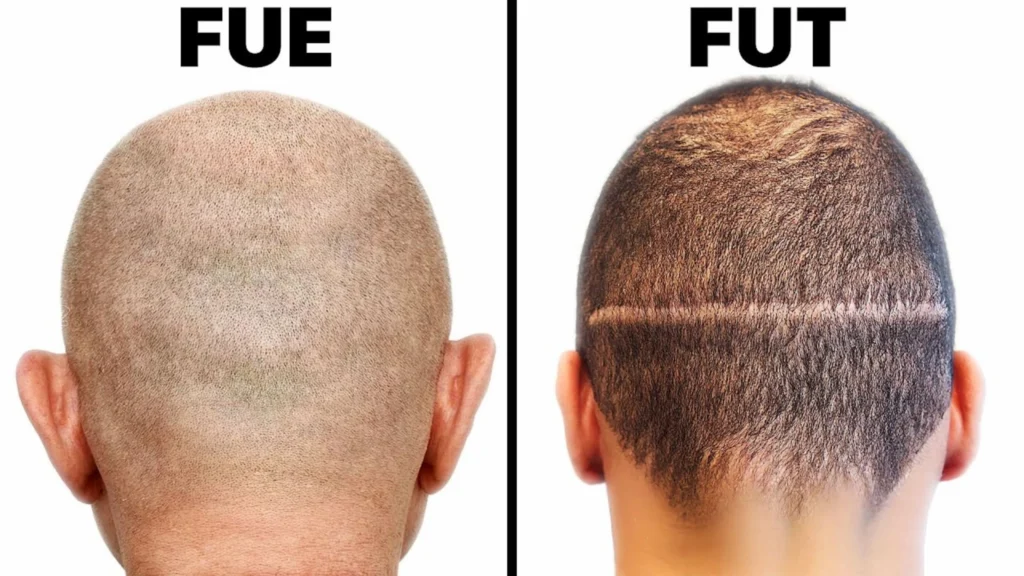
When comparing FUE vs. FUT, FUE may suit patients who prefer short hair and want to avoid a long scar. FUT may work for patients who need many grafts, have flexible scalp skin, and wear longer hair.
Neither method guarantees better results or stops future hair loss. At Hair Restoration Mexico in San Pedro Garza García, Monterrey, Dr. Antonio Aguilar specializes in FUE hair restoration and considers donor hair, scalp health, and future hair loss when planning treatment.
Key Takeaways
- FUE removes hair follicles one by one, while FUT removes a strip of scalp and divides it into smaller grafts.
- FUE leaves small round scars, while FUT creates a linear scar. Both require proper wound care during recovery.
- Both methods can produce natural-looking results. Most patients see fuller hair growth within 12–18 months.
- FUE often costs more per graft, while FUT may cost less for patients who need many grafts.
- The right method depends on donor hair, scalp flexibility, hair loss patterns, and future treatment needs.
FUE vs. FUT: Which Is Better?
FUE is often a better choice for patients who prefer short haircuts, want to avoid a linear scar, or need a shorter recovery. FUT may be more suitable for patients who need many grafts, have enough scalp laxity, and can conceal a linear scar. Neither method is best for everyone, as the right choice depends on donor hair, scalp health, and future treatment needs.
| Factor | FUE | FUT |
|---|---|---|
| Extraction | Individual grafts | Strip of scalp tissue |
| Scarring | Small round scars | Long linear scar |
| Recovery | Faster donor-area healing | Longer donor-area healing |
| Pain | Usually less soreness | More tightness and soreness |
| Cost | Often higher per graft | Often lower per graft |
| Donor area | Grafts taken from a wider area | Grafts taken from one strip |
| Best suited for | Short haircuts and avoiding long scars | Some patients needing large graft sessions |
What Is the Difference Between FUT and FUE Hair Transplants?
Both methods move healthy hair from a donor site, usually the back or sides of the head, into areas with thinning hair. The main difference is how surgeons collect the grafts. Both hair transplant procedures can restore the hairline or add density to the crown when enough donor hair is available.
How Does FUE Work?
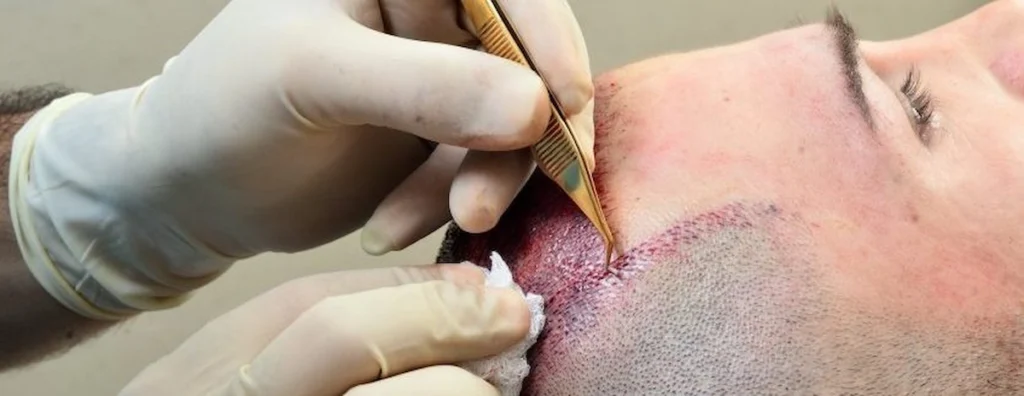
FUE removes individual follicular units with a small round punch, usually less than 1 mm wide. Each unit often contains one to four hairs. The surgeon takes grafts from different parts of the donor area to help prevent visible thinning.
FUE doesn’t require a long cut or stitches in the donor area. Still, the punch can cut or damage hair roots during removal, which is called graft transection. Careful tool placement and gentle handling help protect the follicles.
How Does FUT Work?
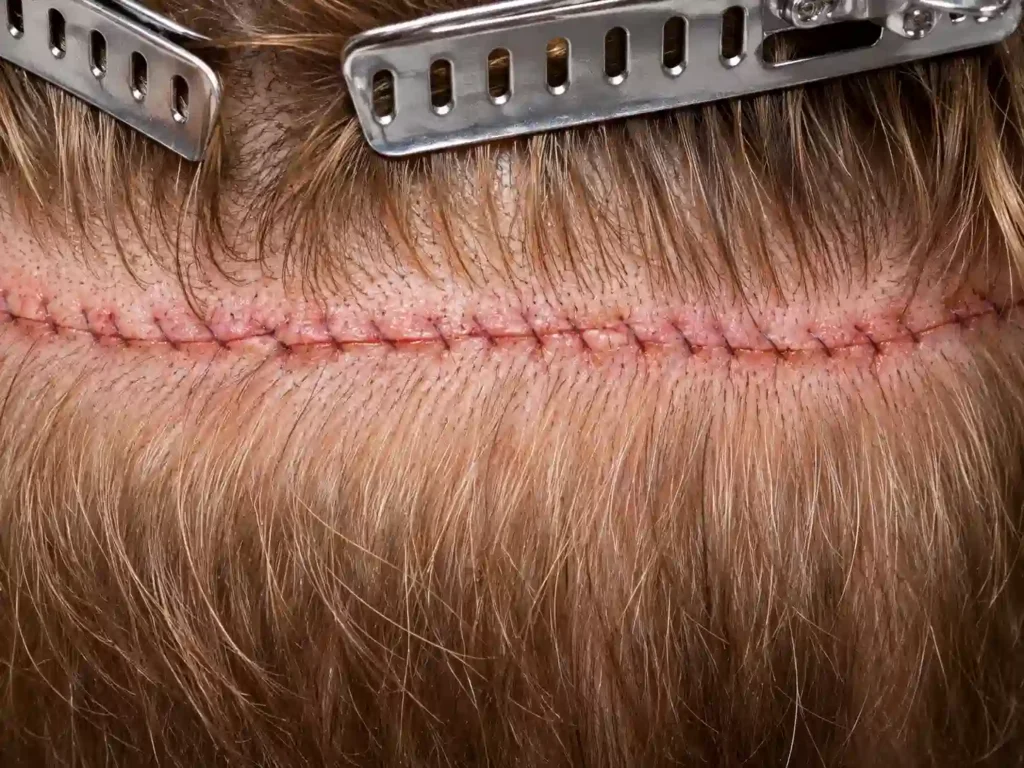
FUT, also called strip surgery, removes a narrow strip of donor scalp. The medical team uses magnification to divide the strip into small hair grafts. The surgeon then closes the wound with stitches or staples, leaving a linear scar.
This method can keep more tissue around each hair root, which may help protect grafts during handling. Hair roots can still be damaged during strip removal or graft preparation. The number of grafts depends on hair density, strip size, and scalp laxity.
FUE vs. FUT: Scarring and Pain
Both methods leave scars, but their size and shape differ. FUE creates small round scars across the donor area, while FUT leaves one linear scar. Pain and scar visibility depend on the surgical method, wound healing, and individual skin characteristics.
FUE vs. FUT: Scars
FUE leaves tiny dot scars where each graft was removed. These extraction sites often close within one to two weeks, but the scars take longer to mature. Removing too many grafts can leave thin patches, especially in people who wear short hair.
FUT leaves one long scar across the donor area. Longer hair often hides the scar, but very short haircuts may make it more visible. Scar size depends on how the wound heals, how the surgeon closes it, and how much tension is placed on the skin.
Is FUT More Painful Than FUE?
FUT often causes more post-surgery pain because it leaves a longer wound. Patients may feel tightness, soreness, or numbness near the incision. FUE usually causes less discomfort, but pain levels vary from person to person.
Both procedures use local anesthesia to numb the scalp. Patients may feel pressure or movement during surgery, but the treated area should remain numb. Pain usually decreases over the next few days.
Recovery Time and Activity Restrictions
Recovery time depends on the extraction method, wound healing, and activity level. The table below compares when patients can usually return to work, wash their hair, and resume exercise.
| Activity | FUE | FUT |
|---|---|---|
| Return to desk work | 3–7 days | 7–14 days |
| Donor-area healing | 7–14 days | 10–14 days for initial wound healing |
| Gentle hair washing | 24–48 hours | 24–48 hours |
| Sleep with head raised | 3–7 nights | 3–7 nights |
| Avoid rubbing grafts | 10–14 days | 10–14 days |
| Stitch or staple removal | Usually not needed | 10–14 days |
| Light exercise | 5–7 days | 7–14 days |
| Heavy exercise | 10–14 days | 3–4 weeks |
These are general timelines, not fixed recovery dates. Knowing what to expect 10 days after a hair transplant can help patients understand normal healing. Healing depends on the procedure, scalp condition, and individual health.
Patients should follow their surgeon’s post-hair transplant care instructions before returning to normal activities.
FUE vs. FUT: Success Rate and Results
Both methods can achieve high graft survival rates, but results vary between patients. A 2018 study by Josephitis and Shapiro compared both methods in three patients and reported survival rates of 91–99%. Other research has found different results, so this small study cannot prove that both methods have the same success rate. A 2020 medical review found that both techniques can produce high-quality grafts, with the best choice depending on the patient.
Results depend on donor hair quality, surgeon skill, graft handling, and postoperative care. Transplanted hair often sheds during the first few weeks, with new growth starting around 3–4 months. Fuller results usually develop within 12–18 months, although untreated hair may continue thinning over time.
FUE vs. FUT: Cost Comparison
In the United States, FUT costs an average of $5,675, compared with $6,344 for FUE, according to CareCredit’s 2026 pricing guide. FUE generally costs more because removing follicles one by one takes more time. These U.S. averages are not package prices, so they should not be compared directly with Mexico packages that may include travel services.
At Hair Restoration Mexico, Dr. Antonio Aguilar’s FUE prices range from $4,500 to $8,000 for a single area and from $6,000 to $10,000 for a full procedure. Prices depend on graft count and treatment needs, while included services should be confirmed with the clinic.
Risks and Complications of FUE and FUT
Both methods carry risks, including infection, bleeding, swelling, numbness, scarring, and poor hair growth. FUE can leave thin donor areas if too many grafts are removed. FUT may cause wide scars, lasting tightness, or slow wound healing.
Medical exams, clean surgical tools, and direct doctor oversight help lower these risks. Direct hair implantation (DHI) uses special pens to place grafts and can be paired with FUE extraction. The main difference between FUE and DHI hair transplants is how surgeons place the grafts. These tools do not guarantee better hair growth, so patients should ask who performs each part of the surgery.
Who Is a Good Candidate for Each?
FUE may suit patients who wear short hair, want to avoid a long scar, or have less flexible scalp skin. FUT may suit patients with enough donor hair and scalp laxity who are comfortable with a linear scar. Both methods require healthy donor hair and realistic goals.
A doctor should examine the safe donor zone, where hair is less likely to thin from common pattern hair loss. Taking grafts from outside this zone may lead to hair loss in the transplanted area later. The exam should also check hair thickness, scalp health, past surgeries, and how much donor supply should remain for future treatment.
Can you combine FUE and FUT?
Yes, surgeons can combine both methods for some patients who need more donor hair. This may help people with advanced hair loss, a history of transplants, or a limited donor area. Using both methods creates small round scars and a linear scar, so careful planning is needed.
A doctor must check past scars, remaining donor hair, and future treatment needs before combining the methods. More surgery doesn’t always mean thicker hair or better results. Regular follow-up helps track healing, new growth, and long-term changes.
To learn which hair transplant method may suit your needs, schedule a free consultation with Dr. Antonio Aguilar at Hair Restoration Mexico. A medical evaluation can help assess your hair loss, donor hair, and treatment options.