

After surgery, patients may feel mild soreness, tightness, or throbbing as the anesthesia wears off. FUE (follicular unit extraction) usually causes less pain than FUT, which may lead to more tightness from stitches. Most pain improves within a few days, but itching, scabs, and swelling may last a week or longer. At Hair Transplant Mexico in San Pedro, Monterrey, pain management includes local anesthesia, prescribed medication, and aftercare instructions.
Key Takeaways
- Hair transplants usually cause little pain during surgery because local anesthesia numbs the scalp. Patients may feel pressure or movement, but they should not feel sharp pain.
- Numbing shots are often the most painful part. They may cause brief stinging or burning before the scalp becomes numb.
- FUE usually causes less postoperative pain than FUT. FUT may cause more soreness and tightness because it uses stitches.
- Most pain improves within 2–3 days. Mild swelling, itching, scabs, and scalp sensitivity may last one to two weeks.
- Good aftercare helps reduce pain and support healing. Severe pain, fever, or unusual drainage requires medical care.
Do Hair Transplants Hurt?
Hair transplants usually cause mild discomfort, not severe pain. Pain levels depend on the patient’s tolerance, the surgical method, and how the body responds to anesthesia. Most patients can manage discomfort with proper medical care.
Before surgery, a doctor checks the patient’s scalp, health history, donor hair, and treatment goals. This helps determine if the patient is a good candidate for hair restoration. The doctor also checks for health issues or medications that could affect anesthesia or healing.
Does a Hair Transplant Hurt During Surgery?
During surgery, local anesthesia numbs the donor and recipient areas to prevent sharp pain. The surgeon then removes healthy follicles, usually from the back or sides of the scalp, and places them in areas affected by hair loss. Patients may feel pressure or slight movement during these steps.
Some clinics use direct hair implantation (DHI), which places follicles with a special pen. DHI often uses follicular unit extraction (FUE) to collect the grafts, while the pen helps place them into the scalp. This method still requires anesthesia and does not guarantee less pain.
How Painful Are Anesthesia Injections?
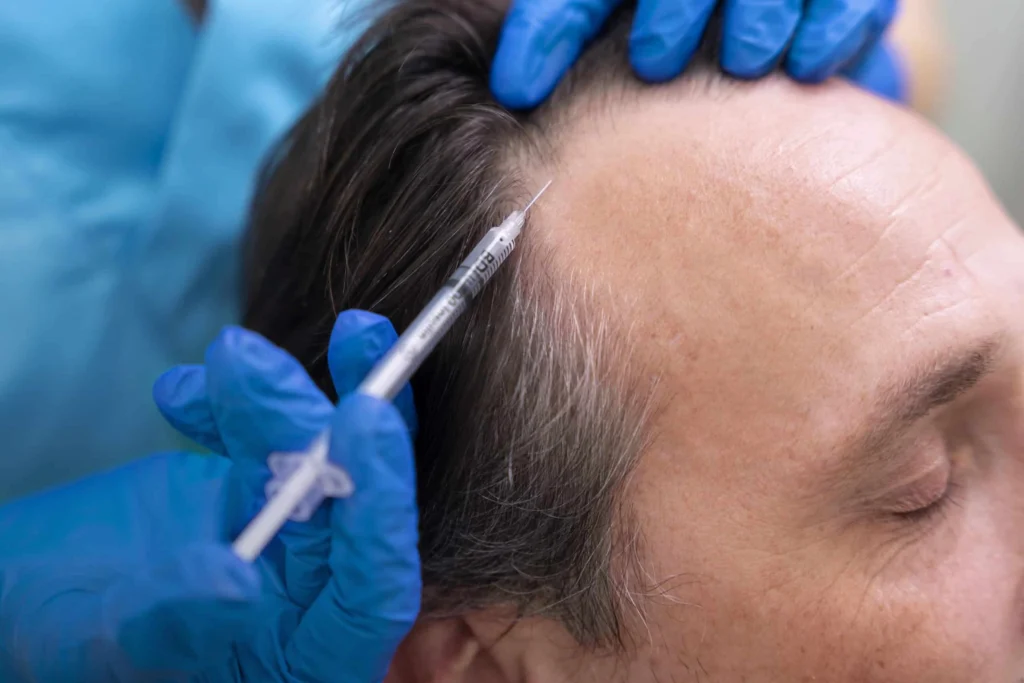
Anesthetic injections are often the most painful part of the procedure. Patients may feel a brief pinch, sting, or burning sensation as the medicine enters the scalp. Each injection usually causes discomfort for only a few seconds.
Once the medicine starts working, the scalp becomes numb enough for surgery. Without proper anesthesia, the small cuts made during surgery would cause significant pain. Patients should tell their doctor right away if they feel sharp pain.
FUE vs. FUT: Which Is More Painful?
Both FUE and FUT (follicular unit transplantation) use local anesthesia, but post-surgery pain can differ. FUE hair transplants remove small groups of follicles through tiny scalp incisions. FUT removes a thin strip of scalp and closes the wound with stitches.
FUE usually causes less pain because it does not leave a long cut in the donor area. FUT may cause more soreness, pulling, or tightness near the stitches. Both methods can cause swelling, numbness, and mild pain during healing.
A 2019 study of 241 patients compared pain after FUE and FUT surgery. Patients who had FUT reported more pain during the first four days, but pain decreased in both groups. The study included 202 FUT patients and 39 FUE patients, so its findings may not apply to everyone.
| Factor | FUE | FUT |
|---|---|---|
| Hair Removal | Small groups of follicles | Strip of scalp |
| Anesthesia | Local | Local |
| Typical Pain | Mild soreness | Soreness and tightness |
| Donor Healing | Many small wounds | One long cut |
| Stitches | Usually not needed | Usually needed |
The right method depends on donor hair, scalp health, and long-term treatment goals, including how long the hair transplant lasts. Neither method promises a pain-free recovery or guaranteed results.
How Painful Is Hair Transplant Recovery?
Hair transplant recovery usually causes mild soreness, swelling, and scalp sensitivity. Most pain begins when the anesthesia wears off, often in the donor area. Patients may also feel itching or tightness as the small wounds heal.
Recovery depends on the method, number of grafts, and the patient’s health. The transplanted hairs may fall out a few weeks after surgery as part of the normal growth cycle. This usually does not cause pain or mean the procedure failed. The hair transplant success rate depends on factors such as graft survival, donor hair quality, and healing.
How Long Does the Pain Last?
Most patients feel much better within the first three days. The scalp may stay sensitive for one or two weeks as the scabs fall off. FUT patients may feel tightness around the stitches for longer.
| Recovery Period | Common Symptoms |
|---|---|
| Days 1–2 | Mild pain, swelling, tenderness |
| Days 3–5 | Less pain and scab formation |
| Days 6–10 | Itching and healing wounds |
| Days 10–14 | Less sensitivity as the scalp heals |
| Following Weeks | Gradual relief from remaining tenderness |
These times are general estimates. Some patients heal faster, while others may have mild numbness or sensitivity for several weeks. The full hair transplant recovery timeline explains each healing stage and when new hair growth begins.
How to Reduce Hair Transplant Pain
Good post-procedural care can reduce pain and help protect new grafts. Doctors give patients instructions for medication, washing, sleep, and daily activities. Following these steps helps the scalp heal and lowers the risk of irritation.
Patients should take pain medication only as their doctor directs. Sleeping with the head slightly raised may help reduce swelling, while avoiding pressure on the recipient area protects new grafts. Patients should not scratch scabs or use scalp products without medical approval.
Medical follow-up is also part of recovery. Regular checks help the doctor track healing, catch problems early, and assess long-term results.
When Is Hair Transplant Pain Abnormal?
Mild pain is normal, but pain that gets worse after the first few days may signal a problem. Severe pain, spreading redness, fever, heavy bleeding, or unusual drainage needs medical attention. These signs may point to an infection or another issue that requires treatment. Understanding hair transplant side effects can help patients distinguish expected symptoms from possible complications.
The Cleveland Clinic advises patients to contact their doctor if they have severe scalp pain, a lasting fever, or signs of infection. Patients should not ignore these signs or try to treat an infection on their own. Early medical care can help find the cause and prevent further problems.

Although fatal complications are very rare, understanding the hair transplant death rate and possible surgical risks can help patients make informed decisions.
Hair restoration requires clear expectations about pain, healing, and results. Medical care, informed consent, and follow-up visits help protect patient health. Most patients recover with mild discomfort, but pain levels and healing times vary.
If you’re considering a hair transplant, understanding the procedure and recovery process can help you prepare. Schedule a free consultation with Hair Transplant Mexico to discuss your options, ask questions, and learn what to expect.