
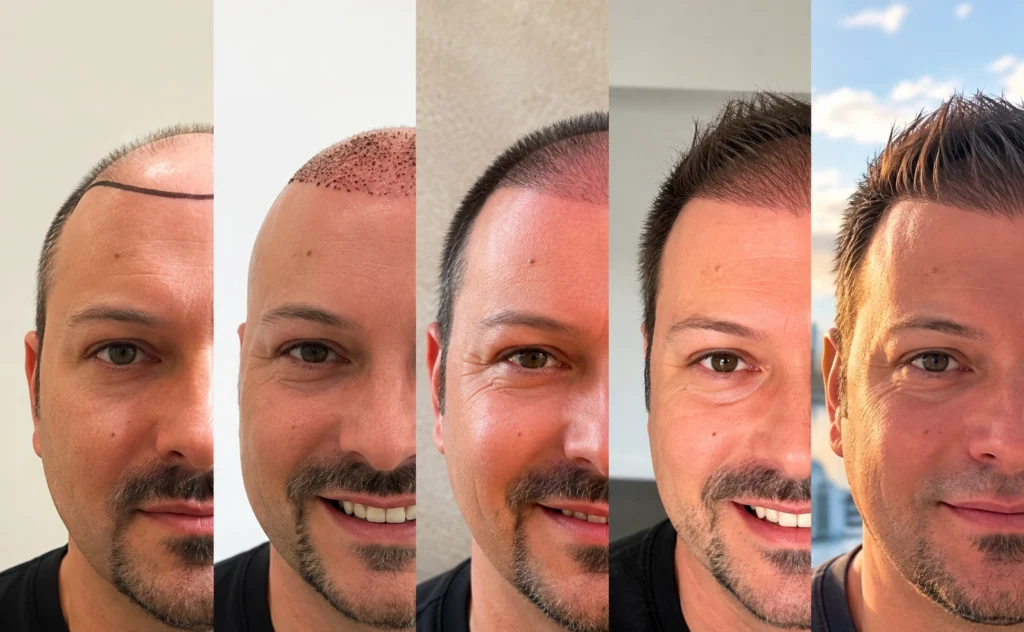
Proper care helps protect new grafts and supports healing. Patients should gently wash their scalp, avoid scratching, and limit heavy exercise and sun exposure. Hair Restoration Mexico is located in San Pedro Garza García, Monterrey, where Dr. Antonio Aguilar specializes in FUE (follicular unit extraction) hair transplantation and hair restoration.
Key Takeaways
- Initial hair transplant recovery takes about 7–14 days, but full hair growth and final results may take 12–18 months.
- Swelling, redness, soreness, and scabs are common during the first week. These symptoms usually improve as the scalp heals.
- Temporary hair shedding often starts within the first month. New growth usually begins around months three to four, with hair becoming thicker over time.
- Proper aftercare includes gentle washing, protecting new grafts, and avoiding heavy exercise, direct sunlight, and scalp irritation.
- FUE and FUT have different healing needs, but both require medical care and follow-up visits. Severe pain, spreading redness, fever, or unusual drainage may signal a problem.
How Long Does Recovery After a Hair Transplant Take?
Recovery time for a hair transplant depends on the surgical method, number of grafts, and how quickly the skin heals. Most patients can return to light tasks within a few days. The scalp usually needs 10–14 days to heal initially, though some redness or soreness may last longer.
Full healing and new growth take more time. Transplanted hairs often fall out before new strands begin to grow. This is normal after a hair transplant.
| Recovery Period | What to Expect |
|---|---|
| Days 1–3 | Swelling, soreness, redness, and scabs |
| Days 4–7 | Less swelling and continued healing |
| Days 8–14 | Scabs fall off, and the scalp looks better |
| Weeks 3–4 | Temporary hair shedding |
| Months 2–3 | Resting phase with little new growth |
| Months 3–4 | Early hair regrowth begins |
| Months 6–8 | Hair becomes thicker and fuller |
| Months 9–12 | Hair continues to grow and mature |
| Months 12–18 | Full results may become visible |
Hair Transplant Recovery Timeline and Stages
The first two weeks focus on healing the skin and protecting the new grafts. After that, some hair falls out before new strands start to grow. Each person heals at a different pace.
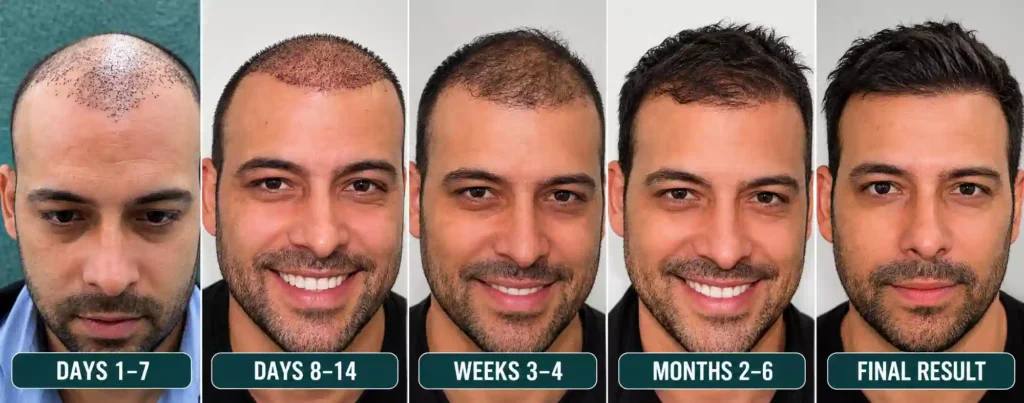
Days 1–7: Swelling, Scabbing, and Healing
During the first three days, the recipient area may feel sore, tight, or swollen. Small scabs form around the new grafts as the skin starts to heal. Patients should avoid touching, rubbing, or scratching the treated scalp.
Swelling from hair transplant surgery may spread to the forehead but often improves within a few days. Scabs protect the small wounds and should fall off on their own. If pain or swelling worsens, seek medical care.
Days 8–14: Scab Removal and Recovery
Most scabs begin to loosen and fall off within 14 days. By 10 days after a hair transplant, many patients notice less redness and fewer scabs, though healing times vary. Gently washing the scalp as directed by the doctor helps clear loose scabs without harming the skin. A short hair attached to a scab does not always mean the graft has been lost.
By the second week, the scalp often looks less red and feels less sore. The skin may look healed, but deeper tissue still needs time to recover.
Weeks 3–4: Shedding and Shock Loss
Temporary hair shedding after a transplant often starts a few weeks after surgery. This is called shock loss and may affect both transplanted hairs and nearby natural hair. The roots usually stay in place beneath the skin and rest before growing again.
Shedding does not mean the surgery has failed. A doctor should check for any severe or lasting hair loss.
Months 2–6: Resting Phase and Regrowth
During months two and three, there may be little visible growth. New follicles are often resting before they start producing hair. This stage is normal and does not mean the grafts have failed.
New strands often appear around months three to four. They may look thin, short, or uneven at first. Hair usually becomes thicker and fuller during months five and six.
Months 7–18: Hair Growth and Maturation
Between months seven and 12, new strands often grow longer and thicker. The front hairline may fill in sooner than the crown, but growth rates vary. Hair type, thickness, and growth direction affect how full the scalp looks.
Many patients see clear changes by month 12. Full results may take up to 18 months, especially in slower-growing areas. Hair loss in untreated areas may continue.
Hair Transplant Recovery Tips and Aftercare
Good post-hair transplant care helps protect new grafts and lowers the risk of problems. Care needs may differ based on the surgical method and the patient’s health. Always follow your doctor’s aftercare instructions rather than using a one-size-fits-all routine.
Washing, Sleeping, and Protecting Grafts
Washing your hair needs extra care during the first few days. Doctors may suggest mild shampoo and gentle water flow to clean the transplanted area. Do not rub the scalp or pull off scabs that are still attached.
Sleeping with your head raised may help reduce swelling, as your doctor recommends. Try to keep the recipient area from rubbing against pillows. Return to normal washing only when your doctor says it is safe.
Exercise, Work, Travel, and Sun Exposure
Most patients can return to desk work within 3–5 days and take short walks after the first few days. Light exercise after a hair transplant may resume after 7–14 days, while running, heavy lifting, and intense workouts often require 2–3 weeks or longer. Contact sports may require 4–6 weeks, depending on healing and the surgeon’s advice.
Patients should generally avoid swimming for at least 2 weeks and direct sun exposure on the scalp for at least 4 weeks. Those traveling for surgery should plan to stay nearby for an early checkup, often within 1–2 days, and schedule follow-up around 10–14 days. Flying may be possible sooner with medical clearance, but travel plans should account for swelling, wound care, and access to a doctor.
Hair Transplant Swelling, Pain, and Side Effects
Mild pain, swelling, and itching are common after surgery. These symptoms often improve as the scalp heals. Some patients may need more time to feel normal.
Normal Symptoms and Pain Levels
The scalp may feel sore, tight, red, or swollen during the first few days. Pain often improves with the doctor-prescribed medication. Some numbness may last longer while the nerves heal.
Small bumps may appear when new hair starts to grow. If they become painful or don’t go away, see a doctor.
Warning Signs and Possible Complications
Severe pain, spreading redness, fever, pus, or bleeding that does not stop may signal a problem. Worsening swelling also needs medical attention.
Contact your doctor if you notice these signs. Early care can help treat an infection or other healing problem.
Frequently Asked Questions About Hair Transplant Recovery
What Are the Worst Days After a Hair Transplant?
The first three to five days are often the hardest. Swelling, soreness, and scabs may cause discomfort, but these symptoms usually improve during the next week.
How Long Does the Donor Area Take to Heal?
FUE donor sites often show clear signs of skin healing within 7–14 days. FUT (follicular unit transplantation) wounds may take longer to heal, and some soreness can remain even after the skin looks fully healed.
When Are Hair Transplant Grafts Secure?
New grafts become more stable during the first week. They are usually more secure after 10–14 days, but patients should still follow their doctor’s care instructions until healing is complete.
Understanding hair transplant recovery helps you prepare for each stage of healing and set realistic expectations. At Hair Restoration Mexico, Dr. Antonio Aguilar can assess your hair loss and explain your treatment options. Schedule a free consultation to discuss your needs and recovery timeline.