

This reaction is temporary and improves as the scalp heals, and hair begins to grow. Coping strategies include understanding each stage of recovery, limiting visual exposure if needed, and using simple techniques to reduce discomfort or anxiety while the appearance changes.
In a hair transplant procedure, these patterns fade over time as healing progresses. Dr. Antonio Aguilar, a physician experienced in Follicular Unit Extraction (FUE), notes that clear expectations help patients interpret these changes with more confidence. This article explains why these reactions occur, what patients typically see, and how to manage sensitivity during recovery.
Key Takeaways
- Hair transplant trypophobia is a visual response to clustered graft patterns, not a complication, and it usually fades as the scalp heals.
- Early healing can make patterns like small scabs and hair restoration procedures appear more pronounced, but these changes are temporary and expected.
- Understanding each phase of a hair grafting surgery helps patients interpret visible signs and reduces unnecessary concern.
- Simple strategies such as limiting mirror exposure, practicing deep breathing, or gradually increasing visual exposure can help manage discomfort or anxiety during recovery.
- Medical evaluation and proper aftercare help distinguish normal healing from infection and support consistent hair growth.
Does Hair Transplant Trigger Trypophobia?
Why Graft Patterns Cause Discomfort
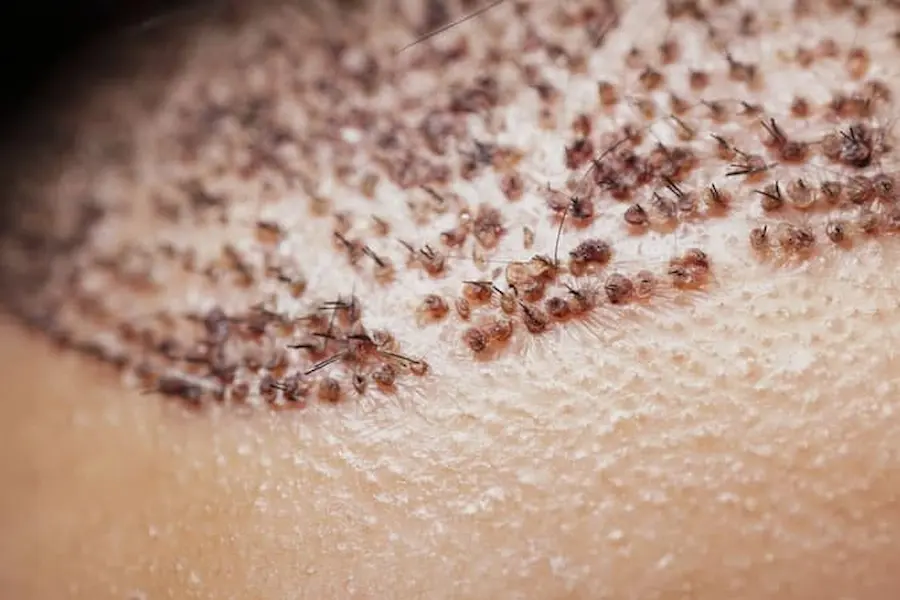
During a hair restoration procedure, tiny incisions are made in the recipient area to place hair follicles. These incisions can appear as hair-transplant holes arranged in patterns resembling clusters of small holes. For some individuals, these repetitive shapes can trigger discomfort or anxiety, especially if they are sensitive to visual patterns.
The reaction is not related to pain or damage but to how the brain interprets dense, repetitive structures. Similar responses can occur when viewing natural patterns such as honeycombs. In hair restoration, this visual response is temporary and decreases as healing progresses.
The brain reacts to repetitive patterns because it is wired to detect potential threats. Clusters of small holes can resemble natural warning patterns, which may trigger discomfort or anxiety even when there is no real danger. This response varies between individuals.
There is also a contrast between perception and reality. The brain may interpret these patterns as irregular, even though they represent the controlled placement of hair follicles. Understanding this difference helps reduce the reaction.
Is This Reaction Normal?
It is normal for some patients to feel uneasy when first seeing the visible signs of the procedure. The early healing process includes redness, small scabs, and closely spaced grafts, which can look unfamiliar. These changes usually improve within days to weeks as the scalp heals and hair growth begins.
Not all patients experience this reaction, and its intensity varies. Understanding that this stage is expected can reduce concern. Medical evaluation before treatment often includes setting expectations.
This response is common and does not indicate a problem. It reflects how the brain processes visual stimuli rather than a complication. Most reactions decrease as the scalp heals.
Why Hair Replacement Procedure Trigger Trypophobia
Clusters, Holes, and Graft Patterns
The visual trigger is linked to the arrangement of grafts in the recipient area. During FUE, each graft contains one to four hair follicles and is placed to support natural hair growth. These patterns can resemble clustered openings on the scalp.
The brain may interpret these clusters as irregular, especially when donor and recipient areas are visible. This response is psychological and varies. As the healing process progresses, these patterns become less noticeable.
The spacing between grafts may appear uniform, with each site showing a small dot. The scalp may show redness, small crusts, and changes in texture, making the pattern more visible. These visible signs of the procedure are temporary.
As healing continues, contrast decreases, and the surface becomes smoother. The pattern becomes less defined, reducing visual discomfort.
How Hair Transplants Look During Recovery
The recovery process includes several visible stages. In the first days, the scalp shows small scabs and redness around each graft. These are normal signs that hair follicles are settling into place.
Over time, scabs fall away, and the skin returns to a more uniform appearance. Hair growth begins gradually after a resting phase. Early visual patterns usually resolve before visible growth becomes significant.
The scalp may appear more pronounced early due to inflammation and scabbing. This increases contrast and makes clusters more visible than they will be later. This stage often looks more intense than it is.
As inflammation decreases, the scalp becomes more uniform. The structure remains stable while the visual appearance improves.
Differences Between Trypophobia and Trichophobia
Trypophobia is a sensitivity to clustered patterns, while trichophobia is an aversion to hair. These are distinct responses, though they can overlap. Understanding the difference helps identify the source of the reaction.
In the context of trypophobia and hair restoration surgery, the concern is visual and temporary. Trichophobia may involve broader emotional responses. A physician can clarify these differences.
While these patterns may look concerning, they are part of normal healing. Understanding this helps patients interpret changes more accurately.
Hair Transplant Healing and Infection Signs
Normal Graft and Scab Formation
After the procedure, small hair transplant scabs form around each implanted follicle. This is a normal part of the healing process and protects the grafts. Mild redness and sensitivity in the donor area are also common.
These signs usually improve within one to two weeks. The scalp stabilizes, and the appearance of the holes from hair restoration surgery becomes less defined. Proper post-hair transplant care supports consistent healing.
Signs of Infection to Watch
Some conditions, such as folliculitis after a hair replacement surgery, can appear during recovery and may require medical guidance. These include increased pain, swelling, or discharge beyond what is expected during healing. Monitoring helps distinguish normal recovery from potential issues.
Key signs include:
- Persistent redness that worsens
- Unusual swelling or warmth
- Discharge or odor
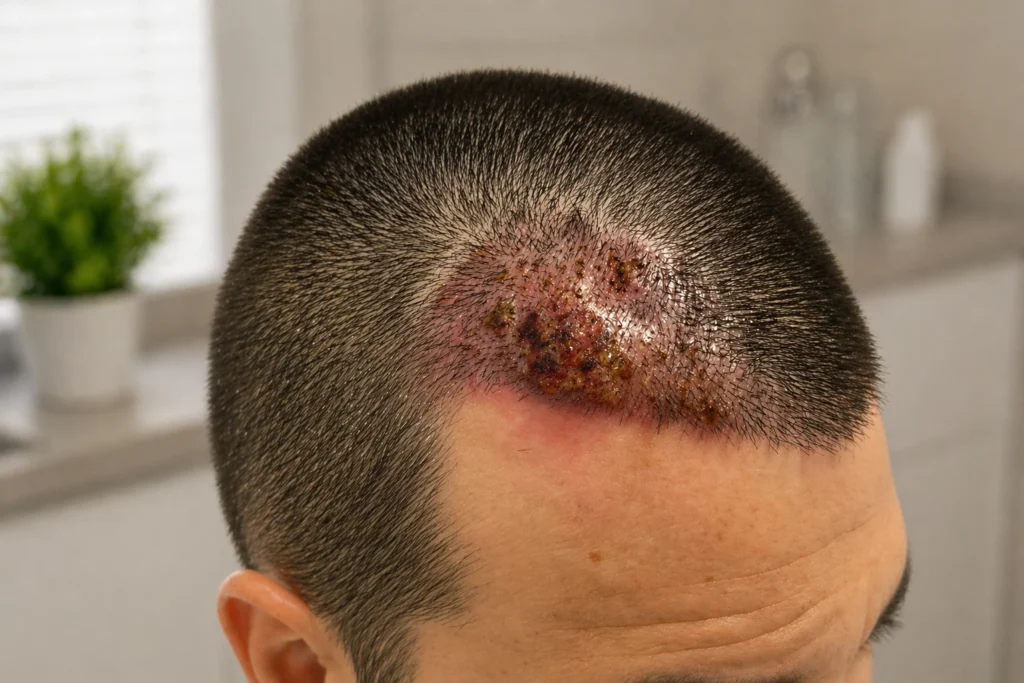
If these occur, a physician should evaluate the situation. Early assessment supports safe recovery.
It is important to distinguish between a visual response and a medical concern. Hair restoration surgery trypophobia relates to perception, while infection involves physical symptoms. This distinction helps prevent unnecessary worry.
A visual reaction alone does not indicate a complication. Medical attention is only needed when physical signs suggest abnormal healing.
How to Manage Trypophobia During Recovery
Preparing Before the Procedure
Preparation can reduce discomfort or anxiety. Patients who understand how the scalp will look at each stage of hair grafting surgery are better prepared. Education helps set expectations.
Reviewing healing images may help some individuals adjust gradually. In some cases, exposure therapy is used to reduce sensitivity. These approaches should be guided by a professional.
Coping With Visual Discomfort
Several strategies can help manage reactions. Limiting mirror exposure in early days or focusing on progress can make the experience more manageable.
Practical techniques include:
- Deep breathing to reduce discomfort or anxiety
- Gradual exposure to the scalp
- Cognitive behavioral therapy CBT in stronger cases
These methods support comfort while healing continues. Most visual triggers decrease as the scalp improves.
Some patients limit how often they check the area. Viewing progress once daily, rather than repeatedly, can reduce focus on temporary changes. Others avoid mirrors briefly.
These adjustments can reduce discomfort during early recovery. As healing progresses, patients usually feel more comfortable.
Medical Evaluation and Safety Considerations
Role of Physician Oversight
A physician-led approach is important in hair restoration. Evaluation includes reviewing hair loss, assessing the donor area, and determining candidacy. Many patients also evaluate whether the procedure aligns with their expectations by reviewing factors such as outcomes, recovery, and cost, and often ask whether a hair replacement procedure is worth it.
In San Pedro, Monterrey, Mexico, practices often emphasize physician involvement during key stages. Patients comparing regions may consider differences in oversight, regulations, and follow-up care.
Risks, Limitations, and Expectations
All procedures involve variability. Hair growth depends on graft survival, scalp condition, and aftercare. Clear communication helps set realistic expectations.
In some cases, patients may also explore hair transplant alternatives depending on their goals and available donor hair. Some cases require multiple sessions. This supports informed decisions.
Recovery can vary between patients based on skin type, graft density, and how the donor and recipient areas respond to a FUE hair transplant. For example, individuals with lighter skin may show more visible redness, while higher graft density can make clusters appear more defined during early healing. These visual differences are part of the normal healing process and do not affect long-term results.
Some patients notice patterns more clearly during the first week, especially when scabs and contrast between graft sites are more visible after the procedure. Others experience a more uniform appearance from the beginning, depending on healing speed and scalp characteristics. These variations are expected and tend to even out as the scalp recovers.