
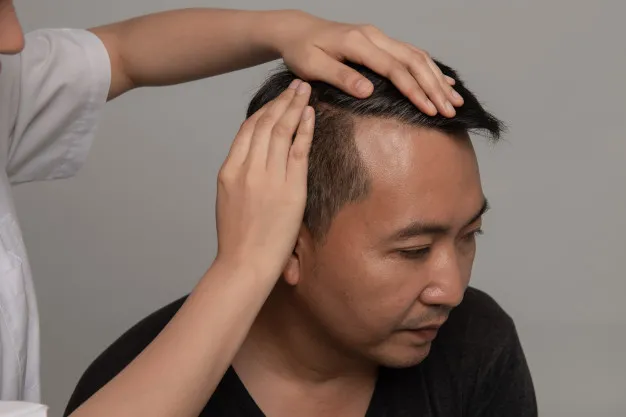
Most cases require between 500 and 1,500 grafts, depending on the stage of hair loss and the size of the temple areas. The goal is to improve facial balance and achieve a natural appearance without creating harsh or overly dense lines.
Results develop gradually and follow a predictable timeline. Transplanted hair often sheds within the first few weeks, followed by new growth starting around three to four months. Visible improvement continues over time, with final results typically seen between nine and twelve months.
Outcomes depend on design, graft placement, and individual hair characteristics, which is why proper planning and medical evaluation are essential, especially when considering options such as hair transplant Mexico, where patients often evaluate medical oversight, follow-up care, and treatment consistency.
Key Takeaways
- Temple hair restoration procedures focus on precise graft placement, angle, and direction to achieve a natural appearance in the temple areas.
- Candidacy depends on the stage of hair loss, donor area quality, and long-term planning, especially in cases of male pattern baldness.
- The number of grafts and density must be carefully controlled, as overplacement or incorrect design can lead to unnatural results.
- Results develop gradually over several months, and consistent postoperative care supports healing and long-term stability.
- Patients often compare locations based on medical oversight, physician involvement, and follow-up, not just cost, when considering hair restoration options.
Can You Get a Hair Transplant on Your Temples?
Yes, it is possible to restore hair in the temple areas through hair restoration surgery. The procedure uses healthy hair follicles from a donor area and places them in the temples affected by hair loss. The goal is to achieve a natural look that matches the existing hairline and facial structure.
Temples require careful design because hair grows at specific angles and directions. Density must remain controlled to avoid an unnatural appearance. A medical evaluation is needed before proceeding with temple hair restoration procedures.
Who Is a Good Candidate
A good candidate has stable hair loss and sufficient donor hair to support the required number of grafts. Patients who are losing hair in the temples but still have strong donor density often see more predictable outcomes. The stage of hair loss plays a key role in determining suitability.
People in an early stage of male pattern baldness may benefit from early intervention. Those with advanced hair loss may need a broader hair restoration plan, including options discussed in hair transplant alternatives. A consultation helps determine whether temple treatment alone is sufficient.
Candidacy and Hair Loss Progression
Hair loss progression directly affects how the temple hairline should be planned. Patients in the early stages of male pattern baldness may continue to lose hair behind or around the transplanted area, which can create an imbalance if the design is too aggressive.
For this reason, surgeons often adopt a conservative approach, placing grafts in a manner that allows for future adjustments if recession continues.
A long-term plan considers how the stage of hair loss may evolve over the next 5 to 10 years. This may include preserving donor hair, strategically spacing grafts, and avoiding low or sharply defined temple points that may not align with future hair patterns. This approach reduces the need for corrective procedures and helps maintain consistent, natural results over time.
Hair Loss Pattern and Donor Area
Hair loss patterns guide treatment decisions and influence the number of grafts. A stable donor area ensures transplanted hair remains resistant to further loss. This is important for long-term results.
The donor area is evaluated for density and quality. If supply is limited, the procedure may need to be adjusted. This helps maintain safety and sustainability.
Why Temples Are Hard to Restore
The temple areas are complex due to their anatomy and hair direction. Hair grows at a low angle and changes direction gradually toward the frontal hairline. Replicating this pattern requires precision.
Another challenge is density control. Overplacement can create an artificial look, while underplacement may not provide enough coverage. This balance makes temple hair restoration procedures more demanding.
Temple Design Principles
Temple restoration depends on angle, direction, and graft selection. Hair in the temple areas grows at a low angle, often between 10 and 20 degrees. This creates a flatter appearance than other areas.
Gradual transitions in direction are required to avoid unnatural results. Single-hair grafts are commonly used to match natural patterns. This helps achieve a natural outcome that blends with existing hair, especially in cases where patients also consider procedures like forehead reduction with hair transplant.
How the Procedure Works
Hair grafting surgery for the temples often uses FUE, which differs from older methods discussed in hair transplant vs. plugs.
The process includes extraction and implantation. Each step must match the natural angle and direction of growth. The goal is to achieve a natural result.
Procedure Duration and Sessions
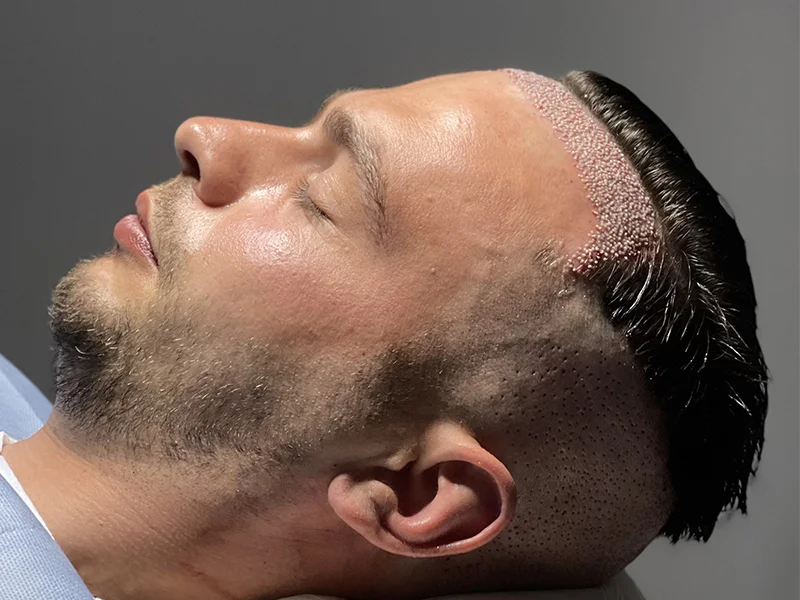
A temple hair graft is usually completed in one session. Most procedures take between four and eight hours, depending on the number of grafts. Smaller cases require less time.
In some cases, additional sessions may be needed. This depends on the density goals or progression of hair loss. Planning helps maintain long-term balance.
FUE Extraction and Graft Placement
In the FUE technique, each follicular unit is extracted individually. This supports healing and allows precise placement. It is useful in delicate areas like the temples.
The surgeon places grafts based on spacing and direction. This ensures alignment with natural growth patterns. It supports natural results.
Temple Angle and Hair Direction
Hair must be placed at a low angle and follow a gradual curve. This creates a natural transition into the frontal hairline. Incorrect angles can affect the final result.
Natural temples do not form straight lines. Density decreases toward the edges to reflect normal patterns. Careful alignment helps maintain a realistic appearance.
How Many Grafts Are Needed
The number of grafts depends on the area size and the desired density. Temple restoration often requires fewer grafts than other procedures. Precision remains more important than volume.
Typical cases range from 300 to 800 grafts per side. The focus is on achieving a natural look rather than maximum density. Planning determines the exact number of grafts.
Graft Selection and Density Strategy
Graft selection depends on the thickness and the number of hairs per graft. This helps create a smooth transition across the treated area. It supports a consistent result.
Density in the temples is lower than in other areas. Overplacement can create an artificial appearance. Spacing and alignment are prioritized.
Hair Transplant Temples Before and After
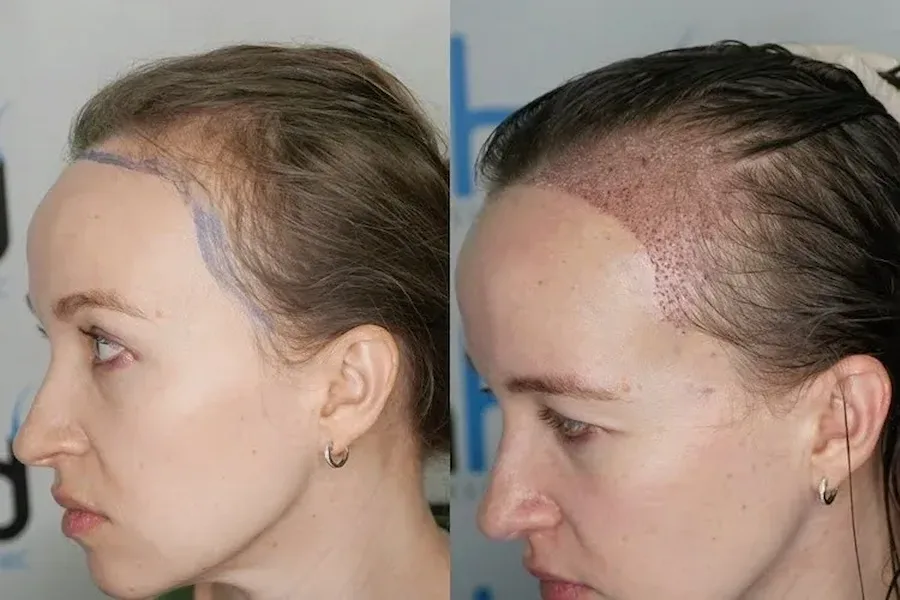
Before-and-after comparisons help set expectations. Early results may include shedding, which is part of the normal cycle. Growth begins a few months after the procedure.
Final results depend on healing and hair characteristics. The goal is to achieve a natural blend rather than a defined line.
What Defines Natural Results
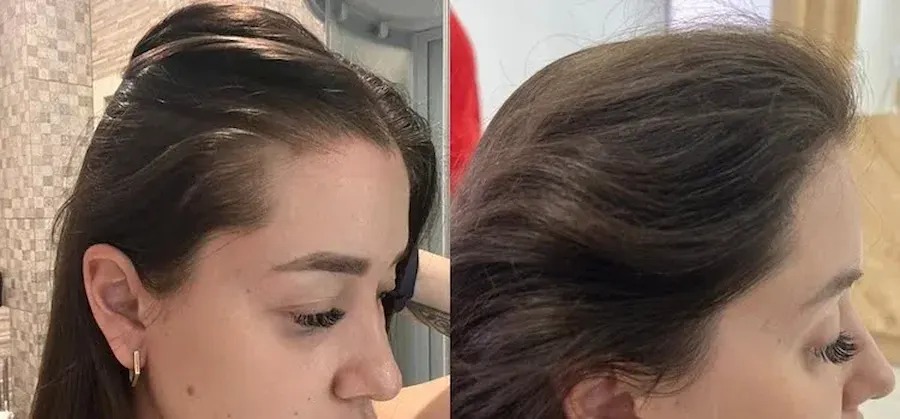
Natural results depend on design rather than density alone. The temple area should have a soft transition instead of a sharp line. This creates a realistic appearance.
Key elements include gradual density, irregular edges, and correct direction. These factors help the result blend with existing hair.
Risks and Limitations
Hair grafting surgery carries risks such as infection or uneven growth. Medical oversight helps reduce these risks. Proper technique is important for safety.
Limitations include donor availability and control of density. Not all patients can achieve the same outcome. Realistic expectations are necessary.
What Can Go Wrong With Poor Design
Incorrect angles can cause unnatural growth patterns. Excessive density can create an artificial appearance. Both issues affect overall results.
Straight or defined temple lines may look unnatural. Natural temples have softer, irregular patterns. Design accuracy is critical.
Healing and Recovery
Recovery includes both short-term healing and long-term hair growth cycles. In the first few days, small scabs form around each graft, and mild swelling or redness may appear in the temple areas. Most patients resume normal activities within a few days, but visible healing of the scalp continues over one to two weeks as the skin recovers.
After the initial phase, transplanted hair follicles enter a temporary shedding stage, usually within the first two to four weeks. This is a normal part of the process and does not indicate failure. New hair growth typically begins around three to four months, with gradual improvement in density and shape over time.
Postoperative care plays a key role in recovery and graft survival. Patients are advised to follow specific instructions, such as using gentle washing techniques, avoiding friction or pressure on the treated area, and limiting physical activity in the first few days. Regular follow-up allows the physician to monitor healing, assess growth, and adjust care as needed to support stable, consistent outcomes.
Variability in Results by Hair Type
Results vary based on hair thickness and texture. Thicker hair provides more coverage with fewer grafts. Curl can also affect appearance.
Color contrast between hair and skin influences visibility. These factors guide planning and graft placement. They help improve predictability.
Hair Transplant Temples Cost
Cost depends on the number of grafts and the technique used. A single-area FUE transplant typically ranges from $4,500 to $8,000, while a full FUE transplant typically ranges from $6,000 to $10,000. Temple procedures often fall on the lower end due to fewer grafts, though precision can affect pricing.
Patients often compare locations when researching hair restoration, including options like hair transplant Mexico. Cost should be considered alongside medical oversight, physician involvement, and follow-up care.
How to Evaluate the Best Hair Transplant Temples
Choosing a provider requires evaluating medical expertise, planning, and experience with temple hair loss patterns. The goal is to ensure safe procedures and consistent results that match natural hair growth.
Patients should review how the surgeon designs the temple areas, including angle, direction, and graft selection. They should also confirm physician involvement during the procedure and assess follow-up care. Focusing on these medical factors helps guide informed decisions when treating temple hair loss.
Key Factors to Evaluate Before Treatment
Patients often review key factors before treatment. These include stability of hair loss and donor quality. Realistic expectations are also important.
Follow-up availability should be considered. These factors help align treatment with long-term goals.
Medical Expertise and Technique
A qualified hair transplant surgeon should oversee the procedure. Physician involvement affects safety and results.
Techniques such as FUE and implantation tools are used based on clinical needs. Results depend on proper execution.
Natural Hairline Design
Design is central to temple restoration, especially when recession is a sign of male pattern baldness. The goal is to achieve a natural look that aligns with the patient’s facial structure and existing hairline.
Hair direction and density must match existing patterns. This ensures proper blending and helps the restored area integrate naturally with the surrounding hair.
Your Next Step
An evaluation of temple hair loss helps determine the stage of hair loss, donor-area quality, and a long-term plan. This assessment clarifies whether a temple hair restoration surgery is appropriate and what results can realistically be expected.
Scheduling a consultation provides an opportunity to review treatment options, estimate the number of grafts needed, and plan for recovery and follow-up. This process supports informed decisions and helps align the procedure with long-term hair restoration goals.