
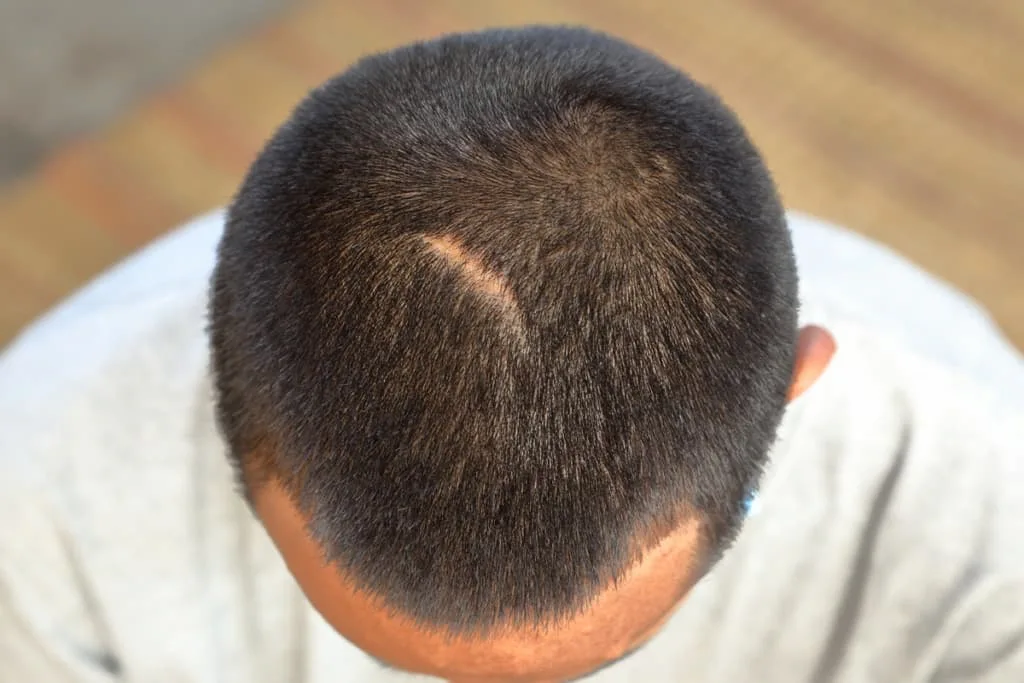
This approach is often considered for localized hair loss resulting from trauma or surgical scars. Because scarred skin differs from normal scalp skin, surgeons adjust techniques such as Follicular Unit Extraction and graft spacing to improve outcomes and minimize additional visible scarring.
The process requires a detailed medical evaluation to determine candidacy and set realistic expectations. Risks include lower graft survival, uneven growth, and slower healing, especially in areas with limited circulation. Results focus on improving coverage and blending the scarred area with surrounding hair rather than achieving full density.
Hair Transplant Mexico, located in San Pedro, Monterrey, provides a setting where doctor-led evaluation and structured follow-up support consistent treatment planning and recovery.
Key Takeaways
- Hair transplant on a scar is possible when the scarred area has sufficient blood supply, but results vary depending on the scar type and skin condition.
- Scarred skin is associated with lower graft survival and density, so outcomes focus on improving coverage rather than on full restoration of hair-loss areas.
- A medical evaluation is required to assess candidacy and plan the hair restoration procedure safely.
- Follicular Unit Extraction allows precise graft placement and minimizes scarring in both the donor and recipient areas.
- Recovery takes several months, with gradual hair growth patterns that require realistic expectations.
Can I Get a Hair Transplant on a Scar?
Many patients can undergo this hair restoration procedure if the tissue can support graft survival. Blood supply is the key factor, as it determines whether a transplanted follicle can grow successfully. This option is often explored when hair loss is limited to a specific scarred region rather than widespread thinning.
Not all scars are suitable for hair follicle transplantation. A physician must evaluate the skin to determine whether the recipient area can sustain growth. In cases where a transplant is not recommended, some patients explore surgical hair restoration alternatives depending on their condition.
Is a Hair Transplant Safe on Scars?
Hair restoration techniques can be safe on scarred skin when performed with proper medical planning. Reduced blood supply increases the risk of uneven growth or lower density compared to the normal scalp. Careful graft placement helps reduce complications and supports consistent healing.
The goal is to achieve minimal scarring while improving the appearance of visible scars. The doctor’s involvement during the hair restoration surgery helps adjust the technique based on the tissue’s response. This approach supports safer outcomes in both donor and recipient areas.
Medical Evaluation and Candidacy
A detailed evaluation is required before performing a hair restoration surgery on a scarred area. Physicians assess scar thickness, flexibility, and blood supply to determine whether hair follicle transplantation is feasible. This step defines how many grafts the recipient area can support.
The goal is to balance coverage with graft survival rather than maximizing density. Some scars may not be suitable if blood flow is too limited or if conditions like scarring alopecia are active. Proper evaluation helps set realistic expectations for treating hair loss in scarred regions.
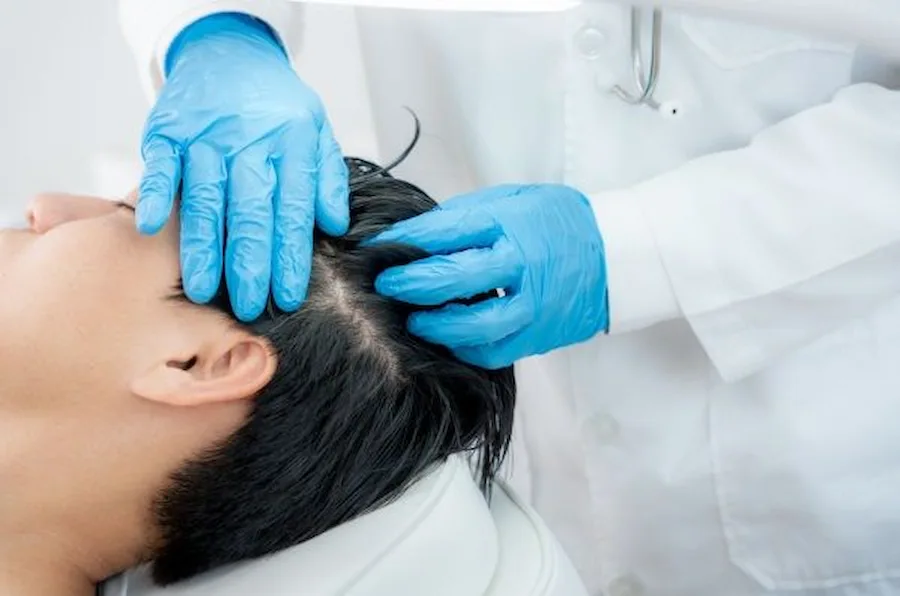
Surgical Hair Restoration on Scar Tissue
Scarred skin differs from normal tissue because it has less vascular support. This affects how transplanted follicles survive and how hair grows over time. As a result, outcomes are usually less dense than in non-scarred areas.
Blood supply directly impacts graft survival and hair growth. Limited circulation can reduce oxygen supply to each transplanted follicle. This may lead to slower growth or partial graft loss.
Types of Scars Treated
Hair restoration surgery can be used on different types of scars, depending on tissue quality. Each type requires a different approach based on depth and structure, using specific hair transplant techniques.
- Surgical scars: Linear scars with better blood supply, usually treated with Follicular Unit Extraction (FUE) and standard graft placement.
- Injury-related scars: Variable depth and structure, treated with adjusted graft spacing and lower density in the recipient area.
- Burn scars: Thicker scars with reduced blood supply, treated with fewer grafts and wider spacing to support survival.
Procedure Overview and Technique
The hair restoration procedure involves extracting follicles from a donor area and placing them into the recipient area. FUE is commonly used because it allows precise harvesting with minimal scarring. This technique is useful in scarred skin where careful placement is required.
Lower graft density is often planned to protect the blood supply in the scarred area. Proper spacing helps improve survival rates and supports more even growth. The approach focuses on improving coverage while maintaining tissue health.
Hair Transplant on Scar: Before and After Results
Results from hair restoration surgery on scars vary based on the condition of the tissue and blood supply. Improvement is gradual, with visible changes developing over several months. The goal is to reduce contrast between the scarred area and the surrounding hair.
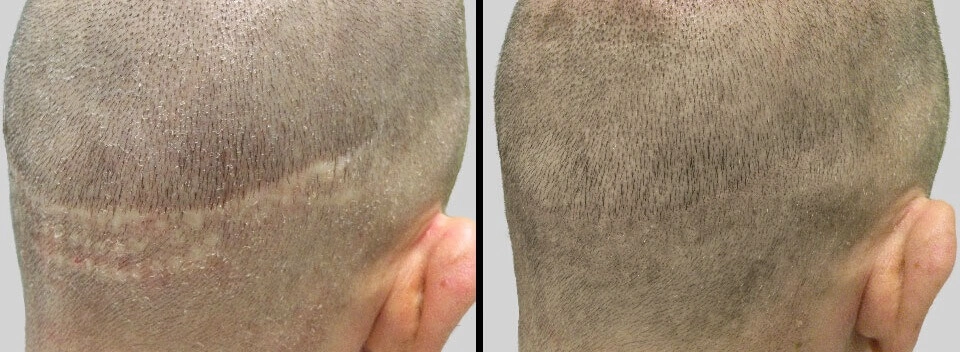
Density is typically lower than in the normal scalp due to biological limitations. Some transplanted follicles may not survive, which affects final coverage. For patients comparing expectations and long-term value, it can help to review whether a hair transplant is worth it based on individual goals.
Hair Restoration Surgery on Scar Cost
The cost of a hair restoration procedure depends on the size of the scarred area and the number of grafts. A single area FUE transplant typically ranges from $4500 to $8000, while a full FUE transplant ranges from $6000 to $10000.
Patients often compare regions based on physician involvement, medical oversight, and follow-up care, which can affect both costs and outcomes.
Risks, Recovery, and Aftercare
Surgical hair restoration on a scarred area carries specific risks due to reduced blood supply. These include lower graft survival, uneven growth, delayed healing, and, in some cases, the need for additional sessions to improve coverage. Careful planning and proper technique help reduce these risks, but outcomes can vary depending on the condition of the scarred skin.
Recovery follows a defined timeline, with initial healing in 7 to 10 days and visible hair growth starting around 3 to 4 months. Full results typically develop over 6 to 12 months as each transplanted follicle stabilizes and hair grows naturally.
Following post-hair transplant care instructions and attending follow-up visits supports better healing and more consistent results. These include avoiding pressure on the recipient area, gentle washing, and limiting intense activity during early recovery.
If you want to understand your candidacy and expected outcome, you can schedule a consultation for a personalized evaluation.